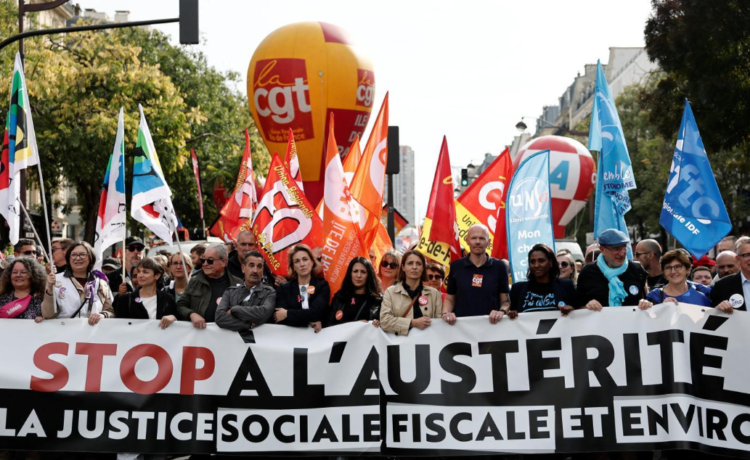
The US dollar strengthened slightly against major currencies at the start of Asian trading on Monday, October 19, while the euro weakened following violent protests in France over the cost of living.
Reuters reported that the euro fell by 0.1 per cent to $1.1225 as trading began in Asia. The dollar index, which measures the US currency against a basket of major currencies, stood at 101.83.
The movement came as investors assessed the potential economic and political implications of unrest in France, one of the eurozone’s largest economies.
French President Emmanuel Macron condemned scenes of violence associated with the demonstrations in a televised address on Sunday, according to Reuters.
The currency movements demonstrate how political developments can influence investor confidence, particularly when uncertainty affects a major economy.
Why the euro came under pressure
Currency markets respond to a range of factors, including interest-rate expectations, economic growth, political stability and demand for assets perceived as safe.
When investors become concerned about a country’s political or fiscal outlook, they may reassess their exposure to its currency and financial markets.
France has also been facing scrutiny over its public finances and budgetary challenges. Protests over living costs add another source of uncertainty as the government attempts to manage public spending and economic pressures.
However, a short-term decline in the euro does not necessarily indicate a prolonged currency crisis. Exchange rates can change rapidly as investors respond to new information and adjust their positions.
The reported 0.1 per cent movement was modest, although it attracted attention because it occurred during a period of heightened political uncertainty.
The dollar and global financial markets
The US dollar plays a central role in international trade and finance. It is widely used in commodity transactions, international lending and central-bank reserves.
Changes in its value can therefore affect countries and businesses far beyond the United States.
A stronger dollar can make dollar-denominated imports more expensive for countries whose currencies weaken against it. It can also increase the local-currency cost of servicing foreign debt.
For countries importing fuel, food and industrial materials, currency depreciation can add to inflationary pressures when international prices remain high.
Nigerian businesses that require imported machinery, technology or raw materials may also be affected by movements in the dollar-naira exchange rate, although domestic exchange-rate conditions are influenced by many additional factors.
Investors watch central banks
Reuters also reported that traders were monitoring forthcoming meetings involving the US Federal Reserve and the European Central Bank.
Central-bank decisions can influence currency markets through changes in interest rates and guidance about future monetary policy.
If investors expect one central bank to maintain higher interest rates than another, demand for the associated currency may increase. However, exchange-rate movements depend on expectations as well as the decisions themselves.
Investors also assess economic growth, inflation, employment and government borrowing when evaluating the outlook for currencies.
Wider implications for businesses
Companies involved in international trade need to monitor exchange rates because currency movements can affect the cost of imports, the value of overseas revenue and the competitiveness of exports.
Importers may face higher costs when their domestic currency weakens, while exporters earning foreign currency may benefit when converting overseas revenue into local currency.
Businesses can manage some of these risks through careful budgeting, diversified sourcing and appropriate foreign-exchange risk management.
Consumers may also experience indirect effects if currency movements contribute to higher prices for imported goods or production inputs.
Conclusion
The euro’s decline at the beginning of Monday’s trading session highlights the connection between political developments and international financial markets.
The extent to which the protests will affect the currency over a longer period remains uncertain. Investors will continue to monitor developments in France, government fiscal policy, economic data and central-bank decisions.
For global markets, the key issue is whether political uncertainty becomes a sustained source of economic pressure or remains a short-term influence on investor sentiment.