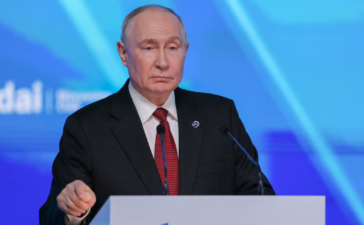
Chinese President Xi Jinping and Russian President Vladimir Putin have reaffirmed their strategic relationships with North Korea, underscoring Pyongyang’s growing importance to both powers as geopolitical divisions deepen across Asia and beyond.
The messages were sent to North Korean leader Kim Jong Un as the country marked the 78th anniversary of its founding on September 9.
According to North Korean state media KCNA, Xi said China was willing to continue strengthening strategic guidance in its relationship with Pyongyang and work with Kim to advance the development of both countries.
The Chinese leader described strengthening China-North Korea relations as a consistent policy of Beijing’s ruling Communist Party and government.
Putin Pledges Closer Partnership
Putin delivered a similar message.
The Russian president said Moscow would continue its closest cooperation with Kim to further strengthen the comprehensive strategic partnership between Russia and North Korea.
Putin argued that stronger relations would contribute to regional security and what he described as a more just, multipolar international order.
Messages from both Xi and Putin appeared prominently on the front page of North Korea’s ruling Workers’ Party newspaper, Rodong Sinmun.
The positioning of the messages reflects the importance Pyongyang attaches to its relationships with Beijing and Moscow.
North Korea Gains Strategic Importance
China has historically been North Korea’s most important economic and diplomatic partner.
Beijing has generally sought stability on the Korean Peninsula while resisting measures that could lead to the collapse of the North Korean state or dramatically increase US influence close to China’s border.
Russia’s relationship with Pyongyang has also strengthened substantially in recent years.
The closer alignment comes as Moscow, Beijing and Pyongyang increasingly challenge aspects of the Western-led international order, although the three countries have different economic and strategic priorities.
For North Korea, stronger ties with two permanent members of the United Nations Security Council provide important diplomatic support at a time when Pyongyang remains under international sanctions connected to its nuclear weapons and ballistic missile programmes.
Wider Geopolitical Competition
The anniversary messages come against the backdrop of intensifying strategic competition in the Indo-Pacific.
The United States has strengthened security cooperation with South Korea and Japan, while China has expanded its military capabilities and Russia has deepened relationships with countries opposed to Western pressure.
North Korea has continued developing its military capabilities despite international sanctions.
The result is an increasingly complicated security environment in Northeast Asia, where nuclear weapons, missile development and competition between major powers intersect.
Kim also received congratulatory messages from leaders in several other countries, including Vietnam, Laos, Cambodia, Mongolia, Belarus, Singapore, Switzerland, Sweden and Zimbabwe.
The messages from Xi and Putin, however, carry considerably greater geopolitical weight.
Their commitment to strengthening relations with Pyongyang suggests North Korea will remain an important component of the evolving strategic relationship between China, Russia and the wider international system.