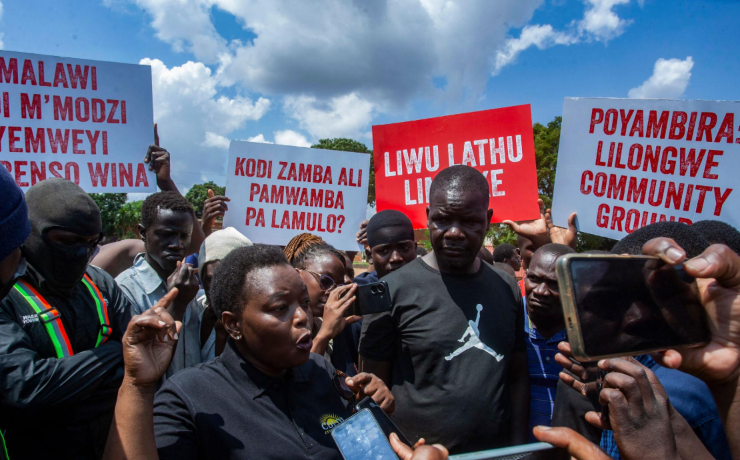
The Concerned Citizens of Malawi People Power Movement (CCM-PPM) announced that the demonstrations would take place in four major cities: Blantyre, Zomba, Lilongwe and Mzuzu.
Residents in other districts have also been encouraged to prepare petitions and submit them to their respective local authorities.
In a statement issued on Tuesday, November 10, the movement said persistent shortages of fuel, foreign exchange and electricity were disrupting economic activities and increasing the cost of living.
The organisation described the proposed demonstrations as a peaceful, non-partisan campaign aimed at demanding accountability and better management of public affairs.
It has called on market traders, transport operators, business owners, workers and young people to participate.
The movement also urged citizens to use the demonstrations to communicate their concerns about the economic situation and demand practical solutions from the government.
Fuel shortages disrupt businesses and transportation
One of the major issues driving the planned demonstrations is the recurring shortage of fuel across Malawi.
The shortage has affected public transportation, businesses and supply chains, making it difficult for economic activities to operate normally.
Transport operators have faced difficulties maintaining their services, while commuters and other residents have experienced challenges accessing reliable transportation.
Fuel availability is particularly important for businesses that depend on transportation to move goods and deliver services.
When fuel becomes difficult to obtain, transportation costs can increase, creating additional pressure on businesses and consumers.
Small businesses are also affected because many depend on generators and other fuel-powered equipment to maintain operations when electricity supply is unavailable.
The civic movement believes that the government needs to introduce sustainable measures to address the situation rather than relying on repeated assurances.
According to the report by Voice of Nigeria, Malawi’s recurring fuel shortages are largely connected to foreign currency constraints, which have limited the country’s ability to finance imports.
This has made the availability of foreign exchange another major concern in the country’s economic situation.
Voice of Nigeria+1
Electricity blackouts increase pressure on households
Apart from fuel shortages, persistent electricity blackouts have become another source of concern for citizens and businesses.
The movement warned that prolonged power interruptions were affecting hospitals, schools, industries and commercial activities.
For businesses, unreliable electricity can increase operating expenses because owners may have to depend on generators and alternative energy sources.
Manufacturers and other industrial operators also require consistent power supply to maintain production and meet delivery schedules.
Hospitals and healthcare facilities depend on electricity to operate essential equipment and provide services to patients.
Similarly, schools and other educational institutions need reliable power to support teaching, administrative activities and digital learning.
The combination of fuel shortages and electricity interruptions therefore creates additional difficulties for households and businesses already dealing with higher living expenses.
The movement has called for urgent government intervention to improve the availability of essential services.
Foreign exchange scarcity remains a major challenge
The shortage of foreign currency is another issue highlighted by the organisers.
Malawi relies on imports for various essential products, including fuel and other goods needed by businesses and households.
When access to foreign exchange becomes limited, importers may experience difficulties paying international suppliers, potentially affecting the availability of products in the domestic market.
The situation can also create pressure on businesses that depend on imported raw materials, machinery and other production inputs.
For companies, uncertainty surrounding foreign currency availability can complicate planning, investment and daily operations.
The civic movement believes that the government must address these challenges through practical economic measures that improve access to essential imports and support productive activities.
Protests add to pressure on Malawi’s government
The planned demonstrations come amid wider public concerns about the country’s economic difficulties.
Other civic organisations have also raised questions about the government’s handling of fuel shortages and electricity supply.
For example, the Human Rights Defenders Coalition (HRDC) announced separate demonstrations for November 17, demanding the resignation of Energy Minister Jean Mathanga over the persistent shortages.
The coalition accused the minister of failing to fulfil an earlier assurance that fuel supplies would return to normal by October 20.
However, the government has not publicly provided a response to the protest plans in the reports reviewed.
The emergence of multiple protest campaigns indicates that economic and public-service concerns are becoming important issues in Malawi’s political discussions.
Nyasa Times+1
What the development means for Malawi
The proposed demonstrations could increase pressure on the government to address the country’s fuel, foreign exchange and electricity challenges.
For businesses, resolving these problems is important because reliable energy and transportation are necessary for production, distribution and investment.
Households also need stable access to essential services to reduce the financial difficulties associated with rising living costs.
The government will therefore face demands to explain the measures being taken to improve fuel availability, strengthen foreign exchange access and address electricity interruptions.
The demonstrations are scheduled for November 17, 2026, and their eventual impact will depend on public participation, the authorities’ response and whether the organisers’ demands lead to further engagement with the government.
For now, the planned action highlights the connection between economic management, public accountability and citizens’ living conditions in Malawi.