Serbia is facing a major political transition after Aleksandar Vučić conceded defeat to a student-led political movement in parliamentary elections held on Sunday, October 25.
The result marks a significant development in the Balkan country’s politics, where Vučić and his political allies have held considerable influence for more than a decade.
According to Reuters, Vučić acknowledged that the student-backed Student List had won the election, based on preliminary projections. He said the movement was expected to secure between 135 and 140 seats in the 250-seat parliament, while his Serbian Progressive Party was projected to win approximately 105 seats.
The figures were based on preliminary assessments rather than final certified results. Nevertheless, the concession represented a major setback for the established political leadership and a remarkable achievement for a movement rooted in student protests.
How the movement gained support
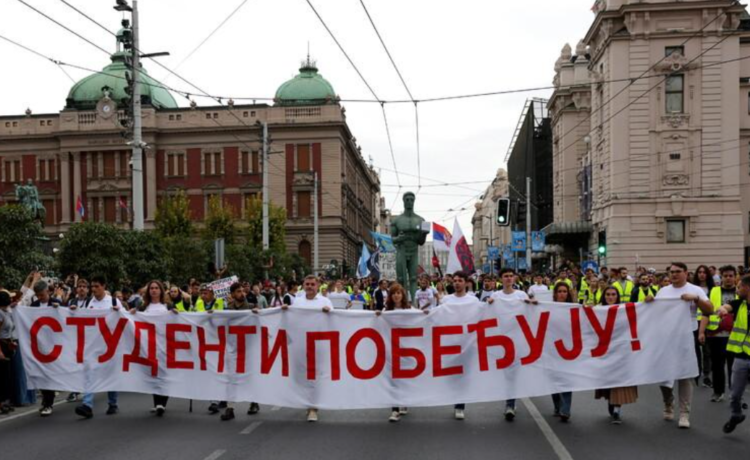
The election followed nearly two years of demonstrations against what protesters described as corruption and increasingly authoritarian governance.
The protests were triggered by the deaths of 16 people when a railway station canopy collapsed in the city of Novi Sad in 2024. The incident became a focal point for public anger and demands for accountability.
Students subsequently organised demonstrations and developed a broader political challenge to the government. Their campaign attracted support from people who wanted investigations into alleged wrongdoing, stronger public institutions and changes in the country’s political direction.
The authorities and political figures accused of misconduct have disputed various allegations. The election, however, provided voters with an opportunity to express their views through the parliamentary process.
The student movement’s success illustrates how a protest campaign can develop into an electoral force when it builds sufficient public support and offers a political alternative.
A significant change in parliament
A parliamentary majority would give the Student List considerable influence over legislation, government formation and public policy.
However, winning an election is only the beginning of the governing process. The incoming political leadership will need to establish institutions, select officials, develop a legislative programme and demonstrate that it can manage the country’s economic and administrative responsibilities.
The final distribution of seats and the procedures for forming a government will be important in determining how quickly the political transition proceeds.
A new parliamentary majority may also face resistance from established institutions and political groups that have benefited from the previous system.
For the student movement, maintaining unity could prove difficult once it moves from campaigning to governing. Different supporters may have different priorities, ranging from anti-corruption measures to education, employment and economic reform.
Implications for Serbia’s international relationships
Serbia occupies an important position in the Western Balkans and maintains relationships with the European Union, Russia, China and neighbouring countries.
A change in parliamentary control could affect discussions about European integration, investment, foreign policy and regional cooperation.
Investors and international partners will want clarity on the new government’s economic plans, institutional reforms and approach to existing international commitments.
The political transition may also affect Serbia’s relations with neighbouring states, particularly where unresolved regional issues require sustained diplomatic engagement.
The scale of change will depend on the policies adopted by the new parliamentary majority rather than the election result alone.
What happens next?
The immediate priority is confirmation of the election results and the constitutional procedures needed to establish a new government.
The student-led movement will face pressure to turn its campaign promises into practical policies. Voters will expect transparency, accountability and improvements in public services.
At the same time, Serbia’s political institutions will need to manage the transition peacefully and ensure that parliamentary processes are respected.
The election demonstrates the potential influence of organised civic movements in democratic politics. It also illustrates the challenges of converting public protest into effective governance.
For Serbia, the coming weeks will determine whether the election leads to a stable transfer of political power and whether the new leadership can meet the expectations that helped bring it to victory.