Nigeria has proposed a series of regional capital market reforms aimed at making it easier for investors to trade bonds and other securities across West Africa.
The proposals are designed to improve cross-border investment, increase access to long-term financing and strengthen the region’s ability to fund infrastructure and economic development projects.
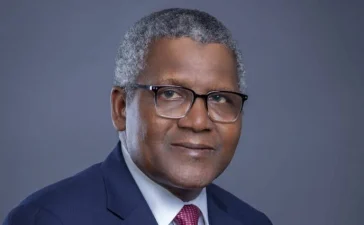
Finance Minister Taiwo Oyedele presented the proposals during the S&P Global Ratings Africa Summit held in Lagos on November 10, 2026.
According to the minister, fragmented capital markets across West Africa have continued to limit the region’s ability to attract the level of investment required for major development projects.
He argued that individual national markets may not be sufficiently deep to attract large-scale investments on their own, making regional integration increasingly important.
One of the major proposals is the introduction of a regional passport system.
Under the proposed arrangement, companies and institutions approved to raise capital in one participating market could potentially access other participating markets without having to repeat separate regulatory approval processes.
The proposal is intended to reduce administrative barriers and make it easier for businesses to attract investors from neighbouring countries.
Nigeria is also advocating a unified investor identification system.
The proposed system would allow investors registered in one participating market to purchase bonds and equities across the region without having to repeat the same onboarding procedures in every country.
This could reduce the time and administrative costs associated with cross-border investment.
Another major proposal involves linking regional trading, settlement and payment infrastructure.
The objective is to allow securities transactions to be settled more efficiently in local currencies, reducing dependence on the United States dollar for certain regional transactions.
This is particularly relevant for West African countries seeking to deepen financial cooperation and improve the movement of capital within the region.
The proposed integration would cover 10 countries: Nigeria, Ghana, Benin, Burkina Faso, Côte d’Ivoire, Guinea-Bissau, Mali, Niger, Senegal and Togo.
Nigeria is also proposing the creation of a regional local-currency bond index to help investors assess opportunities across participating markets.
Another proposal is a credit enhancement facility that could support cross-border infrastructure financing.
Credit enhancement mechanisms are designed to improve the risk profile of financing arrangements, potentially making projects more attractive to investors and lenders.
The proposals build on existing regional initiatives, including the West African Capital Markets Integration Council, the African Exchanges Linkage Project and the Pan-African Payment and Settlement System.
Oyedele said the challenge was to connect existing initiatives into a more coordinated regional framework.
The reforms could have significant implications for governments and businesses seeking long-term financing.
Infrastructure projects such as roads, railways, ports, electricity networks and industrial facilities often require large amounts of capital that may not be readily available through domestic funding sources.
A more integrated regional bond market could widen the pool of potential investors and improve access to financing.
For businesses, stronger capital markets could create opportunities to raise funds for expansion, investment and new projects.
However, successful implementation would require cooperation among regulators, stock exchanges, financial institutions and governments.
Differences in regulatory frameworks, settlement systems, taxation and investor protection could create challenges for the proposed integration.
Nigeria has also outlined an ambition to attain investment-grade credit ratings within three years and develop a capital market worth at least $1 trillion under its 10-year capital market plan.
The regional reforms form part of broader efforts to make Nigeria and West Africa more attractive to domestic and international investors.