Africa’s Investment Future Will Be Won or Lost in Its Cities, Sanwo-Olu Says
Lagos State Governor, Babajide Sanwo-Olu, has said Africa’s investment future will increasingly be determined by the performance of its cities.
The Governor said the continent’s economic transformation would not be won or lost only at the continental or national level.
Instead, he argued that African cities must become the centre of efforts to attract investment, create infrastructure and build sustainable economic opportunities.
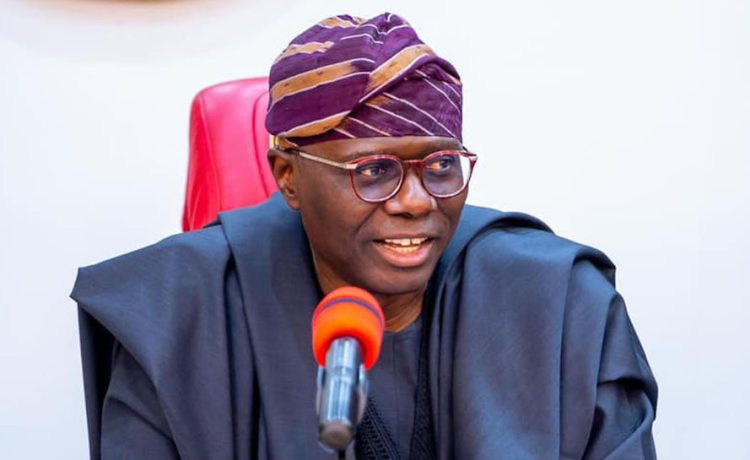
Sanwo-Olu made the remarks while delivering a keynote address in Washington, D.C., after receiving the 2026 Global Transformation and Good Governance Prize.
The award was presented by the Millennium Excellence Award, USA, during activities connected to the 2026 Africa Business Investment Summit.
Speaking on the theme, “Lagos and the Future of African Investment,” the Governor presented Lagos as an example of how urban governance, infrastructure development and private-sector partnerships could support economic transformation.
Sanwo-Olu Receives 2026 Global Transformation and Good Governance Prize
The award ceremony was held at the Warner Theatre in Washington, D.C.
It formed part of the wider 2026 Africa Business Investment Summit organised by the Millennium Excellence Foundation.
The summit was held at the MGM National Harbor in Oxon Hill, Maryland.
Sanwo-Olu received the Global Transformation and Good Governance Prize and dedicated the recognition to the people of Lagos State.
The Governor said he accepted the award on behalf of more than 25 million residents of the state.
He also expressed appreciation to the Asante Crown and the Millennium Excellence Foundation for the recognition.
The Governor used the occasion to highlight Lagos’ economic growth and the policies his administration believes are strengthening the state’s position as a major investment destination.
Lagos Remains a Major Economic Centre
Sanwo-Olu said Lagos occupies less than 0.5 per cent of Nigeria’s total landmass.
However, the state has grown into one of Africa’s most significant urban economies.
According to the Governor, Lagos has a population larger than that of the Netherlands and contributes more than one-quarter of Nigeria’s economic output.
He said the Lagos economy is valued at approximately $259 billion when measured by purchasing power.
Sanwo-Olu described the state as the second-largest city economy in Africa.
He also pointed to the state’s 2026 budget of N4.4 trillion.
According to him, more than half of the budget is allocated to capital expenditure.
The Governor said Lagos is working to strengthen its financial independence through internally generated revenue.
He disclosed that the state’s internally generated revenue for the year was projected to exceed N3 trillion.
Lagos Builds Investment Through Innovation and Technology
Sanwo-Olu also highlighted the growing importance of Lagos’ technology ecosystem.
He said Lagos had been ranked by Startup Genome as the leading startup ecosystem in sub-Saharan Africa.
According to the Governor, the ecosystem has been valued at $8.6 billion.
He said Lagos is home to three active unicorns and maintains one of the strongest technology talent bases in the region.
The Governor said technology and innovation are becoming increasingly important to the future of African cities.
For Lagos, the growth of startups and digital businesses represents an opportunity to create new jobs and attract international investment.
The state is increasingly positioning itself as a destination for technology entrepreneurs and investors.
Lekki Port and Refinery Drive Industrial Development
Sanwo-Olu also pointed to major infrastructure projects as evidence of Lagos’ economic transformation.
He cited the $1.5 billion Lekki Deep Sea Port as a major development in Nigeria’s maritime and logistics sector.
According to the Governor, the port overtook Apapa in 2025 to become Nigeria’s leading port by cargo throughput.
He said the Lekki facility now handles about 40 per cent of Nigeria’s cargo.
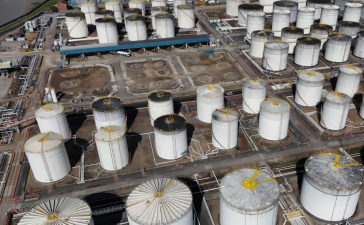
The Governor also highlighted the 650,000-barrel-per-day Lekki Refinery.
The facility, he said, represents a significant shift from the export of crude oil towards domestic refining and higher-value petroleum production.
Together, the port and refinery are expected to strengthen industrial activity and create new opportunities across manufacturing, logistics and related sectors.
Rail and Water Transport Projects Expand Lagos Mobility
Transportation infrastructure was also a major focus of the Governor’s presentation.
Sanwo-Olu said the Lagos Rail Mass Transit Blue Line, described as West Africa’s first electric urban railway, has transported more than eight million passengers.
He also said new eight-car trains had been procured for the Red Line.
The additional trains are expected to increase the capacity of the rail system.
According to the Governor, the Red Line could eventually move up to 500,000 passengers daily.
Sanwo-Olu also highlighted the Omi Eko water transport project.
The project is backed by €410 million in funding.
It is expected to deliver 75 electric ferries, 25 terminals and 15 water transport routes.
The initiative forms part of efforts to develop Lagos’ waterways as an alternative transport network.
Lagos Targets $1 Trillion Economy by 2052
Sanwo-Olu said Lagos had set a long-term target of becoming a $1 trillion economy by 2052.
He said achieving that objective would require sustained investment in infrastructure, technology and human capital.
The Governor also emphasised the importance of optimism and resilience among Lagos residents.
He referred to the popular Yoruba expression, “Èkó ò ní bàjẹ́,” meaning that Lagos will not spoil.
According to him, the expression reflects the determination of residents to continue building and improving the state.
The ambition to grow Lagos into a trillion-dollar economy will depend on the ability of the state to maintain economic growth while managing challenges associated with rapid urbanisation.
African Cities Must Take Centre Stage
Sanwo-Olu said Africa is expected to add nearly one billion urban residents by 2050.
He argued that the expected population growth means cities must become central to Africa’s economic strategy.
African governments, he said, must pay closer attention to the capacity of individual cities to attract investment and provide infrastructure.
The Governor urged investors to move beyond viewing Africa as a single economic bloc.
Instead, he called for greater attention to individual cities.
According to him, investors should examine the quality of governance, infrastructure, business environment and economic opportunities available in specific urban centres.
Governance Will Shape Africa’s Urban Future
Sanwo-Olu’s address placed governance at the centre of Africa’s investment conversation.
He argued that investors are increasingly interested in cities that can demonstrate clear economic policies, reliable infrastructure and long-term planning.
As African cities continue to grow, governments will face increasing pressure to provide housing, transportation, energy and other essential services.
The ability to manage these challenges could determine which cities emerge as major investment destinations.
For Lagos, the Governor believes the combination of infrastructure, innovation and private-sector participation provides a foundation for future growth.
The broader message from his Washington address was clear.
Africa’s economic future will increasingly be shaped by the cities where people live, businesses operate and investment is deployed.
As competition for global capital intensifies, Sanwo-Olu said African cities must position themselves to compete.
For Lagos, the journey towards a projected $1 trillion economy has been set.
The challenge now will be translating infrastructure projects, innovation and governance reforms into sustained economic growth and improved opportunities for millions of residents.