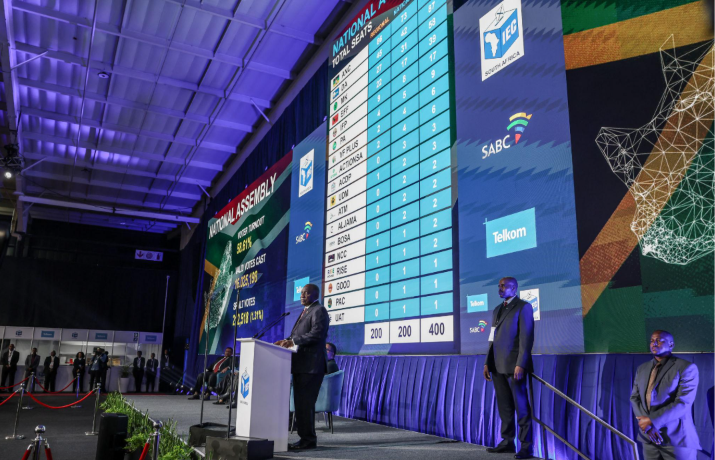
South Africa’s 2026 local government election results have highlighted the country’s increasingly competitive political environment, with several parties securing municipal representation and a significant number of councils requiring coalition arrangements to establish governing majorities.
The official declaration of the results provides an important picture of the distribution of political power across the country’s municipalities.
According to the South African government, the African National Congress (ANC) secured outright control in 51 municipalities and emerged as the leading party in 120 municipalities.
The Democratic Alliance (DA) achieved outright control in 12 municipalities and became the leading party in 29 municipalities.
The Inkatha Freedom Party (IFP) secured outright control in five municipalities and emerged as the leading party in 19 municipalities.
Meanwhile, the uMkhonto weSizwe Party (MK Party) achieved outright control in three municipalities and became the leading party in 18 municipalities.
Rise Tsantsabane Communities also secured outright control in one municipality.
These figures demonstrate that political influence remains distributed among several parties, creating a complex environment for local administration.
One of the most significant findings from the results is the number of municipalities without a party holding an outright majority.
Of the 213 municipalities covered by the declaration, only 72 councils had a party that secured an outright majority of seats.
The remaining 127 councils were classified as hung councils because no political party obtained more than 50 per cent of the seats.
Hung councils are municipalities where political parties must negotiate with other parties or independent representatives to establish a governing arrangement.
This means that coalition negotiations will play an important role in determining the leadership and administration of many local governments.
The development is significant because municipal governments are responsible for delivering essential public services to residents.
These include water supply, sanitation, electricity distribution in relevant municipalities, local roads, waste management and other community services.
The ability of political parties to negotiate stable governing arrangements could therefore influence the effectiveness of local administration.
Coalition governments can create opportunities for cooperation between political groups with different political priorities.
However, they can also face challenges when disagreements emerge over leadership positions, policy decisions and the distribution of responsibilities.
Frequent disagreements within coalition arrangements can affect budget approvals, infrastructure projects and the implementation of municipal development plans.
For residents, the main concern is whether political negotiations will produce stable administrations capable of addressing local needs.
The ANC remains an important force in municipal politics, retaining outright control in 51 municipalities and leading in 120.
However, the results also show that other political parties have established significant representation.
The DA’s outright control of 12 municipalities and leading position in 29 reflects its continuing influence in local government.
The IFP and MK Party also secured municipal influence, indicating that the political environment remains competitive across different parts of the country.
Other parties and independent candidates collectively received 22.97 per cent of the vote and secured representation across municipal councils.
This further demonstrates that political participation is not limited to the country’s largest political organisations.
The results are also important for South Africa’s broader democratic development.
Local government elections provide citizens with an opportunity to assess the performance of political parties and decide which representatives should manage their communities.
Issues such as unemployment, service delivery, infrastructure maintenance, corruption and access to basic amenities frequently influence voters’ decisions.
Municipalities also play an important role in creating conditions that support local economic development.
Effective local administrations can encourage business investment by improving infrastructure, providing reliable services and creating a predictable environment for commercial activities.
Conversely, political instability and weak service delivery can discourage investment and increase operating costs for businesses.
The large number of hung councils therefore places additional responsibility on political parties to negotiate arrangements that prioritise governance rather than political interests alone.
The official results also recorded spoilt votes at 1.84 per cent.
As the new municipal leadership structures take shape, attention will turn to coalition agreements, administrative appointments and the ability of councils to deliver on their responsibilities.
Ultimately, the success of the elections will be measured not only by the distribution of seats but also by whether elected representatives can improve public services and strengthen accountability at the local level.