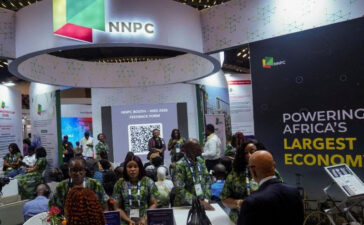
Speaking at the forum, Ibrahim encouraged Chinese investors to look beyond conventional trading activities and establish businesses that would contribute directly to Nigeria’s economic development.
He stressed that Nigeria and China had maintained diplomatic and economic relations for 55 years, providing a strong foundation for deeper cooperation between businesses in both countries.
According to him, the next phase of the relationship should focus on practical investments that would produce measurable economic benefits, including factories, employment opportunities and increased trade.
Ibrahim highlighted Nigeria’s large consumer market, noting that the country offers access to more than 200 million people.
He also pointed to the opportunities available through the African Continental Free Trade Area (AfCFTA), which provides access to a wider African market of approximately 1.3 billion people.
The NACCIMA president described Nigeria as a strategic gateway to the African market, encouraging Chinese companies to consider the country as a destination for expanding their business operations.
He also called for stronger collaboration between Nigerian and Chinese businesses, particularly in areas where foreign expertise, technology and capital could support local production.
Key Sectors Identified for Chinese Investment
The forum attracted investors and business executives from several industries considered important to Nigeria’s economic diversification and industrial development.
These included agribusiness, mining and mineral processing, pharmaceuticals, automobile production, renewable energy and manufacturing.
Nigerian business executives and public-sector representatives also presented investment-ready projects, business ideas and proposals to the Chinese delegation.
The presentations were aimed at attracting investors willing to establish partnerships, finance projects and participate in business ventures across the country.
The mining sector, for instance, offers opportunities for investment in mineral exploration, processing and value addition.
Rather than exporting raw minerals, Nigeria has continued to seek investments that would support local processing and create additional value within the domestic economy.
Agriculture also remains an important area for cooperation, particularly in mechanisation, food processing, storage, technology and agricultural value chains.
In manufacturing, partnerships with Chinese companies could support the development of local production facilities, improve access to technology and reduce dependence on imported finished products.
Renewable energy and pharmaceuticals were also highlighted as sectors where investment could strengthen domestic capacity and improve access to essential products and services.
Nigeria Seeks to Move Beyond Conventional Trade
A major objective of the forum was to encourage a shift from traditional trade relationships towards investment-led economic cooperation.
For many years, Nigeria-China commercial relations have involved significant exchanges of manufactured goods, machinery, industrial equipment and other products.
However, Nigerian business leaders are increasingly seeking partnerships that would encourage Chinese companies to establish production facilities in Nigeria rather than relying solely on exporting finished products into the country.
This approach could support technology transfer, skills development, local employment and the growth of domestic industries.
Nigeria’s Consul-General in Guangzhou, Ambassador Mairo Musa Abbas, also emphasised the importance of moving beyond conventional trade.
She noted that the potential of the economic relationship between Nigeria and China remained largely untapped.
According to her, the objective should be to develop a more productive partnership driven by investment, local manufacturing, technology transfer, industrial development and job creation.
She also reaffirmed the Consulate’s commitment to promoting economic diplomacy and helping Nigerian and Chinese businesses identify investment opportunities.
The Consulate is expected to continue working with NACCIMA and Chinese trade organisations to facilitate business introductions and provide guidance to investors interested in Nigeria.
Trade Organisations Strengthen Business Cooperation
The forum was organised through collaboration between NACCIMA, the China Chamber of International Commerce (CCOIC), the Consulate General of Nigeria in Guangzhou, the China Council for the Promotion of International Trade (CCPIT) and Window of Canton.
Its timing alongside the 140th Canton Fair provided an opportunity to connect Nigerian businesses with international investors and Chinese companies participating in one of the country’s major trade exhibitions.
The engagement also provided a platform for Nigerian business representatives to present specific projects and explore potential partnerships with prospective investors.
The Guangzhou investment engagement is part of broader efforts to strengthen commercial relationships between the two countries.
According to reports on the event, the organisers are seeking to translate the discussions into practical business opportunities rather than limiting cooperation to meetings and memoranda of understanding.
The Guangzhou Chamber of Commerce’s official report also confirmed the participation of more than 200 representatives from Nigerian and Chinese businesses and institutions at a related Nigeria-China investment matchmaking engagement.
gzccoic.cn+1
Investment Opportunities Could Support Nigeria’s Economic Growth
The renewed push for Chinese investment comes as Nigeria continues to pursue economic diversification, expand domestic production and attract foreign direct investment.
Increased investment in manufacturing, agriculture, mining and renewable energy could help strengthen the country’s productive capacity.
It could also create employment opportunities, improve industrial skills and support the development of businesses supplying goods and services to local and international markets.
For Nigeria, however, attracting investment will require more than presenting opportunities to foreign companies.
Investors will also consider infrastructure, electricity supply, access to foreign exchange, regulatory consistency, security and the ease of doing business before committing substantial capital.
Consequently, the success of the NACCIMA initiative will depend on how effectively the proposals presented at the forum translate into actual investments and operational businesses.
The association’s call also places greater emphasis on partnerships that provide long-term benefits to both countries.
As Nigeria and China continue to strengthen their commercial relationship, the focus will increasingly be on whether the engagements can produce more factories, stronger local industries, technology transfer and sustainable employment.
For NACCIMA, the ultimate objective is to ensure that Nigeria benefits from its relationship with China through increased investment, improved production capacity and expanded access to international markets.