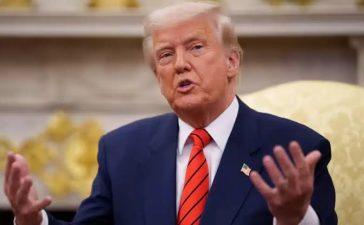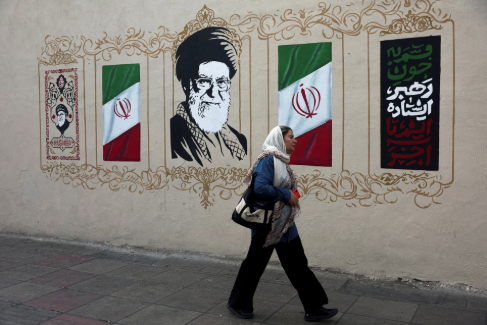
Iranian officials have welcomed the Democratic Party’s sweeping victory in the 2026 United States midterm elections, describing the result as a setback for President Donald Trump’s political agenda and his administration’s approach to the conflict involving Iran.
The election outcome has attracted international attention because of its potential implications for Washington’s foreign policy and the future direction of US relations with Tehran.
Democrats secured majorities in both the House of Representatives and the Senate, ending unified Republican control of Congress.
The results were widely interpreted as a major political setback for Trump, whose administration has faced growing criticism over economic pressures and the ongoing conflict with Iran.
According to a report published by CBS News on November 4, Iranian officials quickly interpreted the Republican losses as evidence that American voters were dissatisfied with the war and its economic consequences.
Mohammad Bagher Ghalibaf, Iran’s parliamentary speaker, welcomed the result and argued that American voters had rejected the conflict.
His comments reflected Tehran’s position that the military confrontation has placed additional pressure on American households through higher energy costs and broader economic uncertainty.
The conflict involving Iran has become an important issue in US domestic politics because of its implications for energy prices, national security and government spending.
Rising energy costs can affect transportation, manufacturing and household budgets, making foreign policy developments an important economic concern for voters.
The election results therefore provide an indication of how international conflicts can influence domestic political decisions.
However, the Democratic victory does not automatically mean that Washington will change its approach towards Iran.
The incoming Congress will have a significant role in legislative oversight, funding decisions and discussions surrounding US foreign policy.
Nevertheless, the president retains important constitutional powers in directing foreign policy and serving as commander-in-chief.
This means that any major change in the United States’ relationship with Iran will depend on decisions taken by the administration, Congress and relevant diplomatic institutions.
The Democratic victory could, however, increase pressure on the White House to explain its military decisions and the economic consequences of the conflict.
Lawmakers may also seek greater transparency regarding the cost of military operations and the government’s strategy for achieving a lasting resolution.
The election has also attracted reactions from other international leaders.
According to CBS News, Spanish Prime Minister Pedro Sánchez welcomed the results, describing them as evidence of a changing political environment.
European Union foreign policy chief Kaja Kallas also expressed hope that the new Congress would strengthen cooperation with European countries, particularly regarding support for Ukraine.
Russia, meanwhile, indicated that the outcome could complicate its relationship with the United States, although Russian officials maintained that their foreign policy positions would not automatically change.
These reactions demonstrate the wider international importance of the US midterm elections.
The United States remains a major participant in international security, global trade, energy markets and diplomatic negotiations.
Changes in its domestic political environment can therefore influence relationships with governments across different regions.
For Iran, the election result provides an opportunity to highlight domestic American dissatisfaction with the conflict. However, it remains uncertain whether the new political balance will lead to significant changes in the administration’s military or diplomatic strategy.
The immediate priority for international observers will be to monitor statements from Washington, congressional discussions and any developments concerning negotiations with Tehran.
The conflict has already demonstrated the close relationship between international security and economic stability.
Higher energy prices can affect households and businesses, while uncertainty surrounding military operations can influence investment decisions and international trade.
Ultimately, Iran’s reaction to the Democratic victory reflects the political importance of the US elections beyond American borders.
Although the election has changed the balance of power in Congress, the future