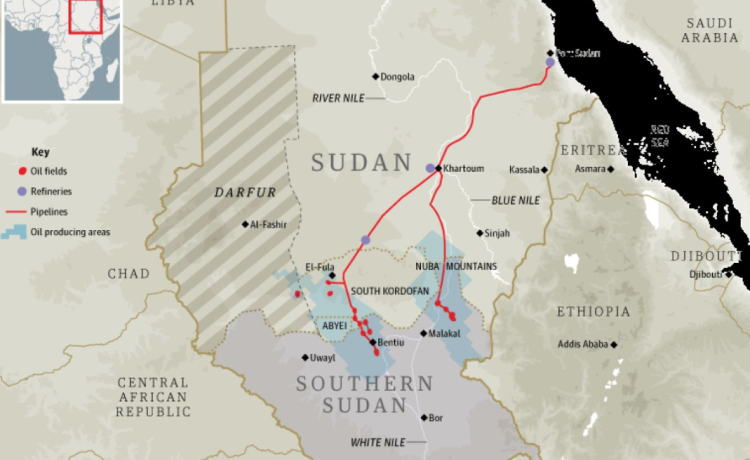
Sudan’s ongoing conflict continues to threaten essential infrastructure, with attacks on electricity facilities worsening the difficulties facing communities already struggling with insecurity, displacement and limited access to basic services.
The destruction and disruption of power infrastructure have become major concerns because electricity is essential to the operation of hospitals, water facilities, communication networks and other important public services.
Recent developments reported by international media indicate that the conflict between the Sudanese Armed Forces (SAF) and the paramilitary Rapid Support Forces (RSF) has increasingly affected infrastructure across different parts of the country.
According to the Council on Foreign Relations’ Global Conflict Tracker, Sudanese government forces accused the RSF of carrying out strikes on power infrastructure in Abu Hamad and Al-Dabbah on November 1, 2026. The reported attacks disrupted electricity supplies to residents.
The tracker also documented earlier drone strikes against electrical infrastructure in October, including attacks on power stations and facilities serving large populations.
These incidents illustrate how the conflict has expanded beyond direct fighting between armed groups to affect facilities that civilians depend on for their daily activities.
Electricity is particularly important for healthcare delivery. Hospitals require reliable power to operate medical equipment, preserve medicines and vaccines, maintain emergency services and support patients who require continuous treatment.
When electricity supplies are interrupted, medical facilities may be forced to depend on generators. However, generators require fuel and regular maintenance, both of which can become difficult to obtain during conflict.
Water supply is another major concern. Many water treatment and distribution facilities depend on electricity to pump and process water.
Power outages can therefore affect access to clean drinking water, increasing the risk of disease outbreaks, especially among displaced people living in crowded communities.
The broader humanitarian situation in Sudan remains extremely serious.
The war began in April 2023 following a power struggle between the Sudanese Armed Forces and the Rapid Support Forces. What initially developed into a struggle for control of the country’s government has evolved into a prolonged conflict involving widespread destruction, displacement and severe humanitarian needs.
The fighting has affected major urban centres and communities across different regions. Millions of people have been displaced from their homes, while access to food, healthcare and other essential services remains limited in many areas.
The conflict has also complicated the delivery of humanitarian assistance. Aid organisations frequently face security restrictions, damaged roads and difficulties reaching communities that require emergency support.
Another concern is the increasing use of drones in the conflict. Drone operations can strike infrastructure far from conventional front lines, making it difficult for civilian facilities to remain protected.
However, responsibility for individual attacks must be established through credible investigations. Accusations made by parties involved in the conflict should not automatically be treated as independently confirmed findings.
The diplomatic consequences are also becoming increasingly important. On November 4, 2026, Sudan’s government accused Ethiopia of hosting drone launch sites used by the RSF. Ethiopia responded by ordering six Sudanese diplomats to leave the country, according to developments documented by the Council on Foreign Relations.
Such developments show how Sudan’s conflict is creating tensions beyond its borders, particularly among countries with strategic interests in the Horn of Africa.
The international community has repeatedly called for an end to the fighting and improved humanitarian access. However, efforts to achieve a lasting ceasefire have faced significant difficulties.
For ordinary Sudanese citizens, the immediate concern remains survival and access to basic necessities.
Restoring electricity infrastructure, protecting hospitals and water facilities, and allowing humanitarian organisations to reach affected populations are important steps towards reducing civilian suffering.
The attacks on power facilities demonstrate that the consequences of the conflict extend beyond the battlefield. Unless essential infrastructure is protected and meaningful peace efforts advance, communities across Sudan will continue to face serious challenges.
Source: Council on Foreign Relations, Global Conflict Tracker, updated November 4, 2026; Associated Press reporting on Sudan’s power infrastructure.