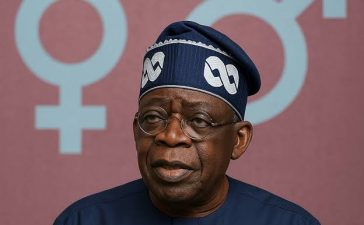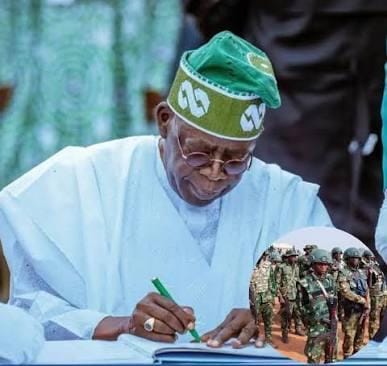
President Bola Tinubu has defended his decision to remove Nigeria’s petrol subsidy, saying he has no regrets about the policy or his administration’s broader economic reforms. The remarks were reported on October 20 following an appearance at a City Boys Movement retreat in Abuja.
Tinubu’s position reflects his government’s continued argument that difficult economic decisions were necessary to address the country’s financial challenges and reduce dependence on borrowing. The subsidy removal, announced on the day he took office in May 2023, has remained one of the most debated policies of his presidency.
Supporters of the reform argue that subsidy spending placed a heavy burden on public finances and that the savings could be redirected towards infrastructure and public services. Critics, however, point to higher transport costs, rising prices and the pressure on households and small businesses.
Finance Minister Taiwo Oyedele also reportedly warned that even a signal that the government might restore the subsidy could put further pressure on the naira. The opposition African Democratic Congress questioned the basis for the currency projection and called for the assumptions behind it to be explained.
The debate highlights the challenge facing the administration as Nigeria approaches the 2027 general elections. The government must defend its reform agenda while responding to public concerns about the cost of living, jobs and purchasing power.
The political significance of Tinubu’s comments is that the administration appears unwilling to reverse course simply because the reforms remain unpopular in some quarters. However, the long-term assessment of the policy will depend on whether Nigerians experience measurable improvements in economic conditions.
The government’s ability to communicate how savings are used, strengthen social support and demonstrate progress on inflation and employment will be central to public confidence.
Tagline: Tinubu stands by his economic reforms as debate over the cost of living continues.
Meta description: President Bola Tinubu defends petrol subsidy removal and economic reforms as Nigerians debate living costs and the impact of government policies.
SEO slug: tinubu-defends-fuel-subsidy-removal-october-2026
Hashtags: #Tinubu #FuelSubsidy #NigeriaPolitics #EconomicReforms
Report reference:
2. INEC Plans Voting Centres for Displaced Persons in Plateau State
Source: Punch Newspapers, October 20, 2026
The Independent National Electoral Commission (INEC) is planning to establish voting centres for internally displaced persons (IDPs) in nine local government areas of Plateau State ahead of Nigeria’s 2027 general elections.
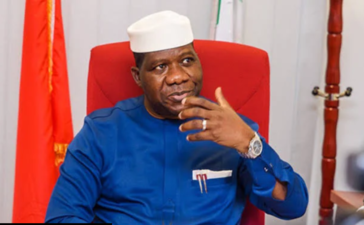
Plateau State Resident Electoral Commissioner, Professor Samuel Egwu, disclosed the plan during a multi-stakeholder dialogue on election security in Jos. The proposed locations include Bassa, Barkin Ladi, Riyom, Jos South, Mangu, Kanam, Kanke, Wase and Bokkos.
The initiative addresses a major challenge in Nigerian elections: ensuring that citizens who have been forced to leave their homes because of insecurity can still exercise their constitutional voting rights.
Displacement can create several barriers to participation. People may move far away from their original polling units, lose access to election information or face difficulties travelling to locations where they are registered. Security concerns can also make returning to their communities unsafe.
By planning designated voting centres, INEC hopes to reduce the risk that eligible voters will be excluded because they have been displaced. However, the final implementation will depend on practical arrangements, including voter identification, registration records, access to polling locations and coordination with security agencies.
The proposal is especially significant in Plateau State, where communities have faced repeated security challenges. Election officials must consider not only whether displaced people can vote but also whether voting centres can operate safely and fairly.
The dialogue that produced the announcement brought together election stakeholders, security agencies and community representatives. It was convened by the CLEEN Foundation as part of efforts to improve election security ahead of the 2027 polls.
CLEEN Foundation Executive Director Peter Maduoma said the engagement would lead to a peace accord involving stakeholders. Plateau State Commissioner of Police Faniyan Ayodeji also stressed the importance of responsible conduct by participants in the electoral process.
The success of the proposal will depend on transparent guidelines and effective communication with displaced communities. Voters need clear information about where and how they can cast their ballots, while election officials must ensure that arrangements do not compromise the secrecy or integrity of voting.
INEC’s plan highlights the importance of inclusive elections. Credible polls require more than counting ballots accurately; they also require making reasonable arrangements so that eligible citizens can participate, including those affected by conflict and displacement.
Further details on the implementation timetable and specific voting arrangements will be important as preparations for the 2027 elections continue.
Tagline: INEC moves to protect displaced voters’ participation ahead of the 2027 elections.
Meta description: INEC plans voting centres for internally displaced persons in nine Plateau LGAs to help eligible voters participate in the 2027 elections.
SEO slug: inec-voting-centres-plateau-idps-2027-elections
Hashtags: #INEC #PlateauState #2027Elections #ElectionSecurity
Read the report: Punch Newspapers
3. Peter Obi Says His Message on Diaspora Remittances Was Twisted
Source: Punch Newspapers, October 20, 2026
Peter Obi, the Nigeria Democratic Congress (NDC) presidential candidate for the 2027 general election, has denied asking Nigerians living abroad to abandon relatives who depend on them for financial support.
The former Anambra State governor issued the clarification after comments he made during a town hall meeting with Nigerians in Manchester, United Kingdom, generated criticism and debate.
During the meeting, Obi urged Nigerians abroad to challenge requests for financial assistance from home and encourage their relatives to support capable leaders at the polls. He argued that remittances can provide immediate relief without resolving the underlying problems that leave many Nigerian households dependent on family members overseas.
The remarks attracted criticism from some opposition parties, including the Labour Party, New Nigeria Peoples Party and Social Democratic Party. Critics argued that discouraging financial support could worsen the difficulties faced by families relying on money sent from abroad.
Obi later said his message had been distorted by political opponents. He stressed that he recognised the sacrifices made by Nigerians in the diaspora and appreciated the money they sent home to cover essential needs such as school fees, hospital bills, rent and food.
His clarification focused on the difference between supporting family members and relying on private remittances to make up for shortcomings in public services and economic opportunities. Obi said his concern was that Nigeria should not remain a country where millions of people depend on relatives abroad for basic survival.
The controversy has drawn attention to the important role of diaspora remittances in the Nigerian economy. For many households, money sent by relatives abroad helps cover daily expenses and emergencies. It can also support education, healthcare and small businesses.
At the same time, Obi’s comments have opened a political debate about whether individual financial assistance can ease hardship without addressing its wider causes. His position places governance, job creation and access to essential services at the centre of the discussion.
The issue is politically sensitive because it touches families directly. For people supporting parents, siblings or children at home, remittances are not simply a political statement; they are often a practical response to immediate needs.
As the 2027 election approaches, candidates are likely to face increasing scrutiny over how they intend to reduce poverty, create jobs and improve living standards. Obi’s remarks have placed those questions back into the national conversation, although the public response shows that Nigerians disagree about the best way to connect personal support with political accountability.
The clarification may help explain his intention, but the debate also demonstrates the importance of choosing words carefully when discussing the economic pressures facing millions of households.
Tagline: The NDC presidential candidate says he supports diaspora families and wants Nigeria to reduce dependence on remittances.
Meta description: Peter Obi clarifies his comments on diaspora remittances, saying he never asked Nigerians abroad to abandon their families amid debate ahead of 2027.
SEO slug: peter-obi-clarifies-diaspora-remittances-comments
Hashtags: #PeterObi #NDC #DiasporaRemittances #NigeriaPolitics
Read the report: Punch Newspapers
4. PDP and NDC Threaten Legal Action Over Missing Candidates on INEC List
Source: Punch Newspapers, October 20, 2026
The Peoples Democratic Party (PDP) and the Nigeria Democratic Congress (NDC) have threatened to consider legal action if the Independent National Electoral Commission fails to include candidates they say were omitted from its list for the 2027 general elections.
The dispute comes as political parties work to resolve nomination and documentation issues before the next stage of election preparations. According to reports, the parties want INEC to address the omissions by October 24.
The PDP’s National Publicity Secretary, Mohammed Jungudo, said the party would consider litigation if the issue remained unresolved. He indicated that the party intended to use the available administrative process before moving to court.
The NDC also said it had written to the commission about the matter. Its National Publicity Secretary, Osa Director, reportedly stated that INEC had acknowledged the party’s correspondence but had not provided a substantive response.
Among the candidates reported to be affected are Isa Pantami in Gombe State, Oladipupo Adebutu in Ogun State, Aminu Gwarzo in Kano State and Danjuma Tella La’ah in Kaduna State. The specific circumstances surrounding each candidate may differ, so the cases will need to be assessed individually.
INEC reportedly said the parties failed to submit their membership registers. Such documents are important to the electoral process because they help establish whether party nominations were conducted in accordance with applicable rules and procedures.
The disagreement raises questions about the responsibilities of political parties and the electoral commission. Parties must submit the required information within the prescribed timelines, while INEC must assess submissions and explain its decisions in accordance with the law.
For candidates, omission from an official list can have serious consequences. It may affect their ability to contest an election and force them to seek clarification or legal relief within a limited period. For parties, unresolved nomination disputes can disrupt campaign planning and create uncertainty among supporters.
Legal action is one avenue available to parties that believe an electoral decision has been made incorrectly. However, court proceedings can be time-consuming, and the outcome depends on the evidence presented and the applicable legal requirements.
The dispute also illustrates the importance of early preparation for the 2027 elections. Political parties need to keep accurate membership records, comply with nomination procedures and maintain clear communication with INEC. The commission, in turn, faces pressure to handle disputes transparently and within the law.
As the reported deadline approaches, the key question is whether the parties and INEC can resolve the disagreements through administrative engagement or whether the matter will proceed to court.
The outcome could affect the candidates involved and serve as another test of how electoral disputes are managed ahead of the national polls.
Tagline: The parties demand action on omitted candidates as preparations for the 2027 elections intensify.
Meta description: PDP and NDC threaten legal action if INEC fails to address omitted candidates ahead of the October 24 deadline for the 2027 elections.
SEO slug: pdp-ndc-threaten-legal-action-over-inec-candidate-list
Hashtags: #PDP #NDC #INEC #2027Elections
Source report: Nigeria Civil Society Situation Room — October election news trend
5. Court Dismisses El-Rufai’s ₦120 Million Rights Suit Against Security and Anti-Graft Agencies
Source: Premium Times, October 20, 2026
The Federal Capital Territory High Court in Maitama has dismissed a ₦120 million fundamental rights suit filed by former Kaduna State Governor Nasir El-Rufai against the Department of State Services (DSS), the Economic and Financial Crimes Commission (EFCC), the Independent Corrupt Practices and Other Related Offences Commission (ICPC), and the Attorney-General of the Federation.
The ruling represents a legal setback for El-Rufai, who had brought the case against the government institutions. According to the report, Justice Sylvanus Oriji found that the suit lacked merit and ordered El-Rufai to pay ₦200,000 in costs to each of the four respondents.
The case is significant because disputes involving former public officials and security or anti-corruption agencies often attract public attention. They raise questions about the exercise of government powers, the protection of individual rights and the ability of citizens to challenge official actions through the courts.
A fundamental rights suit allows a person to ask a court to examine whether their legally protected rights have been violated. Such proceedings are separate from the general political debate surrounding a public figure. A court must consider the evidence, the legal arguments and the specific relief requested before reaching a decision.
In this case, the court’s dismissal means El-Rufai did not obtain the relief he sought through the action as reported. The award of costs also places a financial obligation on him in favour of the respondents.
However, the ruling should not automatically be interpreted as deciding every other issue that may exist between El-Rufai and the agencies. The legal effect of a judgment depends on the claims presented, the court’s reasoning and the specific orders made.
The case also highlights the role of the judiciary in resolving disputes between individuals and public institutions. Courts provide a formal process through which claims about government conduct can be examined. Their decisions can affect how parties pursue subsequent legal steps, depending on the relevant procedural rules.
For political observers, the matter comes amid wider public interest in accountability, anti-corruption enforcement and the treatment of prominent political figures. It is important, however, to distinguish the legal outcome from political interpretations of the case.
The dismissal does not by itself establish the truth of every allegation or counter-allegation that may be circulating outside the courtroom. Those questions must be assessed on the basis of the court record and any other properly established evidence.
The ruling is therefore best understood as a decision on the particular rights action before the FCT High Court. Any further development will depend on the parties’ decisions and the applicable legal process.