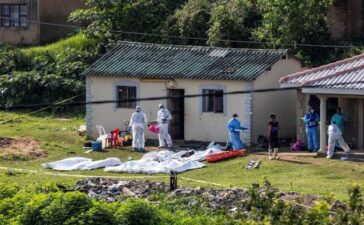
The Africa Centres for Disease Control and Prevention (Africa CDC) has warned that 10 African countries are at risk of Ebola as a major outbreak of the Bundibugyo virus continues to spread across the Democratic Republic of Congo (DRC).
The countries identified as being at risk are Kenya, Rwanda, Tanzania, Angola, Burundi, the Central African Republic, Republic of Congo, Ethiopia, South Sudan and Zambia. The warning is linked to concerns over population movement and the possibility of cross-border transmission.
According to the latest World Health Organisation (WHO) update published on September 25, the DRC had recorded 7,890 confirmed cases and 3,799 deaths as of September 23, giving the outbreak a crude case-fatality ratio of 48.1 per cent. The outbreak had also spread to 63 health zones across seven provinces.
The newly affected areas include Bulu health zone in Sud Ubangi province and Dungu health zone in Haut-Uélé province, with Dungu located near the border with South Sudan. WHO said the geographical expansion has increased the risk of the virus crossing international borders.
Ituri province remains the epicentre of the outbreak, accounting for 6,032 confirmed cases as of September 23. North Kivu is the second most affected province, with 1,480 confirmed cases. WHO said North Kivu has recorded the highest case-fatality ratio in the outbreak, at 59.7 per cent.
The Africa CDC said the situation remains serious despite some improvements in certain areas. In a September 17 assessment, the agency noted that cases and deaths had declined in some hotspots, including Ituri, but transmission was increasing in some health zones, particularly in North Kivu. The agency said the outbreak had not yet clearly reached its peak.
Population movement is a major concern for health authorities. People continue to travel between affected communities and neighbouring countries for trade, work, family reasons and other activities. The United Nations said the outbreak was affecting more than 60 health zones across seven provinces and that IOM was supporting preparedness efforts in the DRC, Uganda and other neighbouring countries.
Uganda, which was previously affected by the same Bundibugyo virus outbreak, has successfully ended its outbreak after completing the required 42-day period without a new confirmed case. WHO and Africa CDC said Uganda’s experience demonstrates the importance of rapid detection, community engagement and strong public-health measures.
However, the response in the DRC remains complicated by conflict, insecurity, displacement and limited access to healthcare. WHO said these challenges are affecting surveillance, contact tracing, infection prevention and timely access to treatment.
Health authorities are therefore increasing surveillance at borders and strengthening preparedness in countries considered at risk. The aim is to detect suspected cases quickly and prevent the outbreak from establishing transmission chains outside the DRC.