Amazon Shipping Disruption Raises Costs
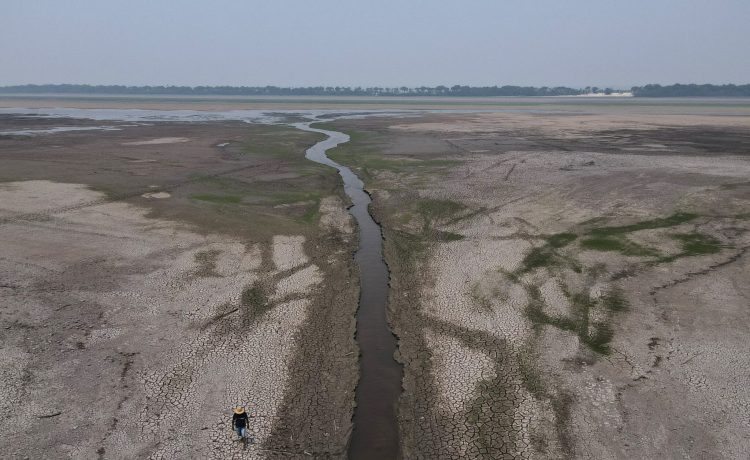
A worsening drought in the Amazon region is creating new challenges for container shipping, with carriers preparing surcharges of up to $1,900 as low water levels threaten maritime connectivity.
The development highlights the growing influence of climate conditions on global shipping operations.
The Amazon River is an important transportation route for Brazil’s northern region.
When water levels fall significantly, vessels can face restrictions on the amount of cargo they can safely carry.
In severe conditions, some shipping operations may require alternative arrangements.
Low Water Limits Vessel Operations
Large commercial vessels require sufficient water depth to operate safely.
When river levels fall, ships may need to reduce their drafts by carrying less cargo.
This creates a difficult economic calculation for shipping companies.
A vessel that carries less cargo may still consume substantial amounts of fuel while operating the same route.
The reduced cargo capacity therefore increases the cost per container.
Shipping companies may respond by introducing additional charges.
According to reports published Monday, carriers are preparing surcharges of up to $1,900 per container as the drought intensifies.
Global Supply Chains Face Climate Risk
The Amazon situation is another example of climate-related disruption affecting maritime logistics.
For decades, supply-chain planning focused primarily on conventional risks such as port strikes, geopolitical conflicts, equipment shortages and extreme weather events.
Climate change is expanding that risk profile.
Low river levels, storms, floods, heatwaves and droughts can all affect maritime transportation.
Companies must therefore increasingly incorporate environmental conditions into logistics planning.
Impact on Cargo Owners
For businesses using the Amazon shipping corridor, higher freight costs could affect the final price of imported and exported goods.
Manufacturers may face higher input costs.
Exporters could experience pressure on profit margins.
Retailers may eventually pass part of the increased logistics cost to consumers.
The impact depends on how long the low-water conditions persist.
If water levels recover quickly, shipping companies may be able to return to normal operations.
If drought conditions continue, however, carriers could maintain surcharges for an extended period.
Shipping Lines Prepare Contingency Plans
Carriers are already examining contingency arrangements to maintain connectivity with Manaus and other destinations.
Alternative transportation methods may become necessary if vessels cannot operate normally.
Such measures can include transloading cargo, using smaller vessels or adjusting sailing schedules.
However, each alternative comes with additional costs.
Smaller vessels may require more trips.
Transloading introduces another handling stage.
Schedule changes can affect inventory management.
Infrastructure Investment Becomes More Important
The situation also raises questions about the resilience of inland waterways.
Ports and logistics operators cannot control rainfall.
However, they can invest in infrastructure and systems that make supply chains more adaptable.
Better water-level monitoring can provide earlier warnings.
Flexible vessel deployment can help operators respond to changing conditions.
Intermodal connections can also provide alternatives when waterways become temporarily inaccessible.
Climate Change and the Future of Shipping
The Amazon drought demonstrates that maritime disruption is not always caused by geopolitical events.
Natural conditions can be equally powerful.
As climate patterns become less predictable, shipping companies will have to build greater flexibility into their networks.
Cargo owners will also need to consider alternative routes and suppliers.
For the maritime sector, resilience is increasingly becoming as important as efficiency.
The Amazon shipping challenge is therefore more than a temporary regional problem.
It is a warning that climate conditions can quickly translate into higher freight costs and supply-chain disruption.
With surcharges reportedly reaching as high as $1,900 per container, businesses connected to the region will be watching water levels closely in the weeks ahead.