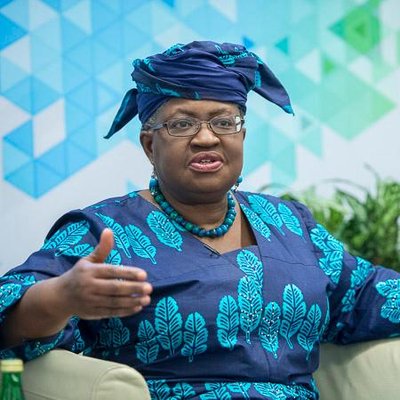
The Director-General of the World Trade Organization (WTO), Ngozi Okonjo-Iweala, has urged the Delta State Government to position the state as a leading industrial and investment destination by taking advantage of opportunities created by the African Continental Free Trade Area (AfCFTA) and the ongoing diversification of global supply chains.
Speaking as the keynote speaker at the Delta State Economic and Investment Summit 2026 in Asaba on Monday, Okonjo-Iweala said changing global trade patterns present a unique opportunity for Delta State to attract investment and become a major player in regional and global value chains.
She explained that businesses and governments are increasingly seeking to reduce geopolitical risks by diversifying supply chains, a trend the WTO describes as “re-globalisation.”
According to her, the shift is creating opportunities for countries and sub-national governments capable of providing a stable investment environment.
Okonjo-Iweala said the AfCFTA, with its market of 1.4 billion people, harmonised standards and integrated infrastructure, offers African economies an unprecedented opportunity to strengthen exports and attract investment.
She urged Delta State to place these opportunities at the centre of its economic development strategy.
“I am convinced that Delta State has the ingredients to become Nigeria’s next great industrial hub, standing alongside Lagos, Kano and Port Harcourt as an engine of the national economy,” she said.
The WTO chief noted that Delta’s emergence as a major economic centre would reduce pressure on existing commercial hubs while contributing significantly to Nigeria’s overall economic growth.
She identified the state’s abundant natural gas reserves, coastline, seaports, fertile agricultural land, solid mineral resources and higher institutions as key competitive advantages for industrialisation.
Commending the state’s fiscal management, Okonjo-Iweala described its debt sustainability and fiscal performance as a strong foundation for long-term development, while urging the government to maintain fiscal discipline.
She stressed that natural resources and government revenue alone would not guarantee development, adding that effective execution, maintenance and strategic prioritisation are essential for sustainable growth.
The former Minister of Finance also endorsed Delta State’s plan to establish Special Economic Zones, describing them as one of the most effective industrial policy tools for attracting manufacturers and investors through improved infrastructure and streamlined regulations.
She called on the state government to collaborate with the Federal Government to provide reliable electricity, gas pipelines, roads, rail connections, water supply and digital infrastructure needed to support industrial parks.
Okonjo-Iweala also advised the government to concentrate investments on two or three high-potential value chains instead of spreading resources too widely, stressing the importance of strengthening production, quality standards, financing and market access.
She identified the blue economy as another area with significant growth potential, urging Delta State to invest in aquaculture, fisheries, marine logistics, ship repair and port services to reduce Nigeria’s dependence on fish imports.
The WTO Director-General further encouraged greater investment in the oil and gas value chain through improved gas pipeline connectivity to industrial zones, saying reliable gas supply would support manufacturing, power generation and mineral processing.
She also highlighted the growing importance of digital infrastructure and artificial intelligence, noting that future trade and commerce would increasingly depend on digital connectivity.
Expressing confidence in Delta State’s future, Okonjo-Iweala said the state is well-positioned to benefit from the global shift towards diversified supply chains, African economic integration under AfCFTA and the increasing role of sub-national governments in driving economic transformation.
She concluded by stating that Delta State’s greatest asset is its people and expressed optimism that sustained reforms and strategic investments would transform the state into a diversified, inclusive and resilient economy.