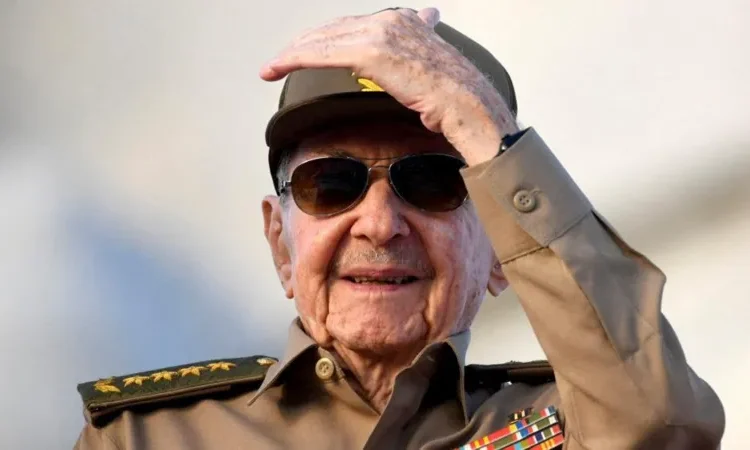
The United States has charged former Cuban leader Raúl Castro with conspiracy to kill US nationals and other offences over the 1996 downing of two civilian aircraft between Cuba and Florida, a case that killed four people, including three Americans.
The indictment, unveiled on Wednesday, accuses Castro and five other individuals of involvement in the shooting down of planes operated by the Cuban-American group Brothers to the Rescue, which had been monitoring Cuban waters at the time.
Raúl Castro, now 94, was Cuba’s armed forces chief at the time of the incident and later served as president of the country from 2008 to 2018. He has long faced international scrutiny over Cuba’s role in the incident.
US Acting Attorney General Todd Blanche announced the charges at Freedom Tower in Miami, stating that Castro also faces counts related to destruction of aircraft and four counts of murder.
“The United States, and President Trump, does not, and will not, forget its citizens,” Blanche said.
The murder charges each carry a potential sentence of life imprisonment or the death penalty under US law.
Cuban President Miguel Díaz-Canel dismissed the indictment as politically motivated, calling it “a political manoeuvre, devoid of any legal foundation.”
The case marks a renewed escalation in US pressure on Cuba’s communist government, which has faced long-standing sanctions, including restrictions on trade and energy supplies that Cuban officials say have contributed to ongoing economic hardship.
US Secretary of State Marco Rubio, in a separate message timed to Cuba’s independence commemorations, accused the Cuban military-linked conglomerate GAESA of contributing to shortages and blackouts across the country.
GAESA controls large segments of Cuba’s economy, including ports, hotels, and fuel distribution networks.
Cuban authorities rejected the allegations, accusing Washington of imposing “collective punishment” on the Cuban population.
Díaz-Canel further warned that the indictment of Castro could be used to justify increased US hostility toward Cuba, including potential military escalation.
He maintained that Cuba’s actions in 1996 were taken in “legitimate self-defence within its jurisdictional waters.”
US officials did not confirm whether they would attempt to physically apprehend Castro but said an arrest warrant has been issued.
Blanche stated that Castro could face prosecution if he enters US jurisdiction, adding, “We expect he will show up here, by his own will or another way.”
Analysts say the case is part of a broader US strategy aimed at increasing pressure on Havana to implement political and economic reforms, although the effectiveness of such measures remains uncertain given Castro’s age and retirement from active politics.
The indictment has drawn strong reactions from Cuban-American communities in Miami, many of whom welcomed the decision and have long sought accountability for the 1996 incident.
The case is expected to further strain already fragile relations between Washington and Havana, which briefly improved during a diplomatic thaw in the Obama era but have since deteriorated significantly.