The United States has launched a series of military strikes on Iranian defence and surveillance facilities in response to the downing of an American Apache helicopter in the Gulf, escalating tensions between Washington and Tehran.
According to the US Central Command (Centcom), the operation targeted Iranian air defence systems, ground control stations, and surveillance radar sites near the strategically important Strait of Hormuz.
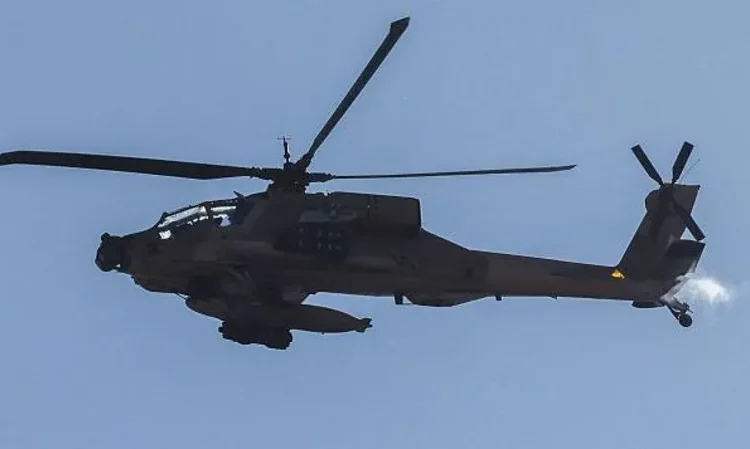
The strikes came after an American Apache helicopter was brought down on Monday while patrolling the waterway. The US military said the attack prompted what it described as a “proportional response.”
In retaliation, Iran’s Islamic Revolutionary Guard Corps (IRGC) announced that it had launched attacks on 21 targets linked to US military installations across the region.
The IRGC said the strikes focused on American bases in Bahrain and Jordan. Meanwhile, Kuwait’s military reported intercepting an attack targeting its territory.
The exchange marks one of the most serious confrontations between the two countries since the outbreak of the regional conflict earlier this year.
Centcom confirmed that the two crew members aboard the downed Apache helicopter were safely rescued by an American sea drone. It was the first publicly acknowledged use of that type of unmanned vessel in a rescue mission.
US officials said Iran used a drone in the attack on the helicopter. However, officials indicated that investigations were ongoing and it remains unclear whether the strike was intentional. Iranian authorities have not formally claimed responsibility for the incident.
Following the US operation, Iranian officials reported damage to civilian infrastructure, including a telecommunications tower and two water storage tanks.
Iranian authorities said the strikes targeted areas in Jask, Sirik, and Qeshm Island, all located near the Gulf.
Centcom later announced that the military mission had been completed, just hours after the first wave of strikes was launched.
While Iran has confirmed retaliatory attacks, US officials have not yet provided details on potential damage to American facilities. Authorities in Bahrain said air raid alerts were activated and claimed Iranian attacks had been successfully repelled.
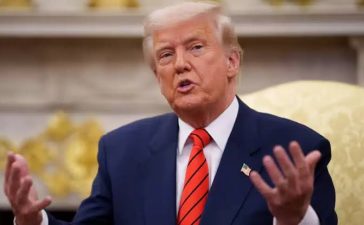
President Donald Trump defended the military response, stating that the United States could not ignore the attack on its aircraft.
“There were two pilots involved, both are safe and uninjured,” Trump wrote on Truth Social. “Nevertheless, the United States must, of necessity, respond to this attack.”
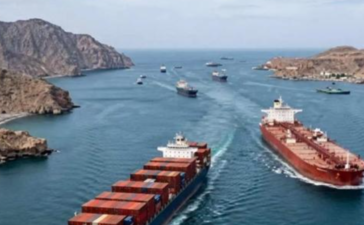
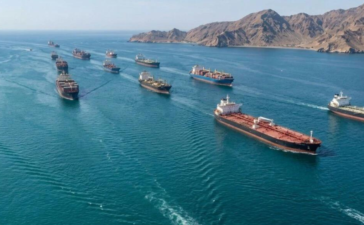
The president also reiterated that the helicopter had been operating in the Strait of Hormuz, one of the world’s most critical shipping routes.
In Washington, House Speaker Mike Johnson revealed that he was present when Trump authorised the renewed military action against Iran.
“We lament that it became necessary,” Johnson said, adding that the United States would “take care of this business.”
Iran responded with strong warnings. Foreign Minister Abbas Araghchi said Tehran would not leave any attack unanswered and accused Washington of escalating tensions despite setbacks on the battlefield.
“Despite its defeats on the battlefield, the US opted to test our determination,” Araghchi wrote on X.
He also urged foreign military forces to leave the region, warning that their presence increased the risk of further confrontation.
The latest escalation comes despite ongoing diplomatic efforts to secure a broader agreement aimed at ending the regional conflict.
Trump recently suggested that negotiations between Washington and Tehran were nearing completion and expressed optimism that a deal could be reached within days.
“We’re in the final throes of what will be a very, very good deal,” Trump told reporters, adding that an agreement could be reached within “two or three days.”
The renewed hostilities also follow fresh Israeli military operations in southern Lebanon, a development that Tehran had warned could trigger additional retaliatory actions.
Although Israel and Iran had halted direct attacks after a brief exchange of fire over the weekend, the latest military actions have renewed concerns that the fragile ceasefire could collapse.
With tensions rising across the Gulf and diplomatic negotiations continuing, international observers are closely monitoring developments amid fears that the conflict could widen further.