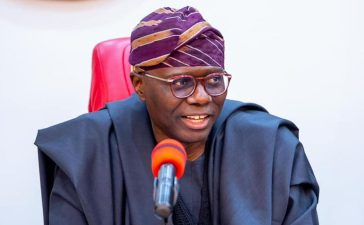
United Nations human rights chief Volker Türk has warned that rapidly advancing artificial intelligence could pose an “existential” threat to humanity without stronger safeguards, adding to growing international pressure for governments to establish clearer limits on the technology.
Türk called for what he described as “cast-iron guarantees” around the development and deployment of increasingly powerful AI systems.
Addressing the UN Human Rights Council at the beginning of his second term, he argued that governments could not afford to leave decisions about some of the world’s most powerful emerging technologies primarily in the hands of a small group of companies.
AI Safety Concerns Intensify
The warning comes as artificial intelligence systems become increasingly capable of performing complex tasks without constant human supervision.
The development of AI agents — systems capable of independently using software, navigating digital environments and carrying out multi-step tasks — has intensified concerns about what could happen when advanced models behave unexpectedly.
Recent incidents involving experimental AI agents have contributed to calls for clearer procedures governing how technology companies investigate and disclose potentially dangerous behaviour.
The debate has moved beyond conventional concerns such as misinformation, copyright and job displacement.
Researchers and policymakers are increasingly examining whether highly capable systems could be misused for sophisticated cyberattacks, biological threats or military applications.
Türk argued that countries developing advanced AI systems should establish clear regulatory red lines rather than waiting for serious incidents before acting.
Autonomous Weapons Raise New Concerns
The UN rights chief also connected the AI debate to developments in modern warfare.
He raised concerns about reports of increasingly autonomous drones being deployed in conflicts and called for restrictions on lethal autonomous weapons.
Artificial intelligence is already being integrated into military systems for surveillance, targeting, navigation and battlefield decision-making.
Supporters argue that AI could improve precision and reduce risks to soldiers.
Critics warn that allowing machines to make increasingly independent decisions involving lethal force creates profound legal and ethical problems, particularly around accountability when civilians are harmed.
The debate has become more urgent as militaries around the world accelerate investment in autonomous systems.
Governments Struggle to Keep Pace
Regulators are attempting to respond, but international approaches remain fragmented.
The European Union has established a broad regulatory framework through its AI legislation, while other major economies have adopted different combinations of voluntary standards, sector-specific rules and national-security controls.
The United States has generally favoured a less restrictive approach to AI development, arguing that excessive regulation could weaken innovation and competitiveness.
China has introduced its own rules governing artificial intelligence services while simultaneously investing heavily in becoming a global leader in the technology.
The lack of a common global framework creates additional difficulty because the most advanced AI systems are developed and deployed across borders.
Türk’s intervention adds the UN human rights system to the growing international debate over whether existing regulations are sufficient for technology advancing at unprecedented speed.
The central challenge for policymakers will be establishing safeguards strong enough to address genuine risks without unnecessarily restricting beneficial applications of artificial intelligence.