Nigeria’s 2027 presidential contest has entered a decisive phase after the Independent National Electoral Commission, INEC, published the final list of presidential and vice-presidential candidates, confirming 18 contenders for the country’s highest political office.
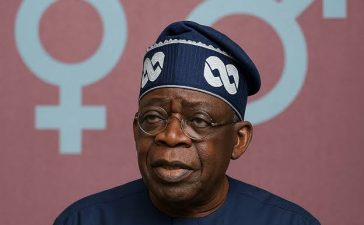
President Bola Ahmed Tinubu will seek a second term under the All Progressives Congress, APC, with Vice President Kashim Shettima remaining his running mate.
Former Vice President Atiku Abubakar will contest on the platform of the African Democratic Congress, ADC, alongside former Rivers State Governor and ex-Transportation Minister Rotimi Amaechi.
Former Anambra State Governor Peter Obi, meanwhile, is the presidential candidate of the Nigeria Democratic Congress, NDC, with former Kano State Governor Rabiu Musa Kwankwaso as his running mate.
The final list significantly clarifies a political landscape that has undergone months of defections, coalition negotiations and party realignments.
Makinde, Donald Duke Also Enter Race
The contest extends beyond the three leading political figures.
Oyo State Governor Seyi Makinde is running under the Allied Peoples Movement, APM, with Musa Lawal Daura as his running mate.
The Peoples Democratic Party, PDP, is fielding Sandy Ojang Onor, while former Cross River State Governor Donald Duke is contesting on the platform of the Peoples Redemption Party, PRP.
INEC’s timetable fixes the presidential and National Assembly elections for January 16, 2027.
That leaves the candidates with only months to persuade an electorate confronting high living costs, insecurity and questions over the direction of the economy.
Opposition Fragmentation Could Shape Contest
The final list also confirms something increasingly important about the opposition: attempts to establish a single anti-APC presidential ticket have not succeeded.
Opposition politicians had earlier committed themselves to working towards a consensus candidate capable of confronting Tinubu.
Instead, Atiku and Obi will enter the election under separate platforms.
That could prove strategically important.
Nigeria elects its president through a combination of the national vote and constitutionally required geographical spread, meaning the distribution of opposition support across states can be as consequential as overall popularity.
Atiku, Obi and Kwankwaso all command different political constituencies, while Tinubu enters the race with the organisational advantage of the governing APC.
Election Becomes Referendum on Tinubu
The campaign is also likely to become a referendum on Tinubu’s first term.
His administration has implemented far-reaching economic reforms, including removal of the petrol subsidy and changes to the foreign-exchange system.
Those measures have attracted investors and helped address some long-standing distortions, but they also contributed to severe cost-of-living pressures.
Reuters reported in August that economic hardship and insecurity were emerging as central vulnerabilities for the APC as campaigning gathered momentum.
The opposition will attempt to turn those frustrations into votes.
Tinubu, meanwhile, will need to convince Nigerians that the disruption associated with his reforms is producing an economy capable of delivering stronger growth and improved living standards.
With INEC’s final list now published, the period of speculation over who will contest is largely over.
The next phase is about who can build the broadest electoral coalition across Nigeria’s regions, generations and increasingly demanding electorate.