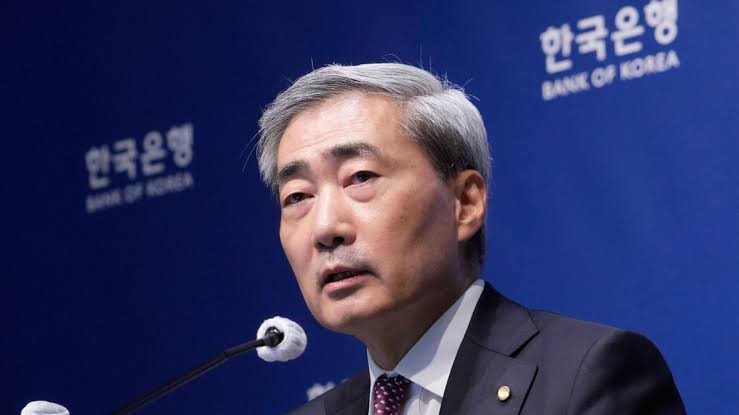
South Korea’s central bank has raised its benchmark interest rate again, continuing efforts to control inflation and maintain economic stability.
The Bank of Korea increased its key interest rate by 25 basis points to 3.00 per cent.
The decision represented another important step in the country’s monetary policy response to continuing price pressures.
Central banks around the world face a difficult challenge.
They must control inflation without slowing economic growth too aggressively.
South Korea’s latest decision shows that policymakers remain concerned about the risks created by persistent inflation.
Higher Rates Affect Businesses and Consumers
Interest-rate increases can have a direct effect on businesses.
Companies that rely heavily on borrowing may face higher financing costs.
This can affect investment plans, expansion and hiring decisions.
Consumers can also feel the impact through higher borrowing costs on mortgages and other forms of credit.
However, central banks use higher interest rates because they can help reduce excessive demand and slow the pace of price increases.
The challenge is finding the right balance.
If rates remain too low, inflation may become more difficult to control.
If they rise too quickly, economic growth could weaken.
Technology and Trade Remain Important
South Korea’s economy is closely connected to global trade.
The country is a major producer of semiconductors, electronics, automobiles and industrial products.
Global demand for these products plays an important role in the country’s economic performance.
The continuing expansion of artificial intelligence has supported demand for advanced semiconductor products.
However, businesses still face uncertainty from global inflation, currency movements and geopolitical developments.
Investors Watch the Currency
Interest-rate decisions can also influence currency markets.
Higher rates may make a country’s financial assets more attractive to international investors.
However, currency movements are also influenced by global economic conditions and the monetary policies of other major economies.
South Korea’s latest decision will therefore be closely watched by investors across Asia.
Global Central Banks Face Similar Questions
The decision by the Bank of Korea reflects a broader global debate.
Central banks are trying to determine whether inflation is moving back towards their long-term targets.
Financial markets are closely monitoring policymakers in the United States, Europe and Asia.
The direction of interest rates will influence borrowing costs, investment decisions and stock-market performance.
For South Korean businesses, the latest increase means financing conditions are likely to remain tight.
Companies will need to manage costs carefully while preparing for changes in global demand.
The Bank of Korea has signalled that inflation remains a key concern.
Its latest action demonstrates that policymakers are prepared to continue responding if price pressures remain persistent.
For businesses and investors, the message is clear.
Monetary policy will remain an important factor shaping economic conditions in the months ahead.