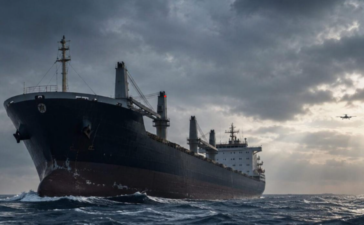
Piracy off the coast of Somalia is making a worrying comeback, with pirate groups carrying out a series of hijackings that have pushed maritime insecurity in the Horn of Africa to its highest level in years.
Since late April, eight vessels have been hijacked by Somali pirates, according to recent reports. Two of the incidents occurred within just two weeks in August, including the seizure of an oil tanker linked to Iran and the Cameroon-flagged Lutuf, which was carrying military equipment for Turkey.
The resurgence comes after years of relative calm in Somali waters. International naval patrols and improved security measures had previously helped bring piracy under control after Somali pirate networks carried out more than 1,000 attacks between 2005 and the early 2010s.
Regional conflicts create an opening
Security experts say the renewed piracy is being encouraged by instability across the wider region.
The ongoing conflict involving the United States, Israel and Iran has diverted international naval resources towards the Red Sea, Gulf of Aden and Strait of Hormuz. This has reduced the attention and resources available for anti-piracy operations off Somalia.
At the same time, attacks by Iran-backed Houthi forces have disrupted major shipping routes in the Red Sea, forcing many commercial vessels to change their routes. Analysts say the resulting changes in maritime traffic have created new opportunities for pirates operating along the Somali coastline.
Lutuf hijacking highlights the threat
One of the most significant recent incidents involved the Lutuf, which was seized off Somalia’s Puntland coast in August.
The vessel was eventually freed following a joint Turkish-Somali operation. Turkish forces reportedly carried out drone strikes against pirate positions, destroying several pirate boats.
However, local officials have also claimed that a ransom of about $2.5 million was paid for the vessel’s release. The reported payment has raised concerns that successful ransom operations could encourage pirate groups to carry out more attacks.
The incident has also highlighted how pirate groups are adapting. Local officials say some pirates have been using previously hijacked vessels as “motherships” to approach and capture other ships.
Pirate groups are also reportedly making greater use of modern technology, including satellite internet, to communicate and track potential targets.
Somalia struggles to secure its coastline
Somalia’s long coastline has historically been difficult to patrol because of limited resources and the country’s wider security challenges.
The country has experienced decades of political instability and conflict since the fall of President Siad Barre in 1991. Weak coastal security, limited patrol vessels and difficulties funding maritime forces have continued to create vulnerabilities.
Somalia’s government has condemned the latest wave of piracy and called for international support to help secure its waters and secure the release of seafarers who remain in captivity.
The renewed attacks are also occurring alongside concerns about the expansion of militant groups and other criminal networks in parts of Somalia, adding another layer to an already complicated security environment.
Shipping companies face renewed risks
The return of piracy could have wider consequences for international trade.
Shipping companies operating around the Horn of Africa may face higher insurance premiums, increased security costs and longer routes as they attempt to avoid dangerous waters. If attacks continue, some operators could choose to divert vessels further away from Somalia, adding time and fuel costs to international supply chains.
The challenge for Somalia and its international partners is that piracy cannot be solved at sea alone. Analysts have argued that long-term progress will require stronger coastal security, better governance and economic opportunities for communities where piracy networks have historically found recruits and support.
For now, the latest hijackings are a reminder that the piracy threat never disappeared completely. Instead, it was suppressed — and the current regional instability appears to have given Somali pirate networks another opportunity to return to the sea.