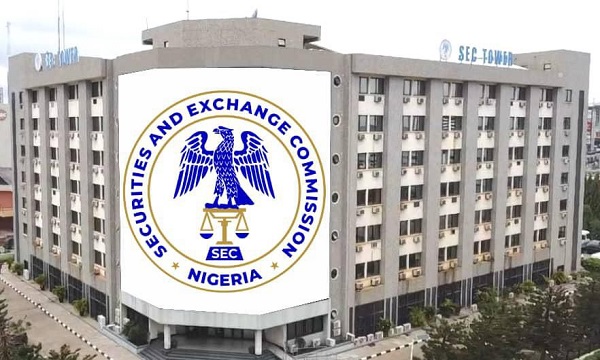
The Securities and Exchange Commission has advanced Nigeria’s capital market development agenda with the launch of the Nigerian Capital Market Master Plan 2.0, a ten-year blueprint designed to strengthen investment, improve market participation and support the country’s long-term economic ambitions.
The plan was unveiled at the National Capital Market Conference held at the Presidential Villa in Abuja on October 19, 2026. According to the SEC, the conference brought together public- and private-sector stakeholders to discuss strategic initiatives for developing the country’s capital market and improving its contribution to economic growth.
The master plan covers the 2026–2036 period and is intended to support a more diverse, efficient, transparent and innovative financial market. It also aligns with Nigeria’s wider economic development objectives.
The initiative comes at a time when policymakers are looking for ways to increase domestic investment, attract capital and improve access to long-term financing for businesses and infrastructure projects.
Why Nigeria needs a stronger capital market
Capital markets allow businesses and governments to raise funds from investors through financial instruments such as shares and bonds. They also provide individuals and institutions with opportunities to invest in companies and other assets.
A well-developed capital market can help businesses access funding beyond traditional bank loans. This is important for companies seeking to expand operations, invest in new technology or undertake projects that require substantial long-term capital.
For investors, a functioning market provides opportunities to diversify portfolios, participate in business growth and potentially earn returns through dividends, interest or changes in asset prices.
However, these benefits depend on investor confidence, reliable information, effective regulation and a sufficiently broad range of investment opportunities.
The SEC’s master plan is intended to address the development needs of Nigeria’s financial market over the next decade. Its success will depend on implementation, coordination among institutions and the ability to turn policy objectives into measurable outcomes.
A ten-year development framework
The SEC describes the Nigerian Capital Market Master Plan 2.0 as a strategic blueprint for building a more competitive and innovative market.
The plan is designed to align with Nigeria Agenda 2050 and the federal government’s development programme for 2026–2030. Its broader vision is to strengthen the capital market’s contribution to economic development and support Nigeria’s ambition of becoming a regional financial centre.
The updated framework also follows changes in the country’s regulatory environment, including the Investments and Securities Act 2025, which expanded the SEC’s mandate in areas such as systemic risk oversight, digital and tokenised assets regulation, and enforcement.
A modern capital market must respond to changes in financial technology and investor behaviour while ensuring that new products operate within an effective regulatory framework.
Digital investment platforms can make markets more accessible, but they can also introduce risks involving fraud, cybersecurity and inadequate investor understanding. Clear regulation and effective supervision are therefore important to maintaining confidence.
Mobilising domestic savings and investment
One of the central issues for Nigeria’s financial development is how to channel available savings into productive economic activity.
Households, pension funds, insurance companies and other institutional investors can provide capital for businesses and infrastructure when suitable investment opportunities and safeguards exist.
The SEC’s October conference also featured the launch of the National Savings Scheme and the inauguration of committees intended to support implementation of the master plan.
The effectiveness of these initiatives will depend on public participation, transparency, appropriate incentives and the availability of investment products that meet the needs of different investors.
For businesses, a deeper market could provide more opportunities to raise funds through equity and debt instruments. For the economy, this could help diversify financing sources and reduce excessive dependence on bank lending.
However, raising market capitalisation alone is not enough. A sustainable market also needs active trading, a broad range of listed companies, adequate disclosure and protection for minority investors.
Investor protection remains essential
Growth in capital markets must be accompanied by effective investor protection. Individuals need access to accurate information about the risks associated with securities and should be able to distinguish regulated investment opportunities from fraudulent schemes.
The SEC has a central role in supervising market operators and enforcing applicable rules. Its responsibilities are particularly important as financial services become increasingly digital and new investment products emerge.
Strong enforcement can discourage misconduct, while transparent disclosure helps investors assess companies and make informed decisions.
The market’s long-term development will also depend on whether investors believe that rules are applied consistently and that complaints can be addressed through appropriate processes.
What the plan means for businesses and investors
If effectively implemented, the master plan could help expand the range of funding available to Nigerian businesses and improve the market’s ability to channel capital into productive projects.
It could also create opportunities for financial technology companies and market operators, provided their activities comply with the relevant rules.
Nevertheless, the plan should be judged by measurable progress rather than the announcement alone. Relevant indicators would include increased participation, improved market liquidity, broader access to capital, stronger compliance and greater investor confidence.
For investors, the launch does not mean that every listed security will increase in value or that investment risks will disappear. Market performance will continue to depend on company results, economic conditions, interest rates and other factors.
The SEC’s ten-year framework establishes a direction for the country’s capital market. The challenge now is to translate that vision into practical reforms that benefit businesses, investors and the wider economy.