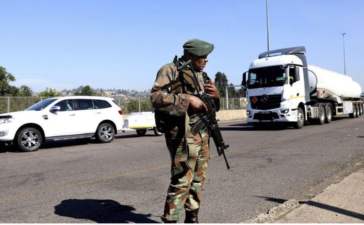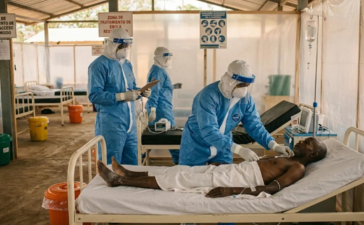
Rwandan authorities have intensified health screenings and restricted movement along the border with the Democratic Republic of Democratic Republic of the Congo as a deadly Ebola outbreak linked to the rare Bundibugyo strain continues to spread in the region.
At least 131 people have died and 531 suspected infections have been recorded in eastern DR Congo, prompting the World Health Organization to declare an international public health emergency.
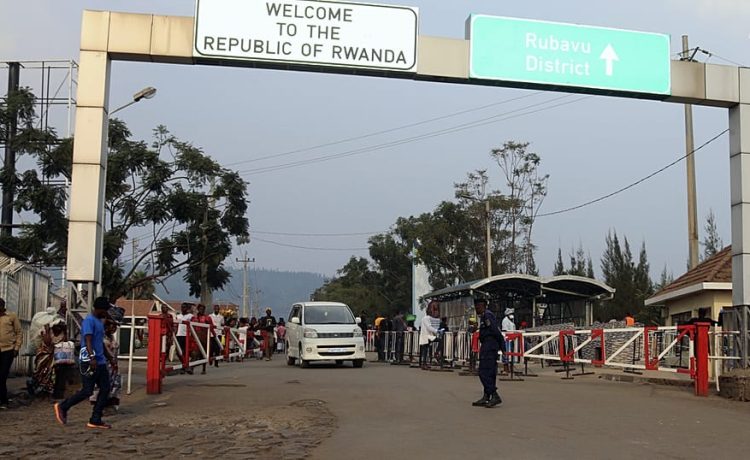
Health officials have increased surveillance at border crossings near Goma, where travelers entering Rwanda are being subjected to temperature checks and Ebola screening.
The outbreak is currently concentrated in Ituri province in northeastern DR Congo, a region already affected by armed conflict and displacement, making containment efforts more difficult.
Authorities say the outbreak is caused by the Bundibugyo strain of Ebola, a rare variant previously recorded in Uganda in 2007 and DR Congo in 2012, with fatality rates estimated between 30 and 50 percent. No approved vaccine or specific treatment currently exists for this strain.
Residents in Rwanda’s Rubavu district say the tightened border measures are disrupting trade and livelihoods, as cross-border movement has been significantly restricted.
Local trader Nsengiyaremye Kigendi said transport disruptions are affecting the movement of goods, while another resident, Twiringirimana Daniel, explained that traders are now forced to leave goods at the border for pickup on the Congolese side, reducing profits and increasing losses.
The outbreak’s epicentre, Mongbwalu, lies in an area controlled by the CODECO militia, while other regions continue to experience attacks from armed groups, including the Allied Democratic Forces linked to the Islamic State group.
Further south, clashes between Congolese forces and Rwanda-backed M23 rebels continue despite a peace agreement signed last year, further complicating humanitarian access.
A confirmed Ebola case has also been reported in Goma, a key border city under M23 control, raising fears of further cross-border transmission.
The United States has raised its travel advisory for DR Congo, South Sudan, and Uganda to Level Four—“Do Not Travel”—and has also advised citizens to reconsider travel to Rwanda due to the outbreak.
Health experts warn that ongoing insecurity, displacement, and limited access for humanitarian workers could accelerate the spread of the virus across the region if containment efforts fail.