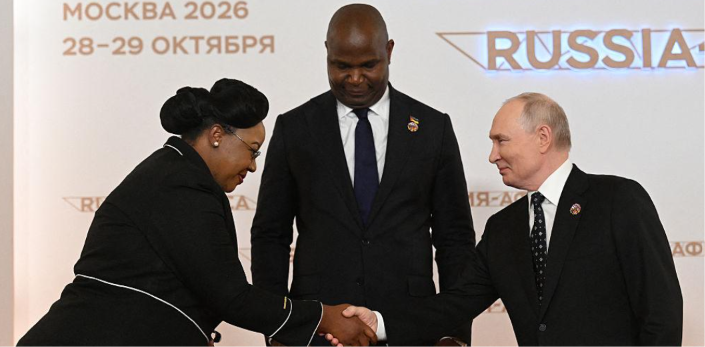
Russia has renewed its push to strengthen political and economic relations with African countries as representatives from across the continent gather in Moscow for the third Russia-Africa Summit.
The summit, which opened on Wednesday, October 28, has brought together delegations from 48 African countries, including approximately 22 African leaders, according to Reuters. Discussions are expected to cover trade, security, agriculture, military cooperation and Russia’s broader relationship with the continent.
Russian President Vladimir Putin used the gathering to present Russia as a potential long-term partner for African countries seeking alternatives to traditional Western economic and political relationships.
The meeting comes at a time when international competition for influence in Africa is increasing. Russia, China, the United States and European countries are all seeking stronger commercial, diplomatic and security relationships with African governments.
Africa’s population, natural resources, agricultural potential and growing consumer markets make it strategically important to international powers.
Trade and agricultural cooperation take centre stage
One of Russia’s principal messages at the summit concerns the expansion of trade and the supply of agricultural products.
Putin said Russia supplies grain and fertilisers to more than 40 African countries and indicated that Moscow was prepared to increase deliveries. These supplies are important because many African economies remain exposed to international food-price fluctuations, fertiliser costs and disruptions in agricultural supply chains.
Improved access to fertilisers and agricultural technology could help African farmers increase productivity, provided that the products are affordable and supported by suitable distribution networks.
African countries also have opportunities to expand exports to Russia, including agricultural commodities and other products. However, converting political agreements into commercial results will depend on transport infrastructure, payment arrangements, trade financing and the ability of businesses to meet market requirements.
The summit therefore offers an opportunity for governments to discuss practical measures that can make trade easier for companies operating on both sides.
Security and diplomatic cooperation
Security is another important subject.
Russia has expanded its relationships with several African governments, particularly in parts of the Sahel where military-led administrations have reduced cooperation with some Western partners.
Russian security involvement has attracted controversy. Supporters of cooperation with Moscow argue that African governments should have the freedom to choose their own security partners. Critics, however, have raised concerns about the activities of Russian-linked forces and the political consequences of security agreements.
These competing views mean that African governments must assess the terms, costs and long-term implications of individual partnerships.
Diplomacy is also on the agenda. Putin has called for stronger African representation in international institutions, including the International Monetary Fund and the World Bank.
African countries have long argued that their representation in global decision-making bodies should better reflect the continent’s population and economic importance.
What the summit means for Africa
For African economies, the main question is whether discussions will produce measurable benefits.
Potential gains include increased exports, agricultural investment, technology transfer, industrial cooperation and infrastructure development. Governments will also need to consider debt sustainability, local employment, environmental standards and the effect of agreements on domestic industries.
Nigeria and other major African economies could benefit from stronger international trade relationships if new arrangements support local production and generate sustainable investment.
However, summit declarations alone do not guarantee new jobs, lower food prices or increased trade. These outcomes depend on implementation, transparent contracts and the ability of businesses to participate.
As the summit continues, attention will remain on the specific agreements reached and the extent to which they translate into practical economic opportunities.
Russia’s renewed engagement demonstrates Africa’s growing importance in international affairs. The lasting value of the meeting will depend on whether both sides can turn diplomatic commitments into partnerships that deliver tangible benefits for African citizens.