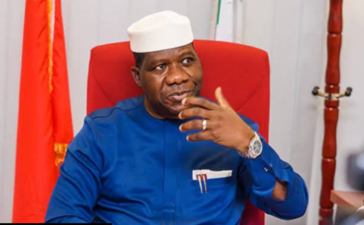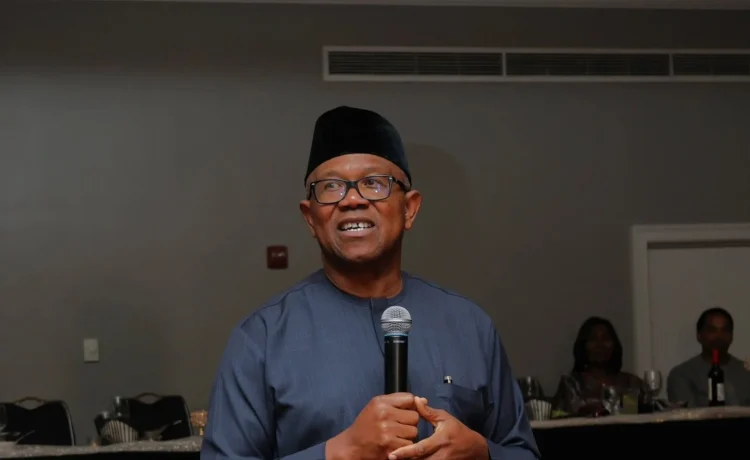
A former Governor of Anambra State, Peter Obi, has expressed concern over Nigeria’s projected plan to spend about $11.6 billion on debt repayments in 2026, warning that it reflects deeper issues in the country’s fiscal priorities.
Obi made the remarks in a statement shared on his official X account on Monday, arguing that while borrowing is not inherently negative, it becomes problematic when not directed toward productive investment.
He noted that a significant portion of Nigeria’s past borrowing, including under the current administration of President Bola Tinubu, has gone into consumption rather than sustainable development outcomes.
According to him, Nigeria has recently taken on substantial external loans, including $5 billion from First Abu Dhabi Bank, $1 billion via UK Export Finance through Citibank London, $516 million arranged through Deutsche Bank, and a proposed $1.25 billion World Bank facility, bringing total recent external commitments to about $7.8 billion.
Obi also referenced domestic borrowing through ongoing bond issuances, warning that these add continuously to the country’s debt stock.
He compared the projected debt servicing burden with key budget allocations, noting that Nigeria’s combined spending on health (₦2.46 trillion), education (₦2.56 trillion), and poverty alleviation (₦865 billion) totals about ₦5.885 trillion.
He argued that debt servicing, estimated at about $11.6 billion (roughly ₦17–₦18 trillion), is nearly three times higher than combined spending on those critical sectors.
“This imbalance highlights a troubling fiscal reality in which debt obligations increasingly crowd out investment in human capital and poverty reduction,” he said.
Obi further cautioned that even allocated funds in key sectors are often not fully released or are subject to mismanagement, worsening development challenges.
He cited countries such as Japan, the United Kingdom, the United States, the United Arab Emirates, Singapore, and Indonesia as examples of highly indebted nations that channel borrowing into productive sectors like infrastructure, innovation, and human capital development.
He argued that the key issue is not the existence of debt, but whether it is being converted into measurable productivity and improved living standards.
Obi warned that without such outcomes, debt servicing risks becoming a long-term structural burden that constrains growth and deepens economic vulnerability.
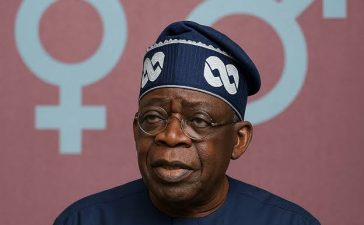
His comments come shortly after President Bola Tinubu revealed at the Africa Forward Summit in Nairobi that Nigeria is projected to spend about $11.6 billion on debt servicing in 2026.
Obi, alongside Ralph Nwosu and other political actors, recently aligned with the Nigeria Democratic Congress (NDC), following earlier coalition moves involving the African Democratic Congress (ADC).