Nigeria’s education sector is receiving renewed attention from the Federal Government as the country marks its 66th Independence Anniversary, with several reforms introduced to improve access, financing, digital learning and the quality of education.
However, despite the new initiatives, longstanding challenges continue to affect millions of Nigerian learners.
The Federal Government, under the leadership of Education Minister Tunji Alausa, has pursued reforms covering infrastructure development, digital education, student financing, basic education funding, technical and vocational education and research.
The government has also placed emphasis on revitalising the National Library of Nigeria and expanding digital learning opportunities.
According to reports on the state of education at 66, these initiatives are aimed at addressing some of the structural weaknesses that have affected the sector for decades.
Since independence in 1960, Nigeria has significantly expanded its education system. The country has established more primary and secondary schools, universities, polytechnics and colleges of education to accommodate its growing population.
However, the expansion has not completely solved the problems facing the sector.
Among the major concerns are inadequate infrastructure, insufficient funding, teacher shortages, poor learning outcomes and the large number of children who remain outside the formal education system.
Many schools still require better classrooms, laboratories, libraries, teaching materials, electricity, water and sanitation facilities. In some areas, rapid population growth has also placed additional pressure on existing schools.
Teacher development remains another important concern. Education stakeholders have continued to call for better training and improved support for teachers so they can effectively respond to the changing needs of learners.
The government has said its current reform agenda includes improving teacher quality and strengthening foundational learning.
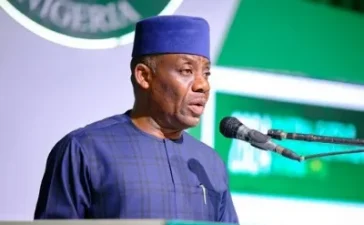
Minister of Education Tunji Alausa, in his Independence Day message, described education as fundamental to human capital development, social mobility, innovation and sustainable national development.
He said the Nigeria Education Sector Renewal Initiative is being used to advance reforms and investments aimed at expanding access and strengthening educational institutions.
According to the minister, the initiative is also supporting learners, improving teacher quality and promoting technical and vocational education.
The issue of out-of-school children remains another major challenge.
Poverty, insecurity, displacement, child labour and other social and economic difficulties continue to make it difficult for some children to enrol in school, attend regularly or complete their education.
Security challenges have also affected education in some parts of the country, with attacks, displacement and school closures disrupting the education of children and the work of teachers.
Another concern is the relationship between education and employment. As the Nigerian economy changes, employers increasingly require digital skills, technical knowledge, communication abilities, problem-solving skills and other practical competencies.
Education stakeholders have therefore called for stronger technical and vocational education and closer links between schools and the labour market.
The government has introduced different programmes to improve student financing and access to tertiary education. Student loan initiatives are also intended to reduce financial barriers for eligible students.
However, analysts and education stakeholders continue to stress that increased funding must be matched with proper implementation and accountability.
The National Library of Nigeria headquarters project in Abuja is also cited as an example of the difficulties associated with completing major education infrastructure projects. The broader challenge is ensuring that government projects and policies are completed and translated into benefits for students, teachers and researchers.
As Nigeria celebrates its 66th year of independence, the education sector therefore stands between new reform efforts and old challenges.
The success of the current reforms will ultimately depend on implementation and whether they produce measurable improvements in classrooms and communities.
For millions of Nigerian children, progress will mean having access to safe schools, qualified teachers, learning materials and quality instruction.
For students in tertiary institutions, it will mean stronger institutions, better research facilities, affordable education and skills that can improve their chances in the labour market.
The government has continued to emphasise reform, but the central challenge remains turning policies and financial investments into lasting improvements.
At 66, Nigeria’s education sector has made significant progress since independence, but much work remains to ensure that every Nigerian child has access to quality and relevant education.