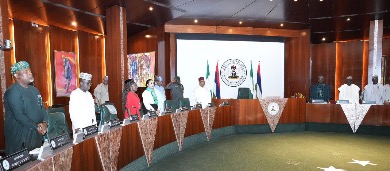
The National Economic Council (NEC) has approved N83.2 billion for the Anticipatory Action Task Force (AATF) to mitigate the impact of expected flooding and other climate-related emergencies across Nigeria.
The approval was made on Thursday during the 158th NEC meeting, following a presentation by the Minister of State for Budget and Economic Planning, Atiku Bagudu, who highlighted the need for proactive measures to address seasonal flooding and disaster risks nationwide.
The Council noted that the intervention was designed to strengthen Nigeria’s disaster preparedness and reduce reliance on reactive emergency responses.
Officials said the funding reflects a shift towards anticipatory action in managing natural disasters, particularly flooding during the rainy season, which has continued to affect communities, farmlands and infrastructure across the country.
Vice President Kashim Shettima, who chairs the National Economic Council, urged state governments to work closely with the Federal Government to remove logistical and regulatory barriers that hinder the export of agricultural produce.
He said the administration’s reform agenda under President Bola Tinubu must deliver tangible improvements in the lives of Nigerians, particularly farmers, manufacturers, vulnerable groups and young people.
“When this Council last met, I called our economy a workshop… A workshop is judged by one thing. Not by the plans pinned to its walls, but by what comes off the bench,” Shettima said.
He described Nigeria’s economic direction as a transition from stabilisation to production and from fragmented interventions to coordinated national growth, stressing the need for visible results from policy implementation.
Shettima also emphasised that social protection systems must be strengthened to ensure no Nigerian is left behind in the country’s economic transformation.
On trade and agriculture, the Vice President said Nigeria must move away from dependence on raw material exports while importing finished goods, calling for a stronger domestic value chain linking production, processing and global market access.
“We cannot continue to export raw materials and import finished prosperity,” he said.
He added that addressing port inefficiencies and export compliance challenges is essential to improving Nigeria’s competitiveness in international markets and ensuring farmers and manufacturers benefit fully from their production.
“A nation that cannot move its goods has imprisoned its own farmers,” Shettima stated, stressing the importance of meeting global standards to expand access to export markets.
The NEC meeting also underscored the need for improved coordination between federal and state governments in disaster management, infrastructure planning and economic reform implementation.
Officials said the N83.2 billion intervention is expected to strengthen early response mechanisms, reduce flood-related losses and support vulnerable communities ahead of anticipated climate shocks.