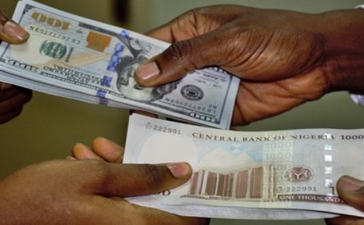
Naira Gains as Offshore Inflows Support Market
The naira strengthened during the week as increased offshore foreign exchange supply improved market liquidity.
The Nigerian currency appreciated by 0.7 per cent week-on-week to N1,338.01 against the United States dollar.
The gain was supported by offshore inflows linked to participation in the Central Bank of Nigeria’s Open Market Operations auction.
The development reflects continued investor interest in Nigerian financial assets.
Foreign investors can increase the supply of dollars in the local market when they bring capital into the country to participate in investment opportunities.
This additional supply can support the value of the naira.
External Reserves Rise to $53.31 Billion
Nigeria’s gross external reserves also recorded a significant increase.
The reserves rose by $478.45 million to $53.31 billion as of August 27, 2026.
The increase provides additional support for Nigeria’s foreign exchange position.
External reserves play an important role in supporting confidence in an economy.
They can provide a buffer against external shocks and help meet foreign currency obligations.
The continued growth in reserves could strengthen the ability of authorities to manage periods of pressure in the foreign exchange market.
OMO Auctions Attract Strong Investor Interest
The Open Market Operations market recorded strong demand during the week.
The Central Bank conducted two OMO auctions.
At the first auction, the CBN offered N600 billion in bills.
Demand reached N4.26 trillion.
The bank eventually allotted N2.80 trillion.
A second auction attracted N4.36 trillion in demand.
The CBN offered N500 billion during that auction and allotted N1.93 trillion.
The strong demand demonstrates continued investor interest in Nigerian fixed-income instruments.
However, large OMO auctions can also influence liquidity in the financial system.
The CBN uses such operations as part of its efforts to manage money supply.
Treasury Bill Yields Remain Attractive
The Treasury bills market remained active during the week.
At the latest Nigerian Treasury Bills auction, the Debt Management Office offered N700 billion across three tenors.
Total investor demand reached N3.79 trillion.
The DMO eventually allotted N762.89 billion.
The 364-day Treasury bill stop rate declined by 44 basis points to 17.15 per cent.
Rates on the 91-day and 182-day bills remained unchanged.
The continued demand for government securities reflects the attraction of relatively high fixed-income yields.
Strong Fixed-Income Market Supports Capital Inflows
Nigeria’s high interest-rate environment continues to attract investors to fixed-income instruments.
These investments can provide returns that are attractive compared with other markets.
Portfolio inflows could therefore continue to provide support for the foreign exchange market.
However, the same high yields can also create challenges for the equities market.
Investors may choose to allocate capital to fixed-income instruments instead of shares.
The balance between these investment options will continue to influence financial market activity.
Naira Outlook Remains Broadly Stable
The outlook for the naira remains broadly stable in the near term.
Market conditions are expected to benefit from continued portfolio inflows and relatively firm investor sentiment.
The current account position could also provide support.
However, analysts continue to identify oil-related foreign exchange inflows as a major risk.
Nigeria remains heavily dependent on oil revenue for foreign exchange earnings.
A significant decline in oil receipts could weaken the country’s foreign currency position.
Stability Remains Key to Investor Confidence
Exchange-rate stability remains an important issue for businesses and investors.
Companies that depend on imported goods or foreign services are particularly sensitive to currency movements.
A more stable naira can improve planning and reduce uncertainty.
For investors, exchange-rate stability can also influence decisions about whether to bring capital into the country.
The latest appreciation of the naira and the rise in external reserves provide positive signals.
However, sustaining the gains will depend on continued foreign exchange inflows and prudent monetary management.
As the Central Bank continues to manage liquidity and inflationary pressures, the foreign exchange market will remain closely watched.
For now, stronger reserves and continued offshore interest are providing support for the naira.
The key test will be whether Nigeria can sustain those conditions in the face of potential changes in oil prices, global capital flows and domestic economic activity.