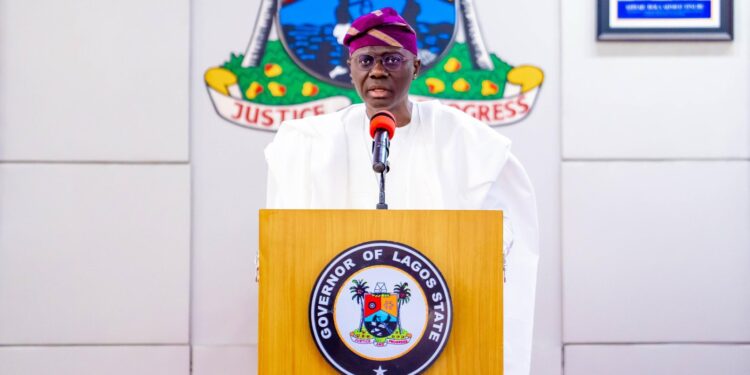
The Lagos State Government says it is on track to deliver more than 14,000 housing units across the state by the end of 2026 as part of efforts to reduce the housing deficit and improve access to affordable homes for residents.
The Commissioner for Housing, Moruf Akinderu-Fatai, made this known during a ministerial press briefing marking the third year of Governor Babajide Sanwo-Olu’s second term.
He said the administration has expanded housing development through direct government investment and Public-Private Partnership (PPP) arrangements aimed at increasing the supply of decent and affordable housing across Lagos.
According to him, the state has delivered 10,623 housing units over the past seven years, while ongoing developments are expected to push the total to 14,022 units upon completion.
Akinderu-Fatai listed five major housing schemes currently under construction through budgetary allocations. These include the Egan-Igando Mixed Housing Scheme (576 units), LagosHOMS Sangotedo Phase II (528 units), Epe Housing Scheme (112 units), LagosHOMS Ibeshe Phase II (192 units), and the Workers’ Village, Ipaja project (176 units).
He added that most of the projects are at advanced stages and are expected to be completed before the end of 2026.
The commissioner also said the state is executing several joint venture housing projects in strategic locations to expand housing stock and ease pressure caused by rapid urbanisation and population growth.
He noted that Lagos faces an estimated housing deficit of over 3.3 million units, making it the most pressured housing market in Nigeria.
The government’s housing strategy, he said, focuses on boosting supply, improving affordability, and encouraging private sector participation in real estate development.
Akinderu-Fatai also highlighted recently commissioned estates in 2025, including the Akinsanya Sunny Ajose Estate Phase I and the Abraham Adesanya Housing Estate Joint Venture Scheme, which have added additional housing units to the state’s stock.
He said the ongoing projects are also generating employment opportunities for construction workers, artisans, suppliers, and professionals, contributing to broader economic activity in the state.