Kenya has requested rapid financial assistance from the World Bank to help cushion its economy from shocks triggered by the Iran war, according to the country’s central bank governor.
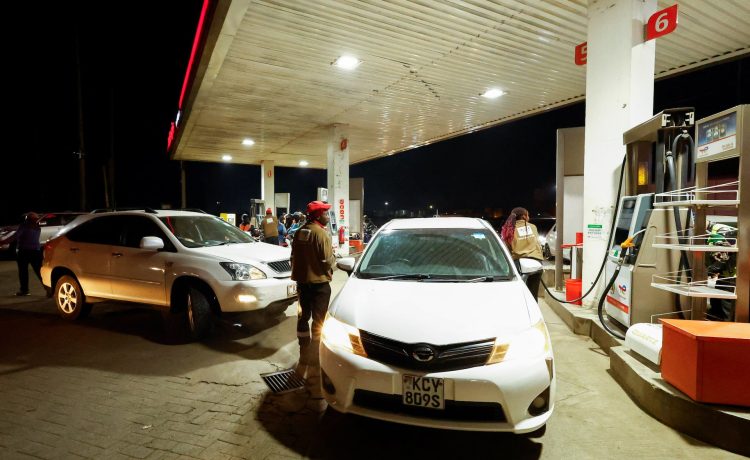
Like other energy-importing economies, Kenya is facing pressure from rising fuel costs and supply uncertainties, which threaten to push up inflation and strain public finances.
Central Bank of Kenya Governor Kamau Thugge told Reuters on Thursday that the request for support was “significant,” though he did not disclose the exact amount being sought. The comments were made on the sidelines of the IMF and World Bank spring meetings.
Kenya is the first major emerging economy to publicly confirm a formal request for emergency-style support from the World Bank, although several other countries, including Egypt, have also reportedly approached multilateral lenders.
IMF Managing Director Kristalina Georgieva said at least 12 countries are currently seeking financial assistance to manage the fallout from the global crisis.
The proposed support would come in addition to earlier discussions between Kenya and the World Bank on a development policy operation, a form of budget support lending.
Rapid Response Support from the World Bank is designed as fast-disbursing funding to help countries manage sudden economic shocks, including commodity price spikes and external disruptions.
In response to rising fuel prices, President William Ruto signed legislation reducing value-added tax on petroleum products from 13% to 8% for three months to ease pressure on consumers.
Kenya’s central bank recently downgraded its 2026 growth forecast to 5.3%, citing risks from global oil price volatility and geopolitical instability affecting key sectors of the economy.
Governor Thugge noted that while the Kenyan shilling weakened during the peak of the conflict between the United States, Israel, and Iran, it has since recovered most of those losses.
He added that foreign exchange reserves, currently above $13 billion—equivalent to 5.8 months of import cover—provide a buffer against excessive currency volatility.
“If there’s pressure… definitely it will depreciate,” he said, stressing that any currency adjustment would be “orderly” due to the country’s strengthened reserves position.
The central bank is also advancing plans to diversify reserves by adding gold, with officials studying successful models used by other countries.
On monetary policy, Thugge said future interest rate decisions will depend on incoming economic data ahead of the next policy meeting in June, following a recent pause in rate cuts as policymakers assess the impact of higher oil prices on inflation.