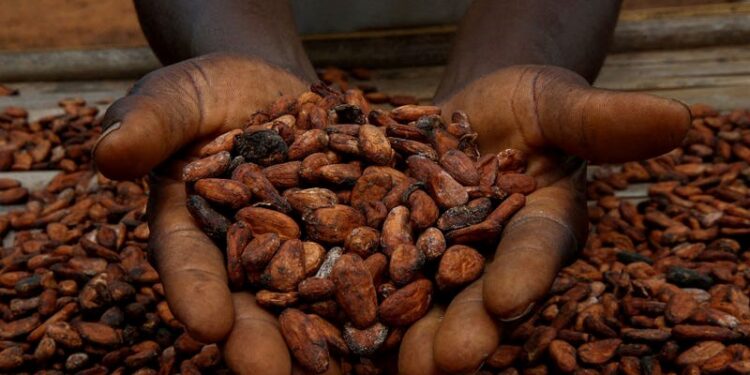
Ghana’s state-owned cocoa buyer, Producer Buying Company, has reportedly stopped purchasing cocoa from farmers after accumulating debts of 673 million cedis ($60 million), according to a company source familiar with the matter.
The company, widely known as PBC, is legally required to act as a buyer of last resort by purchasing cocoa from any farmer across Ghana. In February, the government pledged to restore the company as the country’s leading cocoa buyer. However, three months later, the company is struggling with severe financial difficulties.
According to the source, PBC currently owes farmers 24 million cedis for more than 9,000 bags of cocoa already delivered. The company also lacks the funds needed to resume purchases from growers.
The situation worsened after a consortium of Ghanaian banks, owed 257 million cedis by PBC, secured a court order in March to sell off the company’s assets.
Ghana’s cocoa sector has faced mounting pressure in recent months due to lower global cocoa prices, increased harvest volumes, and weakening demand from chocolate manufacturers. These factors have made it difficult for industry players to sell cocoa beans and maintain payments to farmers.
PBC’s market influence has also declined sharply. The company once controlled about 30 per cent of Ghana’s cocoa purchasing market but now accounts for less than five per cent of cocoa bought nationwide.
The financial crisis has added to the hardship faced by thousands of smallholder farmers, many of whom reportedly have not been paid for cocoa supplied since November 2025.
The company source, who spoke anonymously because they were not authorised to speak publicly, said the Ghana Cocoa Board, popularly known as COCOBOD, has yet to reimburse PBC for 800 metric tons of cocoa delivered more than two months ago.
Under Ghana’s cocoa marketing structure, Licensed Buying Companies purchase cocoa from farmers before selling the beans to COCOBOD, which then exports them to international buyers.
The source further claimed that both Ghana’s finance ministry and COCOBOD have not responded to repeated requests for financial support. Reuters reported that neither institution commented on the matter.
In February, Ghana’s Finance Minister, Cassiel Ato Forson, described the revival of PBC as a key part of the government’s strategy to support cocoa farmers and ensure transparent cocoa trading. However, the source said there have been no follow-up discussions with the company since then.
PBC’s debt burden reportedly includes more than two years of unpaid staff salaries, vendor arrears, statutory obligations, and the outstanding bank loans.
The company’s difficulties have also been compounded by limited support from Social Security and National Insurance Trust, a major shareholder that has reportedly declined to inject fresh capital after failing to receive expected dividends from its investment.
Despite the crisis, the source said PBC could still recover if COCOBOD directs more international cocoa buyers toward the company and releases funds to support fresh cocoa purchases.
PBC currently operates across all 127 cocoa-growing districts in Ghana, giving it one of the widest operational networks in the country’s cocoa industry.