Kenya’s government has announced a temporary registration and legal-protection window for undocumented East African nationals, particularly Burundians, after hundreds of Burundian nationals gathered outside their embassy in Nairobi seeking travel documents amid fears of a crackdown on foreign traders.
The development follows a directive by President William Ruto last week ordering authorities to shut down small-scale businesses operated by foreign traders who do not have the required work permits. The directive came after Kenyan traders had protested against tax reforms and complained about competition from foreign traders.
Burundians rush to embassy
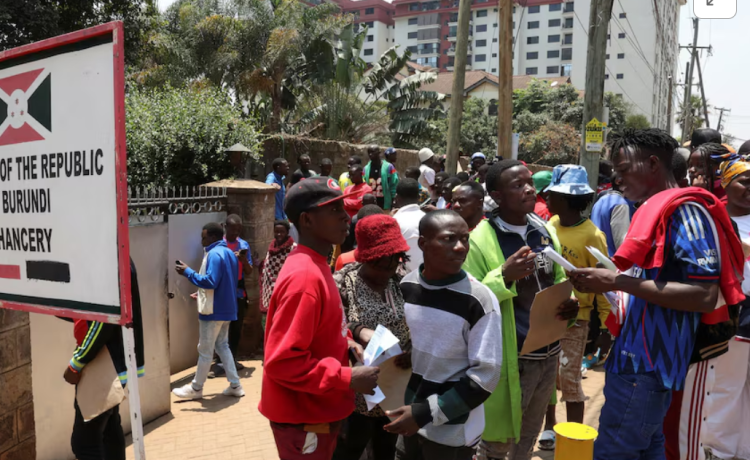
On Monday, hundreds of Burundians gathered outside their country’s embassy in Nairobi, with many carrying luggage and seeking travel documents because they feared they might be forced to leave Kenya.
Some said they had lived in Kenya for years without proper documentation and were uncertain about what would happen to their businesses and livelihoods.
The Kenyan government, however, moved to calm the situation. Government spokesperson Charles Owino said undocumented East African Community nationals should report to their respective embassies or high commissions for formal identification and registration.
Temporary legal protection
According to the government, people undergoing the registration process will be presumed to be legally present in Kenya during the designated registration period. This means they should be able to access essential services, including healthcare and banking, while their status is being regularised.
The government also warned security agencies, local authorities and businesses against harassment or discrimination of foreign nationals.
Owino stressed that Kenya has “zero tolerance” for xenophobia, saying the new measures should not be interpreted as a blanket ban on foreigners.
About 16,000 Burundians affected
The situation is particularly significant for Burundi nationals. The UN refugee agency estimates that around 16,000 Burundian refugees and asylum seekers are in Kenya, with many involved in small-scale businesses in Nairobi, including the sale of coffee and second-hand clothing.
Critics of Ruto’s policy have accused his government of shifting blame for Kenya’s economic difficulties onto foreigners, particularly as the country approaches its next election. The government maintains that its objective is to protect local livelihoods, regulate informal trade and improve national identity documentation.
What happens next?
Kenya’s Ministry of Foreign Affairs is expected to work with Burundi and other East African diplomatic missions to establish the registration process and timelines. The government says the exercise is intended to bring undocumented residents into the legal system rather than automatically deport them.