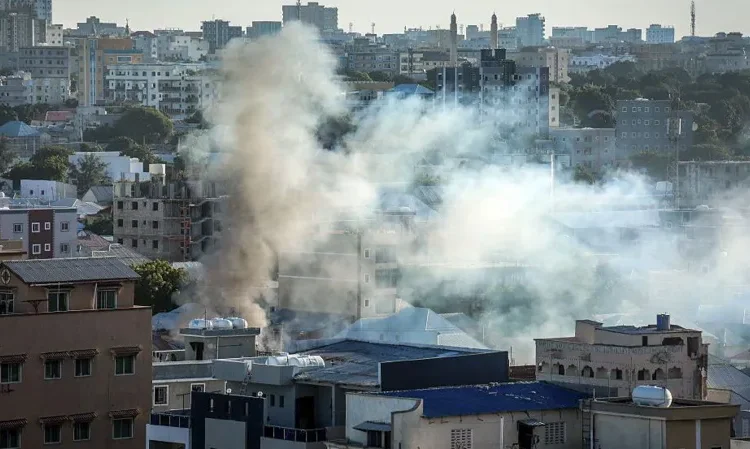
Heavy gunfire has erupted across parts of Mogadishu, Somalia’s capital, as tensions between government forces and opposition groups escalated over disputed election delays and the extension of President Hassan Sheikh Mohamud’s term.
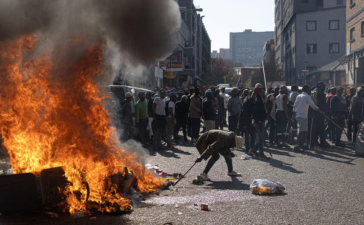
Residents reported sustained exchanges of gunfire in several neighbourhoods overnight, with security forces describing ongoing operations against “heavily armed militias” accused of launching mortar attacks in the city.
The violence comes after President Mohamud’s original term expired on 15 May, with lawmakers approving a one-year extension that the opposition has rejected as unconstitutional. Opposition leaders subsequently called for protests, which have been overshadowed by the outbreak of fighting.
Former Prime Minister Hassan Ali Khaire said government forces attacked him and other opposition figures while they were preparing for what he described as peaceful demonstrations. He blamed the president for any resulting casualties, accusing the administration of undermining constitutional rights.
“The responsibility for any casualties or damage resulting from this incident lies with the president whose term has expired,” he said.
Residents described scenes of panic, with mortar shells reportedly landing in residential areas. One witness said a neighbouring house was struck and a woman injured, while another building was set ablaze following the impact of explosives.
Despite the clashes, Somalia’s Civil Aviation Authority said operations at Aden Adde International Airport remained unaffected, with all scheduled flights continuing as normal.
The United States embassy in Mogadishu condemned the violence as “reckless,” urging all parties to resolve disputes through peaceful dialogue. Regional and international partners, including the Intergovernmental Authority on Development (IGAD) and the European Union delegation, also called for restraint and consensus-building.
The political crisis stems from disagreements over Somalia’s transition toward direct elections, replacing the long-standing clan-based electoral system. While the government has pushed for reforms, the opposition has criticised the process, arguing that recent constitutional changes and electoral arrangements lack inclusivity and legitimacy.
Somalia has not held a fully direct national election since 1969, and decades of civil war combined with ongoing insurgency from al-Shabab have continued to undermine political stability.
As sporadic gunfire continues in parts of the capital, the situation remains tense, with fears that the standoff could further destabilise the country’s fragile political transition.