The Federal Government recorded an aggregate fiscal deficit of N4.69 trillion in the first quarter of 2026, reflecting persistent challenges in revenue generation and budget financing.
According to the 2026 Budget Performance Report released by the Budget Office of the Federation (BOF), the deficit was recorded between January and March, as government revenue fell considerably below the amount projected for the period.
The report showed that the N4.69 trillion deficit was below the prorated quarterly target of N7.86 trillion by approximately N3.18 trillion.
Although the deficit was lower than projected, the figures also revealed that government revenue and expenditure both fell significantly short of their respective targets.
Aggregate Federal Government revenue stood at N5.08 trillion during the review period, compared with the projected N9.22 trillion.
This resulted in a revenue shortfall of N4.14 trillion, meaning the government generated only about 55 per cent of its expected revenue in the first three months of the year.
The development highlights the difficulties facing the government as it works to implement the 2026 budget while balancing revenue constraints, infrastructure commitments and other expenditure obligations.
Government Expenditure Also Falls Below Projection
The report further revealed that aggregate Federal Government expenditure amounted to N9.76 trillion in the first quarter, compared with the prorated target of N17.08 trillion.
This represented an expenditure shortfall of N7.32 trillion, or approximately 42.8 per cent below the projected amount.
The lower expenditure outturn indicates that the government spent significantly less than planned during the period, partly reflecting revenue and budget implementation constraints.
Of particular concern was the performance of capital expenditure, which is expected to support infrastructure development, economic activities and job creation.
Actual capital expenditure releases stood at approximately N1.69 trillion, compared with the prorated quarterly projection of N8.07 trillion.
This represented a shortfall of about N6.38 trillion.
The slow release of capital funds could affect the implementation of government projects across critical sectors, including transportation, power, housing and other infrastructure-related activities.
The report also indicated that non-debt recurrent expenditure stood at N2.77 trillion, below the quarterly projection of N3.86 trillion.
Meanwhile, statutory transfers amounted to N644.87 billion during the period.
Debt Servicing Consumes 91% of Government Revenue
Nigeria’s debt obligations continued to place significant pressure on government finances during the first quarter.
According to the report, the Federal Government spent approximately N4.63 trillion on debt servicing between January and March 2026.
This represented about 91 per cent of the N5.08 trillion revenue generated during the period.
The debt servicing expenditure exceeded the prorated quarterly target of approximately N3.88 trillion by N754 billion.
A breakdown showed that domestic debt servicing accounted for approximately N3.14 trillion, while external debt servicing amounted to N1.49 trillion.
The figures highlight the growing pressure that debt obligations place on government finances, leaving limited resources available for other spending priorities.
The situation also raises concerns about fiscal sustainability, particularly as the government continues to rely on borrowing to finance budget deficits and support infrastructure development.
With debt servicing consuming such a significant proportion of revenue, improving revenue mobilisation will remain important to reducing the government’s dependence on additional borrowing.
Domestic Borrowing Remains the Main Source of Deficit Financing
On deficit financing, the Federal Government relied largely on domestic borrowing during the first quarter.
Domestic borrowing stood at N3.9 trillion, compared with the prorated target of N4.61 trillion, leaving a shortfall of N704.03 billion.
The government also received N287.44 billion from multilateral and bilateral project-tied loans, while privatisation proceeds amounted to approximately N3.32 billion.
However, the report indicated that no actual inflow was recorded under the planned external borrowing component during the quarter.
This suggests that delays in accessing some external financing sources also affected the government’s ability to execute its borrowing programme as scheduled.
The dependence on domestic borrowing could further increase pressure on the local debt market, particularly if government financing requirements remain high.
Oil and Non-Oil Revenue Underperform
The revenue shortfall was driven by weaker-than-expected collections from both oil and non-oil sources.
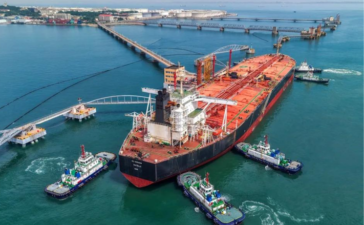
Oil revenue remained below expectations despite relatively favourable international crude oil prices during the period.
The Budget Office identified lower-than-projected crude oil production and lifting, alongside inadequate investment in the petroleum industry, as factors affecting revenue performance.
Gross non-oil revenue also fell short of expectations.
Collections from taxes, customs duties and other non-oil sources did not generate enough revenue to compensate for the weakness in oil receipts.
Although some tax categories recorded improvements compared with the corresponding period of 2025, overall collections remained below the government’s quarterly projections.
The development highlights the importance of strengthening non-oil revenue mobilisation and reducing Nigeria’s dependence on crude oil earnings.
Nigeria’s Economy Grows by 3.89% Despite Fiscal Challenges
The fiscal challenges came as Nigeria’s economy recorded real growth of 3.89 per cent in the first quarter of 2026.
The expansion was supported by improved performances in both the oil and non-oil sectors.
However, the growth in economic output has yet to translate into sufficient government revenue to meet the budget’s financing expectations.
This highlights the difference between economic growth and government revenue generation.
An expanding economy does not automatically guarantee higher government income, particularly when tax collection remains weak, oil production falls below expectations and other revenue sources underperform.
The government will therefore need to strengthen revenue administration, improve oil production and expand the tax base to ensure that economic growth translates into stronger public finances.
Outlook: Revenue Mobilisation Becomes More Urgent
The first-quarter fiscal performance presents a challenging picture for the Federal Government as it continues efforts to implement the 2026 budget.
Although the N4.69 trillion deficit was below the prorated target, the significant revenue shortfall, high debt-servicing costs and slow capital expenditure execution remain major concerns.
The government faces the task of improving revenue generation while managing its borrowing requirements and meeting essential expenditure commitments.
Strengthening crude oil production, tackling oil theft, improving tax compliance and expanding non-oil revenue sources could help address some of these challenges.
The performance of the remaining quarters will be important in determining whether the government can improve revenue collection and accelerate budget implementation.
For investors and businesses, the government’s fiscal position will also remain an important economic indicator because borrowing requirements, debt servicing and capital spending can influence interest rates, liquidity and investment opportunities.
Ultimately, improving revenue generation will be critical to reducing fiscal pressure and ensuring that government spending supports sustainable economic growth.
Key Financial Figures at a Glance
| Indicator | Q1 2026 |
|---|---|
| Fiscal deficit | N4.69tn |
| Prorated deficit target | N7.86tn |
| Federal Government revenue | N5.08tn |
| Revenue target | N9.22tn |
| Revenue shortfall | N4.14tn |
| Government expenditure | N9.76tn |
| Expenditure target | N17.08tn |
| Domestic debt servicing | N3.14tn |
| External debt servicing | N1.49tn |
| Total debt servicing | N4.63tn |
| Domestic borrowing | N3.90tn |
| Capital expenditure | N1.69tn |
| Real GDP growth | 3.89% |