The Democratic Republic of the Congo (DR Congo) is facing a major public health emergency as the number of confirmed Ebola cases has climbed to 11,042, with at least 5,387 deaths recorded, according to government figures released on Tuesday, November 10, 2026.
The outbreak, caused by the rare Bundibugyo strain of the Ebola virus, has become one of the most serious health emergencies currently confronting the African continent.
The latest figures were reported as health authorities continued struggling to contain the disease amid delayed detection, insecurity and pressure on already stretched healthcare facilities.
According to information reported by Al Jazeera and Reuters, eight of the country’s 26 provinces have been affected by the outbreak.
The situation has become particularly concerning because several deaths have occurred outside treatment centres, making it more difficult for health workers to identify infections, trace contacts and prevent further transmission.
The outbreak is now the second-largest and second-deadliest Ebola outbreak recorded globally, behind the 2014–2016 West African epidemic, which infected more than 28,600 people and killed over 11,000.
Bundibugyo strain creates additional challenges
The current outbreak is caused by the Bundibugyo strain, a relatively rare form of the Ebola virus.
One of the major challenges facing medical authorities is the absence of a specifically approved vaccine or treatment for this particular strain.
The Bundibugyo virus can cause severe illness and has a reported fatality rate of approximately 50 per cent.
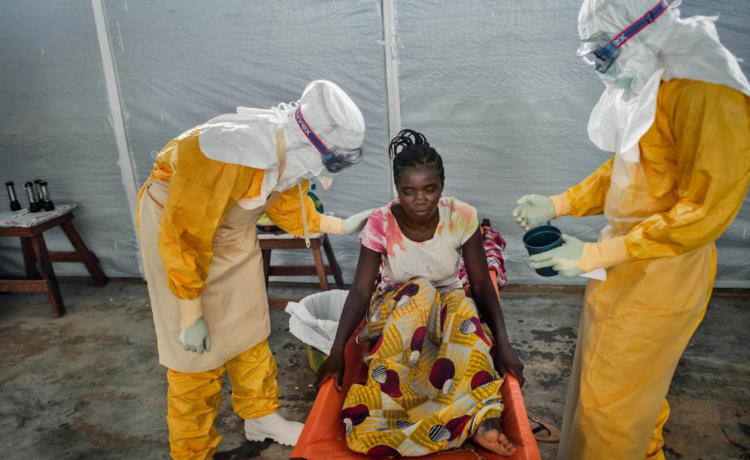
Ebola is a serious infectious disease that can spread through direct contact with the blood and bodily fluids of infected people or contaminated materials.
Symptoms can include fever, weakness, muscle pain, headache and sore throat. In severe cases, patients may experience vomiting, diarrhoea and internal or external bleeding.
The disease can spread rapidly when infected individuals are not identified early or when healthcare workers lack adequate protective equipment.
This makes early detection, isolation, contact tracing and community awareness essential parts of the response.
Conflict and weak healthcare services complicate response
The humanitarian and security situation in parts of eastern DR Congo has made the outbreak more difficult to control.
Several communities already face challenges accessing healthcare because of armed conflict, population displacement and damaged infrastructure.
Insecurity can prevent medical teams from reaching affected communities quickly, while displaced populations may move between locations before infections are detected.
The pressure on healthcare facilities also creates difficulties for patients requiring treatment for other illnesses.
Medical workers must therefore balance the Ebola response with the provision of routine healthcare services.
The situation highlights the connection between public health emergencies and wider humanitarian conditions.
Where communities lack access to reliable healthcare, clean water, sanitation and accurate information, infectious diseases can spread more easily.
Authorities have consequently been urged to strengthen surveillance, improve community engagement and ensure that affected communities receive timely medical assistance.
WHO supports vaccine research
The World Health Organization has approved clinical trials involving two new Ebola vaccine candidates, with results expected in early 2027.
The development offers a potential opportunity to improve protection against the Bundibugyo strain, although the vaccines are still undergoing scientific evaluation.
The trials are important because existing Ebola vaccines have been developed for other strains and cannot automatically be assumed to provide protection against every form of the virus.
Researchers will need to establish the safety and effectiveness of the new candidates before they can be considered for wider use.
The WHO and other health partners are also expected to continue supporting surveillance, laboratory testing and emergency response activities.
Growing concern beyond DR Congo
The outbreak has attracted wider international attention because of the possibility of cross-border transmission.
Cases have been reported across East, Central and West Africa, giving the outbreak an unusually wide geographical reach.
African countries may face additional pressure if infections spread through international travel and population movements.
Neighbouring countries therefore have an important role to play in strengthening border health screening, surveillance systems and emergency preparedness.
However, public health experts emphasise that border measures alone cannot contain an outbreak.
Effective control requires strong healthcare systems, reliable testing, rapid identification of infections and cooperation between governments and communities.
For DR Congo, the immediate priority remains reducing transmission, protecting healthcare workers and ensuring that infected individuals receive appropriate care.
The latest figures demonstrate the seriousness of the situation and the need for sustained international support.
As vaccine trials continue, the ability of health authorities to improve early detection and overcome insecurity will remain central to controlling the outbreak.