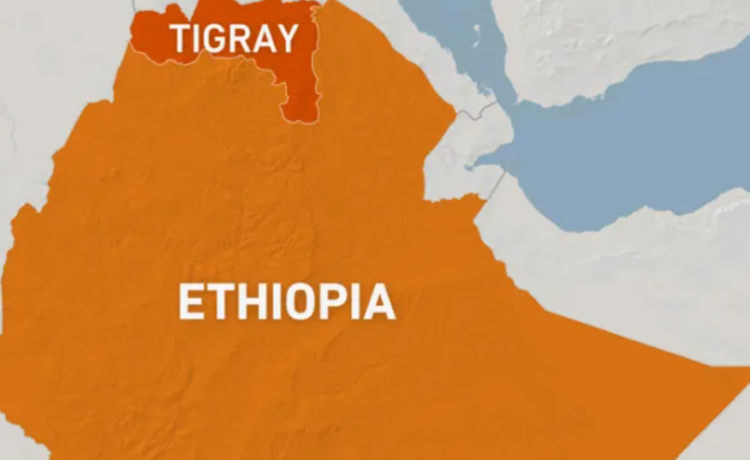
Displaced families in Ethiopia’s northern Tigray region are facing renewed uncertainty as fresh fighting threatens the fragile peace established after the 2020–2022 conflict between Ethiopian federal forces and the Tigray People’s Liberation Front (TPLF).
Thousands of families who fled their homes during the previous war are still living in temporary shelters, with many uncertain about when they will be able to return to their communities.
In Abi Adi, classrooms that were originally built for students have become temporary homes for displaced residents.
Families have spent years sharing school buildings, using classrooms as sleeping areas and storing their personal belongings in spaces that were never designed for long-term accommodation.
The situation has become more difficult following renewed fighting in September 2026, which has increased fears that the region could experience another prolonged conflict.
According to a report by Al Jazeera published on November 11, the renewed violence has weakened confidence in the peace process and further complicated efforts to restore normal life.
Peace agreement faces fresh challenges
The Pretoria Agreement was signed in November 2022 between Ethiopia’s federal government and the TPLF, bringing an end to two years of devastating conflict.
The agreement was intended to establish a permanent ceasefire, restore government services, support humanitarian access and create conditions for reconciliation.
The war caused enormous human suffering, with an estimated 500,000 deaths from violence, famine and the collapse of healthcare services, according to figures cited in the report.
Millions of people were also displaced during the conflict.
Although the agreement reduced large-scale fighting, it did not resolve all the political and territorial disputes that contributed to the war.
One of the most sensitive issues has been the status of Western Tigray, an area claimed by competing political and ethnic groups.
Amhara forces took control of the disputed territory during the war, and disagreements over its administration and the return of displaced residents have remained major obstacles to lasting peace.
Other unresolved issues include the withdrawal of non-federal forces, disarmament and the political administration of the region.
Renewed fighting increases fears
Tensions escalated on September 22, 2026, followed by a TPLF offensive the following day.
The Tigrayan forces seized Mekelle’s airport, while federal forces and allied fighters subsequently launched a counterattack.
Federal forces retook Mekelle on October 4 as Tigrayan fighters withdrew.
However, fighting continued in other parts of the region, demonstrating that the security situation remained unstable.
The federal government later established a six-month caretaker administration to govern Tigray, restore public services and prepare the region for elections.
Despite this arrangement, political disagreements and insecurity have continued.
Human Rights Watch and other organisations raised concerns about renewed hostilities in an October communication to the United Nations Human Rights Council.
The organisations referred to reports of drone strikes, mortar fire and artillery attacks, including incidents near populated areas and internally displaced people’s camps.
They warned that continued fighting could undermine the progress achieved through the Pretoria Agreement.
Displaced families struggle with basic needs
For families living in temporary shelters, the conflict has created difficulties that go beyond the loss of their homes.
Many residents have spent several years without access to stable housing, employment and reliable public services.
Families in Abi Adi have reported shortages of food, clean water and essential medicines.
Overcrowding has also created additional difficulties for children, older people and individuals living with chronic illnesses.
Some families depend on limited humanitarian assistance to meet their daily needs.
A displaced mother identified as Selass told Al Jazeera that obtaining medicine for her children had become a major concern.
She explained that some medicines were unavailable at local clinics, forcing families to purchase them from private pharmacies despite having limited financial resources.
The situation illustrates the wider humanitarian consequences of prolonged displacement.
Children growing up in temporary shelters face interruptions to their education, while parents struggle to rebuild their livelihoods.
Hospitals face shortages
Healthcare facilities in Tigray are also dealing with the consequences of years of conflict.
Doctors at Ayder Referral Hospital in Mekelle told Al Jazeera that the hospital was experiencing shortages of essential medicines and medical supplies.
Some patients have been required to purchase prescribed medicines from private pharmacies because the hospital cannot provide everything they need.
This creates additional difficulties for families already struggling with displacement and poverty.
The destruction of infrastructure during the previous war has also affected the ability of hospitals to provide adequate services.
Although some facilities have resumed operations and humanitarian organisations continue providing assistance, healthcare gaps remain significant.
Renewed fighting could further disrupt access to treatment and delay recovery efforts.
Former fighters attempt to rebuild their lives
The crisis is also affecting former fighters who are trying to return to civilian life.
On November 5, Ethiopia’s National Rehabilitation Commission said approximately 5,500 former Tigrayan fighters were receiving rehabilitation training at a centre in Mekelle.
The programme is intended to support their transition into civilian life through education, vocational training and employment opportunities.
Some former fighters have expressed a desire to return to school, secure jobs and establish families.
However, the renewed conflict creates uncertainty about the future of rehabilitation programmes.
There are also concerns about allegations of forced recruitment and arbitrary conscription involving different armed actors.
The United Nations human rights chief has previously raised concerns about reports of forced recruitment, including allegations involving children and previously demobilised fighters.
International pressure for lasting peace
The renewed tensions have increased calls for stronger international attention to the situation in Tigray.
Humanitarian organisations have warned that another major conflict could worsen displacement, increase civilian suffering and destroy progress made since the 2022 agreement.
A lasting solution will require addressing unresolved territorial disputes, ensuring humanitarian access and rebuilding public institutions.
For displaced families, however, the most immediate concern is returning home safely.
Many have already spent years waiting for the opportunity to rebuild their lives.
Without improved security and a political settlement, the prospect of another conflict could prolong their suffering.
The situation in Tigray therefore remains an important test of Ethiopia’s commitment to lasting peace and post-war recovery.