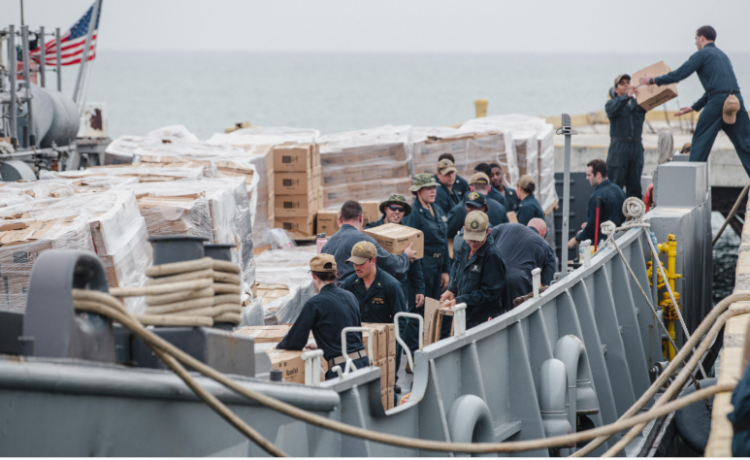
A United States military commander has warned that American warships could leave waters near Myanmar if the country’s military authorities refuse to allow the delivery of humanitarian assistance to cyclone survivors.
The warning, reported by Reuters on Thursday, October 29, highlights the difficulties of delivering emergency aid in a country where humanitarian needs intersect with political and security tensions.
The proposed assistance includes essential supplies such as food and water for people affected by a cyclone.
Natural disasters can leave communities without reliable access to drinking water, electricity, healthcare, transport and shelter. In such circumstances, delays in relief delivery can increase the risks faced by vulnerable residents.
However, humanitarian operations may become more complicated when authorities impose restrictions on access or when security concerns affect the movement of aid personnel.
The role of military assets in relief operations
Naval vessels can provide logistical support during humanitarian emergencies, depending on the circumstances and the capabilities available.
Ships may transport supplies, support communications and provide access to areas where ordinary transport networks have been damaged.
Their usefulness depends on coordination with relevant authorities, safe access to affected communities and clear arrangements for distributing aid.
In disaster response, the presence of military vessels does not by itself guarantee that supplies will reach the people who need them.
Relief agencies must still identify affected communities, establish distribution points and ensure that assistance is delivered safely and fairly.
The reported warning suggests that permission from Myanmar’s military authorities remains a key factor in the proposed US assistance.
Myanmar’s political and humanitarian challenges
Myanmar has faced prolonged political instability since the military seized power in February 2021. The country has also experienced widespread conflict and significant humanitarian challenges.
These conditions can complicate emergency responses, particularly where access is restricted or where different authorities control different areas.
When a natural disaster occurs in an already fragile environment, existing difficulties can become more severe.
People may face simultaneous risks from displacement, damaged infrastructure, interrupted medical services and shortages of essential supplies.
Humanitarian organisations generally emphasise the importance of safe and timely access to affected populations, regardless of political circumstances.
Negotiations over access can therefore have direct consequences for the speed and reach of relief efforts.
Diplomacy and the delivery of aid
The reported US warning introduces a diplomatic dimension to the relief operation.
If the vessels leave, the proposed naval assistance may not proceed in the form described. However, the report does not establish that all humanitarian assistance to Myanmar would stop or that other relief channels would necessarily be affected.
The extent of any impact would depend on what supplies were planned, which communities were intended to receive them and whether alternative delivery arrangements were available.
The situation also raises broader questions about the relationship between humanitarian assistance and national sovereignty.
Governments exercise authority over their territory and waters, while international humanitarian efforts seek to ensure that people affected by disasters can receive essential support.
Resolving such tensions often requires communication, practical arrangements and agreement on how assistance can be delivered safely.
What happens next?
The immediate question is whether Myanmar’s military authorities will permit the proposed aid operation to proceed.
Further official statements would be needed to establish the final decision, the scope of the proposed assistance and the likely consequences for affected communities.
For people recovering from a cyclone, the priority remains access to clean water, food, medical assistance and safe shelter.
The broader significance of the warning lies in the difficulty of separating humanitarian needs from political and security disputes.
Effective disaster response requires timely access, reliable coordination and a focus on the people who need assistance most.