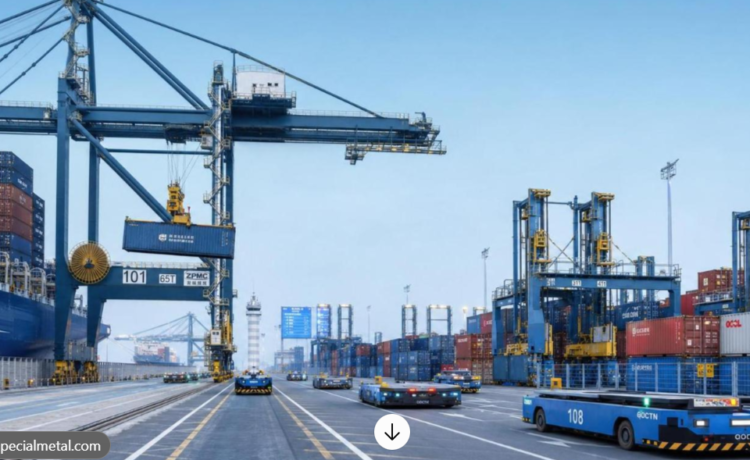
Maritime technology company INFYZ Solutions Private Limited has won the Maritime Innovation Excellence Award at the Marine Insight Global Awards 2026, recognising its work in developing digital solutions for ports, shipping companies and logistics operators.
The award, reported by Marine Insight on October 21, highlights the industry’s growing interest in technologies that can improve operational efficiency, strengthen safety and reduce delays in the movement of cargo.
The recognition also reflects INFYZ’s role as the official Ports and Terminals Digitalisation Partner for the Marine Insight Summit 2026.
According to the report, the competition was closely contested, with the two leading nominees separated by a small margin. INFYZ received the highest public vote in the category in addition to winning the jury evaluation.
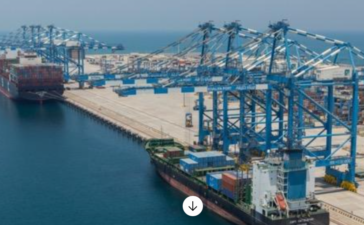
The award places attention on a challenge facing ports around the world: how to manage growing operational demands while controlling costs and improving service delivery.
Digitalisation is changing port operations
Ports connect ships with road transport, rail networks, warehouses and distribution centres. Every stage requires information to move between different businesses and operational teams.
When those systems operate separately, staff may need to enter the same information more than once, rely on manual paperwork or make phone calls to confirm operational details.
These gaps can create delays at terminal gates, complicate cargo tracking and make it harder to coordinate vessel arrivals.
Digitalisation seeks to address these problems by connecting information and automating routine tasks.
A well-integrated system can help terminal operators monitor cargo movements, schedule equipment, manage truck appointments and coordinate activities across different parts of the port.
For shipping companies, better information can support more accurate planning. For cargo owners, it can improve visibility into the movement of goods.
The benefits, however, depend on the quality of implementation, the reliability of the technology and the willingness of different stakeholders to use compatible systems.
Company expands its maritime software operations
Marine Insight reported that INFYZ has developed software covering a range of maritime and logistics processes.
Its solutions include systems for container terminals, general cargo operations and roll-on/roll-off terminals, where vehicles are driven on and off vessels.
The company’s product range also includes commercial systems for shipping lines, vehicle processing centres, container depots, truck appointment management and cargo logistics.
The report said the business operates across more than 65 locations in 15 countries and has a team of more than 100 engineers.
This international presence illustrates the demand for technology that can be adapted to different port environments and cargo-handling requirements.
The company was established in 2007 and focuses on digital solutions for the maritime, port and logistics industries.
Automation could reduce waiting times
During a Smart Ports panel at the summit, INFYZ Chief Executive Officer Srinivas Ramireddy discussed the operational challenges faced by small and medium-sized ports that still depend on manual processes.
The report cited automated gate systems as one example of how technology can improve efficiency. Ramireddy said automation could reduce truck turnaround times from as much as 10 minutes to less than 60 seconds in relevant operations.
Such improvements can matter because truck movements are closely connected to the wider flow of cargo through a terminal.
When vehicles spend less time waiting at gates, operators may be able to improve scheduling and reduce congestion within the port.
However, the results achieved at individual terminals will depend on their infrastructure, traffic volumes, security procedures and the way systems are integrated into existing operations.
Automation must also be supported by staff training, maintenance and reliable data.
Artificial intelligence and connected supply chains
Looking towards 2035, Ramireddy outlined a vision of more connected supply chains, including real-time operational visibility, vessel speed adjustments to support just-in-time arrivals, artificial intelligence tools for terminal planners and integrated terminal operating systems.
These technologies could help port operators make decisions using more timely information.
For example, better coordination between vessel arrivals and terminal readiness may reduce unnecessary waiting. AI-supported planning could also help operators assess competing demands for labour, equipment and storage space.
Yet digital transformation brings challenges. Ports must consider cybersecurity, system reliability, staff skills and the protection of commercial information.
Technology investment also requires a clear business case, particularly for smaller terminals operating with limited resources.
Lessons for African ports
The award has relevance beyond the company itself. African ports are under pressure to improve cargo handling, attract shipping services and reduce the costs associated with moving goods.
Nigeria, in particular, is pursuing reforms aimed at simplifying trade documentation and improving port efficiency.
Digital port systems could complement these efforts by improving the exchange of information between terminal operators, shipping companies, clearing agents and government agencies.
Still, modernisation should be guided by practical needs rather than technology alone. Ports need solutions that work with their existing infrastructure and produce measurable improvements.
Conclusion: INFYZ’s award highlights the importance of digital innovation in maritime operations. As ports pursue greater efficiency, the lasting value of these technologies will depend on their ability to reduce delays, improve safety and make cargo movement more reliable.