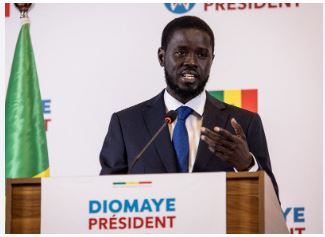
Senegalese President Bassirou Diomaye Faye is heading into crucial discussions with the International Monetary Fund as his government seeks to advance its economic reform programme and strengthen confidence in the country’s finances.
Faye is scheduled to meet IMF Managing Director Kristalina Georgieva on September 15 in Washington, the Fund confirmed on Monday.
The meeting will focus on recent developments in Senegal’s economy and the government’s ongoing reform programme.
The talks form part of Faye’s working visit to Washington on September 14 and 15.
IMF Relationship Matters for Senegal
The discussions carry considerable significance because Senegal has been attempting to strengthen fiscal management while maintaining the development ambitions of Faye’s administration.
IMF-backed programmes can provide countries with access to financing, but they also typically involve commitments covering government expenditure, revenue mobilisation, debt management and broader economic reforms.
For Senegal, reaching common ground with the Fund could help strengthen investor confidence and improve access to international financing.
But the government must also balance fiscal discipline with domestic expectations for employment, infrastructure and improvements in living standards.
Economic Reform Takes Centre Stage
According to the IMF, Georgieva and Faye will discuss both recent economic developments and Senegal’s economic reform programme.
That wording suggests the meeting will go beyond a diplomatic courtesy call.
Senegal has significant economic potential, including oil and gas production, agriculture, infrastructure and its position as an important commercial gateway in West Africa.
But converting those assets into broad-based growth requires credible public finances and an investment environment capable of attracting long-term capital.
The country’s relationship with international lenders therefore remains important.
Washington Followed by Abu Dhabi
Faye’s diplomatic schedule also demonstrates Senegal’s effort to diversify economic partnerships.
Following the Washington visit, the Senegalese leader is scheduled to make an official visit to Abu Dhabi on September 16 and 17.
The sequence is notable.
Washington gives Dakar an opportunity to engage international financial institutions, while Abu Dhabi provides access to one of the world’s major centres of sovereign investment capital.
Gulf states have substantially increased their economic involvement across Africa, particularly in infrastructure, energy, ports, agriculture and mining.
Senegal will be looking to position itself to benefit from those capital flows.
Reform Must Translate Into Growth
For ordinary Senegalese citizens, however, the success of economic reform will ultimately be measured differently.
Macroeconomic stability matters, but households are more likely to judge policy through employment, food prices, electricity costs, incomes and access to public services.
That leaves Faye with the challenge confronting many African governments: satisfying lenders and investors without allowing fiscal reforms to undermine domestic living standards.
Tuesday’s meeting with Georgieva could therefore become an important indicator of how Senegal intends to balance those competing priorities.
The objective for Dakar is not merely another IMF agreement.
It is to create a financial framework capable of supporting investment and growth without allowing debt and fiscal pressures to overwhelm the country’s development ambitions.