Nigeria’s long-running debate over petrol subsidies has entered another phase as policymakers and economic stakeholders continue to weigh the financial gains of subsidy removal against its impact on consumers and businesses.
Before the removal of the subsidy, petrol prices were kept artificially low through government intervention.
The system required the government to finance the difference between the cost of importing or supplying petroleum products and the regulated retail price.
While the policy provided cheaper fuel for consumers, it placed considerable pressure on government finances.
The cost of the old system
Nigeria spent enormous amounts maintaining the subsidy regime.
The system was estimated to have cost the government around N4 trillion in 2022 alone.
That level of spending reduced the resources available for other priorities.
Critics of the subsidy argued that the money could have been invested in infrastructure, healthcare, education and other areas capable of improving long-term productivity.
However, removing the subsidy created a different set of economic challenges.
Consumers face higher costs
The most immediate effect of subsidy removal was an increase in petrol prices.
That increase affected household budgets and business operating costs.
Transport costs rose, while companies faced higher logistics expenses.
The impact also spread through the wider economy because transportation is connected to almost every sector.
Farmers pay to move agricultural products.
Manufacturers pay to transport raw materials.
Retailers pay to move goods.
Workers also spend money commuting.
Therefore, changes in petrol prices can influence the broader cost of living.
Government gains fiscal space
Despite those challenges, subsidy removal has improved government revenues.
The government no longer has to dedicate massive resources to maintaining a fixed petrol price.
Those resources can potentially be redirected towards development spending.
The reform has also changed the structure of Nigeria’s petroleum market.
Private businesses can now compete more directly based on supply costs and market conditions.
The Dangote effect
Nigeria’s growing domestic refining capacity is another major factor.
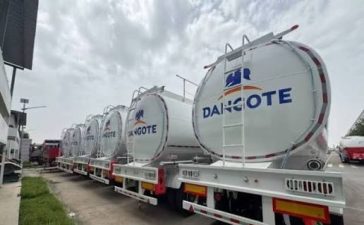
The Dangote Refinery has become increasingly important to the domestic petroleum supply chain.
Its expansion could reduce dependence on imported refined products and create more opportunities for local value addition.
Recent efforts to reduce distribution costs could also help improve downstream efficiency.
However, domestic refining does not automatically guarantee low petrol prices.
The final cost will continue to depend on crude oil prices, exchange rates, taxes, distribution and operating expenses.
Finding the balance
The central policy challenge is therefore finding a balance between affordability and fiscal sustainability.
A return to a broad subsidy could place significant pressure on public finances.
At the same time, allowing fuel prices to rise without sufficient measures to protect vulnerable households could worsen cost-of-living pressures.
This is why economists and policymakers continue to debate targeted support mechanisms.
Rather than subsidising every litre of petrol for every consumer, government could focus assistance on vulnerable households and productive sectors.
Such a strategy could preserve some of the fiscal gains from reform while reducing the burden on lower-income Nigerians.
A long-term economic question
Nigeria’s subsidy debate is ultimately about more than petrol.
It is about how the country manages scarce public resources.
If savings from subsidy reform are invested productively, the economy could benefit from improved infrastructure and stronger public services.
If the savings are not translated into visible improvements, public opposition to the reform could intensify.
The success of the policy will therefore be judged not only by government finances but also by whether Nigerians experience stronger economic opportunities and improved living standards.