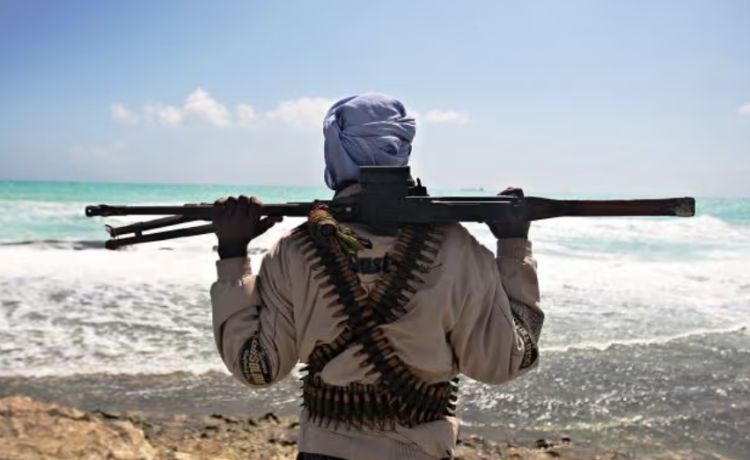
Authorities in Somalia’s Puntland region have raised fresh concerns about a possible return of piracy along the country’s coastline.
The Puntland government said it has increased maritime security operations after receiving information suggesting that criminal networks linked to piracy may be trying to rebuild their activities.
In a statement released on Saturday, the Ministry of Fisheries and Marine Resources said preliminary intelligence suggested that outside actors could be attempting to recruit or financially support individuals and networks previously associated with piracy. Puntland authorities said the alleged efforts could threaten regional security and damage the region’s international reputation.
The warning comes after a series of recent hijackings in waters around Somalia and the Gulf of Aden. Somali pirates reportedly hijacked the oil products tanker M.T. Sibu 1 off the coast of Yemen on August 20, taking the vessel towards Somalia’s Puntland coast. The incident followed the seizure of another vessel, the M/V LUTUF, off Somalia just days earlier.
According to recent reports, the M.T. Sibu 1 was the sixth commercial vessel hijacked by Somali pirates since April, raising concerns that piracy could once again become a major threat to international shipping in the region. The attacks have reportedly occurred both near Somalia’s coastline and farther out in the Gulf of Aden and western Indian Ocean.
Puntland authorities said they are responding by strengthening security along the coastline and monitoring areas where pirate groups may attempt to operate.
The renewed threat is particularly worrying because the waters around Somalia are among the world’s most important shipping routes. Thousands of commercial vessels travel through the Gulf of Aden and nearby waters every year, carrying goods, fuel and other important supplies between Asia, Africa, Europe and the Middle East.
Piracy off Somalia was once one of the biggest threats to international shipping, but international naval patrols and improved security measures significantly reduced attacks over the years. The recent incidents, however, have raised fears that criminal groups could be taking advantage of changing security conditions in the region.
Puntland officials have also linked the latest concerns to broader security challenges facing the region, including ongoing counterterrorism operations.
As authorities increase patrols and surveillance, the situation will be closely watched by governments, shipping companies and international security agencies.
For now, Puntland’s message is clear: coastal security is being strengthened as authorities try to prevent a full-scale return of piracy and protect one of Africa’s most strategically important maritime regions.