The United States has threatened to impose what Treasury Secretary Scott Bessent described as the “toughest sanctions in history” on Iran, as Washington increases economic pressure on Tehran and seeks to limit the need for further major military operations.
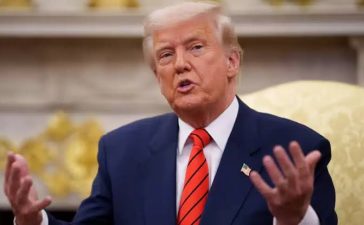
Bessent made the remarks on Thursday, a day after President Donald Trump threatened “Economic Warfare” against Iran and warned that countries providing any form of economic lifeline to Tehran would face severe consequences.
The Treasury secretary said details of the new sanctions package would be announced at a press conference on Monday.
Bessent said the administration’s strategy would combine financial pressure with an existing blockade on Iran.
“It is a one-two punch. We have the blockade, and we are going to have the toughest sanctions in history,” he said, referring to a US naval blockade imposed on Iran in April and paused for a month in mid-June.
Bessent suggested that intensified economic pressure could reduce the likelihood of a large-scale resumption of military action.
“If we are doing the maximum economic pressure, then that means that likely there will not be a large-scale kinetic restart,” he said.
Oil prices rose to more than a three-week high on Thursday after the latest US threats, as investors assessed the potential impact of additional financial restrictions on an already disrupted Middle Eastern energy market.
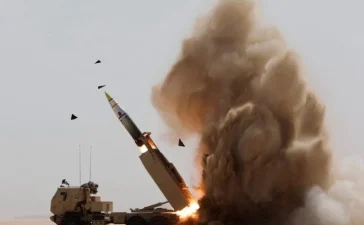
The nearly six-month-old conflict has killed thousands of people, drawn Gulf nations into the crisis and disrupted oil markets.
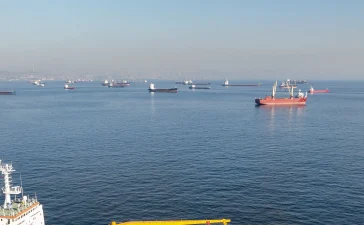
Iran has also demonstrated its ability to restrict shipping through the Strait of Hormuz, a strategically important waterway that carried about one-fifth of globally traded oil before the conflict began.
The United States and Iran have twice announced ceasefire agreements, in April and June, aimed at restoring the free flow of shipping through the Strait of Hormuz and creating a path towards ending the conflict.
Both agreements subsequently collapsed.
Iran has faced extensive economic sanctions for nearly five decades, dating back to the 1979 Islamic Revolution.
Iran’s Foreign Ministry condemned the latest US sanctions threats, describing Washington’s economic measures as “economic terrorism” and saying they would not weaken the country’s determination to protect its independence and national sovereignty.
Bessent said the United States would provide more details about the sanctions package on Monday and explain the specific measures Washington intends to take against Iran.
The potential impact on China is also emerging as a major concern.
China purchased more than 80% of Iran’s shipped oil in 2025, according to data from analytics firm Kpler, making Beijing a key customer for Iranian crude.
Asked whether the United States could target China for continuing to do business with Iran, Bessent indicated that some discussions would be handled privately.
He noted that China obtains about half of its energy from the Gulf and argued that Beijing would benefit from supporting Washington’s efforts.
China’s embassy in Washington rejected the use of sanctions and economic pressure as a solution to the conflict.
A spokesperson said sanctions and pressure would not help resolve the dispute and called on the relevant parties to pursue political and diplomatic solutions.
Trump had warned on Wednesday that the United States would pursue “Economic Warfare and Isolation on an unprecedented scale.”
He said countries allowing their financial institutions, businesses, airports or government entities to provide any form of support to Iran would face “TREMENDOUS Economic Consequences.”
Trump did not specify the measures the United States would impose or identify particular countries that could be targeted.
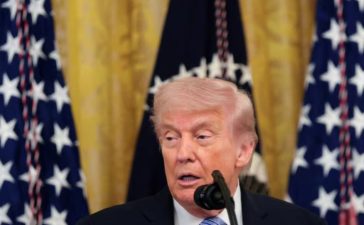
The warning comes as the US president faces growing domestic pressure to bring the conflict to an end.
Higher fuel prices have weighed on his approval ratings and could become an issue ahead of the November midterm elections, when Republicans will seek to retain control of Congress.
Iranian Foreign Minister Abbas Araqchi accused Trump of using the threats to divert attention from domestic economic challenges in the United States, including record government debt and rising interest rates.
Araqchi said Washington’s continued reliance on what he described as failed policies would produce further failures and increase opposition to the United States among Iranians.
Trump’s social media announcements and threats have not always been implemented exactly as stated, leaving investors and governments watching closely for details of the measures expected to be unveiled on Monday.