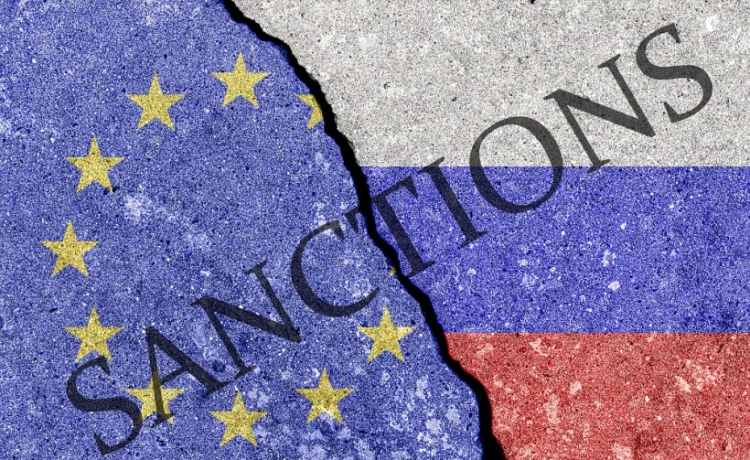
The European Union is preparing a major new round of sanctions against Russia as European governments seek to increase pressure over Moscow’s war in Ukraine.
EU foreign policy chief Kaja Kallas said the bloc intends to introduce its most far-reaching sanctions package against Russia in the coming months.
The announcement represents another escalation in Europe’s effort to restrict Russian revenue and limit the country’s ability to sustain its war effort.
Europe Plans Tougher Measures
The European Union has already imposed multiple rounds of sanctions against Russia.
The measures have targeted individuals, companies, financial institutions, energy-related activities and other sectors of the Russian economy.
The new package is expected to broaden those restrictions.
Kallas said the number of sanctioned Russian entities could rise significantly if the proposed measures are adopted.
The objective is to increase economic pressure on Moscow while supporting Ukraine.
The Ukraine War Remains at the Centre
The sanctions are part of Europe’s broader response to Russia’s invasion of Ukraine.
European governments have maintained that economic pressure is necessary to limit Russia’s ability to finance military operations.
However, sanctions have also created economic challenges for European countries.
Europe has had to reduce its dependence on Russian energy supplies while finding alternative sources.
That process has changed energy markets across the continent.
Targeting Russia’s Revenue
One of the central objectives of sanctions is to reduce Russia’s ability to generate revenue from international trade.
Energy exports have historically been an important source of Russian government income.
The EU has therefore targeted various aspects of Russia’s energy industry.
The bloc has also attempted to restrict the activities of vessels involved in transporting Russian oil outside conventional shipping channels.
Financial restrictions are another important component.
Sanctions can make it more difficult for Russian companies and individuals to access international financial systems.
The Shadow Fleet Issue
European governments have increasingly focused on what is often referred to as Russia’s “shadow fleet”.
These are vessels that are used to transport Russian oil and other commodities while attempting to avoid Western restrictions.
The EU has already sanctioned many vessels linked to this network.
The new package could expand the number of ships and companies affected.
The goal is to make it more difficult for Russia to maintain oil revenues despite existing sanctions.
Russia’s Response
Moscow has consistently criticised Western sanctions.
Russian officials have argued that the restrictions amount to economic warfare.
The Kremlin has also attempted to strengthen trade relationships with countries outside the Western sanctions regime.
Russia has increased economic ties with countries including China and India.
These relationships have helped Moscow maintain access to international markets.
That means the effectiveness of European sanctions depends partly on whether Russia can continue redirecting its exports elsewhere.
Challenges for Europe
The EU itself must balance political objectives against economic considerations.
Some European industries have historically depended on Russian energy and raw materials.
The transition away from Russian supplies has therefore involved significant costs.
Energy security remains a major concern.
European governments also have to consider the effect of sanctions on businesses and consumers.
The bloc must therefore design measures that increase pressure on Russia without creating unacceptable economic consequences for European economies.
US Relations Matter
The effectiveness of Western sanctions also depends on cooperation between Europe and the United States.
The US has imposed extensive sanctions against Russia.
However, differences between Washington and European capitals can complicate coordination.
European governments have continued to support Ukraine, but the broader international diplomatic environment has become increasingly complicated.
Any future peace negotiations could also influence the direction of sanctions policy.
What the New Package Could Mean
If adopted, the new EU measures would demonstrate that Europe remains committed to maintaining economic pressure on Moscow.
The sanctions could affect Russian companies, financial networks, energy operations and individuals linked to the country’s war effort.
However, sanctions alone are unlikely to determine the outcome of the conflict.
Their effectiveness depends on enforcement and international cooperation.
Russia’s ability to find alternative buyers and suppliers also remains an important factor.
The Road Ahead
The European Commission and EU member states will now work on the details of the proposed package.
Member states must agree on the measures before they can be formally adopted.
That process can involve difficult negotiations because individual European countries have different economic interests.
Still, Kallas’s announcement signals that Brussels wants the next package to be significantly stronger than previous rounds.
For Ukraine, stronger sanctions could provide additional economic pressure on Russia.
For Moscow, they represent another challenge to its ability to operate within the international financial and trading system.
The coming months will show how far the EU is prepared to go and whether its members can maintain a united position.
For now, Europe is signalling that its sanctions campaign against Russia is not winding down.
Instead, Brussels appears ready to enter another phase of economic pressure.