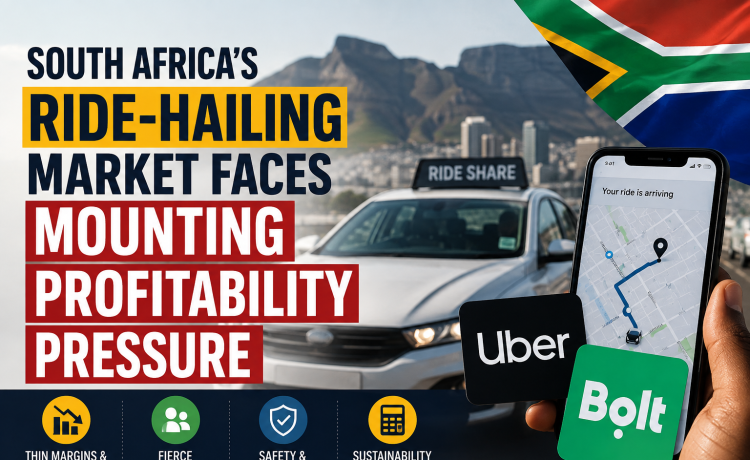
South Africa’s ride-hailing industry is facing increasing pressure as platforms, drivers and regulators grapple with rising operating costs, intense competition and growing demand for affordable fares.
Bobby Ramagwede, chief executive officer of the Automobile Association, has warned that the economics of ride-hailing in South Africa could be challenging for major platforms such as Uber and Bolt.
Ramagwede made the comments while discussing the proposed e-hailing platform linked to the Gautrain. According to him, the highly competitive nature of South Africa’s ride-hailing market means that even a new entrant could struggle to generate sustainable profits.
Thin Margins Put Pressure on Ride-Hailing Platforms
At the centre of the challenge is a difficult balance between what passengers are willing to pay and what drivers need to earn.
South African commuters generally want convenient transportation at affordable prices. However, drivers are facing higher expenses associated with fuel, vehicle maintenance, insurance and other operating costs.
As a result, ride-hailing companies have to keep fares competitive enough to retain passengers while also ensuring that drivers receive an income that makes the business worthwhile.
This creates pressure on the entire business model.
When fares remain low, passengers benefit in the short term. However, lower fares can make it more difficult for drivers to cover their operating expenses and for platforms to maintain healthy margins.
The situation is particularly challenging in a market where several companies compete for the same passengers and drivers.
Bolt Rejects Claims of Financial Struggle
While Ramagwede’s comments highlight concerns about the financial sustainability of ride-hailing, Bolt has disputed the suggestion that it is struggling financially in South Africa.
The company says South Africa remains one of its most important markets. Bolt has also stated that it has invested approximately R3 billion in the country over the past decade.
That investment highlights the importance of the South African market to the company’s long-term strategy.
However, continued investment does not necessarily eliminate the wider challenges facing the industry. Ride-hailing platforms still have to contend with changing consumer expectations, operating costs, competition and government regulation.
For drivers, meanwhile, the key issue remains whether the income generated from trips is sufficient after expenses are taken into account.
Uber Changes Its Service Offering
The pressure on the sector is also reflected in changes to the services offered by major platforms.
Uber plans to discontinue its UberX service in South Africa from September 2026. The company is expected to replace the existing middle-tier option with a revised structure that includes the cheaper Uber Go service, as well as Comfort and Black.
The change is significant because pricing and vehicle categories play an important role in how ride-hailing companies compete for customers.
By offering a cheaper option alongside premium services, Uber can potentially appeal to passengers with different budgets while maintaining higher-end alternatives for customers willing to pay more.
However, the success of such a strategy will depend on whether the pricing structure works for both passengers and drivers.
Safety and Regulation Add to Industry Pressure
Profitability is not the only challenge facing South Africa’s ride-hailing sector.
Uber and Bolt are also operating in an environment where safety concerns, vehicle impoundments and regulatory pressures remain important issues.
These challenges can increase costs for drivers and platforms while creating uncertainty about how the industry will operate in the future.
For drivers, vehicle-related enforcement can have a direct impact on their ability to work. For companies, regulatory uncertainty can make it more difficult to plan investments and develop long-term strategies.
At the same time, passenger safety remains a major concern. Ride-hailing companies must continue investing in systems and measures designed to improve the safety of both passengers and drivers.
The Bigger Question for South Africa’s E-Hailing Industry
Despite the challenges, there is little indication that South Africans will stop relying on ride-hailing services in the near future.
For many commuters, platforms such as Uber and Bolt have become an important part of the urban transportation system, providing an alternative to private cars and traditional public transport.
The more fundamental question, therefore, is whether the industry can remain financially sustainable for everyone involved.
Platforms need enough revenue to operate and invest in technology, safety and expansion. Drivers need sufficient earnings to cover fuel, vehicle maintenance and other costs. At the same time, passengers want fares that remain affordable.
Finding a sustainable balance between these competing demands could determine the future of ride-hailing in South Africa.
The proposed Gautrain e-hailing platform will also enter this challenging environment. Its ability to attract passengers and drivers may ultimately depend not only on convenience, but also on whether its business model can generate sustainable returns in a market where margins are already under pressure.
For now, South Africa’s ride-hailing sector remains highly competitive. The coming changes at Uber, the continued expansion of Bolt and the emergence of new platforms could provide a clearer picture of whether the industry can successfully balance affordability, driver earnings and profitability.