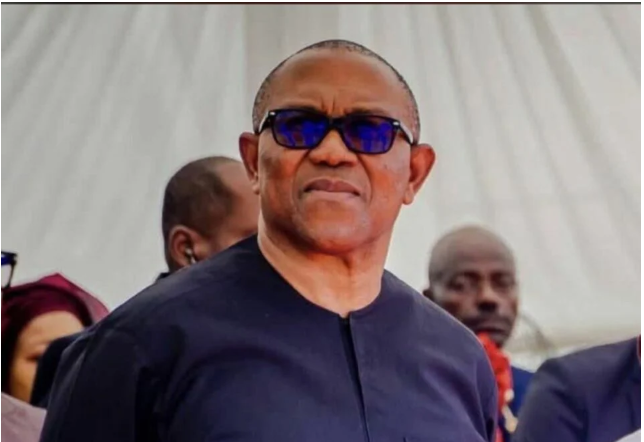
Peter Obi, a former presidential candidate and prominent political figure, has criticised aspects of Nigeria’s political system while raising fresh concerns about corruption and accountability in the country’s governance structure.
Obi’s comments have renewed discussions about the state of Nigeria’s democracy, the effectiveness of public institutions and the need for reforms that can strengthen transparency and accountability in public administration.
Speaking on the country’s political environment, Obi reportedly questioned the way political affiliations and party loyalties can influence public discourse and the handling of allegations against political actors.
His remarks have added to the growing debate over the role of political parties in Nigeria’s fight against corruption and the importance of ensuring that accountability remains consistent regardless of an individual’s political affiliation.
The former presidential candidate has consistently advocated for stronger institutions and greater transparency in the management of public resources. He has also frequently argued that Nigeria’s development challenges cannot be addressed without fundamental changes to the way the country manages its resources and conducts public affairs.
At the centre of his latest criticism is the concern that political considerations could sometimes influence public perception and responses to allegations of misconduct.
For Obi, the effectiveness of any anti-corruption campaign depends largely on the ability of institutions to operate independently and apply the law consistently.
His position has resonated with sections of the public who believe that corruption remains one of Nigeria’s most persistent development challenges.
Over the years, corruption has been identified as a major factor affecting public service delivery, infrastructure development and economic growth. Critics argue that the mismanagement or diversion of public resources can limit the government’s ability to provide quality healthcare, education, security and other essential services.
Obi’s intervention has therefore brought renewed attention to the need for stronger institutions capable of holding public officials accountable.
Political analysts have also noted that Nigeria’s democratic development requires citizens to have confidence in the country’s institutions.
When allegations of corruption or misconduct arise, citizens expect relevant authorities to investigate them transparently and take appropriate action where wrongdoing is established.
The perception that political connections can influence accountability can weaken public trust and discourage citizens from participating actively in democratic processes.
Beyond corruption, Obi’s broader criticism reflects his long-standing argument that Nigeria needs a political system focused more on development and less on political competition.
He has repeatedly called for greater emphasis on production, investment in human capital and responsible management of public resources.
According to this perspective, political leadership should be measured not only by electoral victories but also by the ability to improve the quality of life of citizens.
This includes creating employment opportunities, strengthening education, improving healthcare and building infrastructure that supports economic growth.
The debate surrounding Obi’s comments comes as Nigeria moves towards another important electoral cycle, with political parties and politicians increasingly positioning themselves ahead of the 2027 general elections.
As political activities intensify, issues surrounding corruption, governance and accountability are expected to remain prominent in public discussions.
Citizens are likely to demand greater clarity from political parties and candidates about their plans to address the country’s economic and institutional challenges.
For many Nigerians, the fight against corruption is closely connected to the broader question of good governance.
Strong anti-corruption institutions, transparent public procurement systems and effective oversight mechanisms are widely regarded as important tools for ensuring that public resources are used for their intended purposes.
Obi’s latest comments have therefore contributed to a wider national conversation about the kind of political system Nigeria needs to achieve sustainable development.
While political disagreements are an essential part of democratic governance, stakeholders say such debates should ultimately lead to constructive discussions about policies and solutions.
As the country prepares for future elections, the ability of political leaders to address concerns about corruption, accountability and institutional integrity will remain an important consideration for voters.
Ultimately, the debate sparked by Obi’s remarks underscores the need for a political culture in which accountability applies equally to all individuals, regardless of political affiliation.
Strengthening democratic institutions, promoting transparency and ensuring that public officials are held accountable could help rebuild public confidence and create a stronger foundation for Nigeria’s economic and social development.