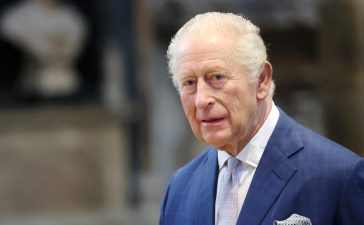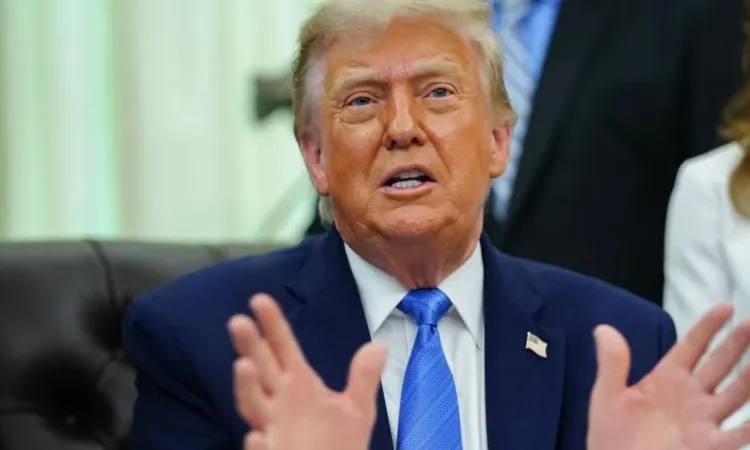
US President Donald Trump on Wednesday sparked fresh debate over inflation and economic policy after stating that he “loved” the inflation, even as official data showed consumer prices rising at their fastest pace in three years.
Speaking to reporters, Trump responded to concerns about inflation exceeding 4 per cent and its potential political impact ahead of upcoming US midterm elections, insisting that price pressures would ease once the Iran conflict ends.
“I love the inflation,” Trump said when asked about the latest government data and its implications for voters and the economy.
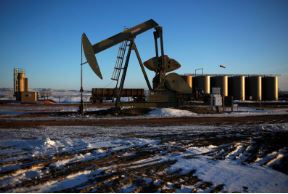
The president added that he expected oil prices to fall sharply after the conflict subsides, arguing that current disruptions were temporary. “When it’s over, you will see oil drop to where it was before. It’s coming down. It’s going to come down like a rock,” he said.
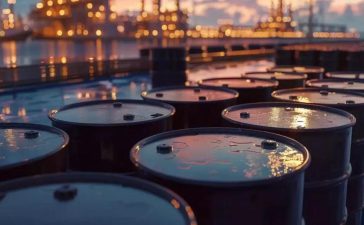
Trump also revealed that he had approved a plan to discreetly move oil tankers through the Strait of Hormuz amid rising tensions and fears of supply shortages, describing the decision as necessary despite its economic consequences.
“It was worth it to me,” he said, referring to the operation and its broader strategic objectives.
The remarks come as the ongoing conflict involving Iran continues to disrupt global energy markets, pushing up the cost of oil, gasoline, fertilizer, and other key commodities. Analysts warn that prolonged instability in the Strait of Hormuz could sustain inflationary pressures worldwide.
Higher energy prices also complicate monetary policy decisions for the US Federal Reserve, which may be forced to maintain higher interest rates for longer, despite earlier expectations of rate cuts.
Trump has repeatedly called for lower borrowing costs since returning to office, arguing that tighter monetary policy could slow economic growth and increase financial strain on households and businesses.
However, rising inflation has become a growing political challenge for Republicans, who are seeking to retain control of both the House of Representatives and the Senate in upcoming elections. Economists warn that persistent cost-of-living pressures could weaken voter support for the party.
Trump’s own approval ratings on economic management have reportedly declined, despite his campaign pledge to reduce inflation and ease household financial burdens.
The conflict in Iran has also intensified concerns in global energy markets, particularly as disruptions in the Strait of Hormuz continue to affect tanker movements. Industry experts warn that any prolonged closure of the strategic waterway could trigger another sharp spike in oil prices.
Even in the event of a diplomatic breakthrough, analysts caution that restoring normal supply flows could take months, with ripple effects potentially lasting into 2026.
While the United States is relatively insulated from extreme fuel shocks compared to other economies, sustained higher energy prices could still weigh on consumer spending and broader economic growth.
Earlier comments by Trump suggesting that US national security priorities outweigh domestic economic concerns have further fueled debate over the balance between geopolitical strategy and economic stability.
As tensions between Washington and Tehran continue, markets and policymakers alike remain focused on whether the conflict will deepen inflationary pressures or eventually give way to stabilisation in global energy prices.