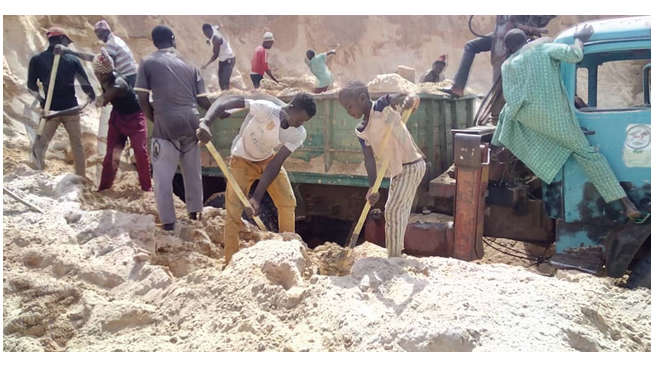
The Federal Government of Nigeria has reiterated its commitment to eliminating child labour as part of global efforts to achieve its eradication by 2030.
Mr. Magaji Ademu, Director of the Labour Inspectorate Department at the Ministry of Labour and Employment, made the statement on Wednesday in Geneva, Switzerland, during the ongoing 114th Session of the International Labour Conference.
Speaking to journalists on the sidelines of the global gathering, Ademu said Nigeria remains fully committed to ending all forms of child labour and strengthening enforcement mechanisms across the country.
He noted that key national policy frameworks had already been developed with international support, particularly from the International Labour Organization.
According to him, Nigeria’s National Child Labour Policy and National Action Plan have been validated and are set for official launch on June 16 in Abuja.
“Our national child labour policy and national action plan were validated with the support of the ILO. On the 16th of this month, as scheduled, they will be launched in Abuja,” he said.
Ademu stressed that Nigeria’s approach aligns with global commitments under international declarations calling for stronger political will, improved social protection systems, and effective law enforcement to eliminate child labour.
He also referenced the symbolic “red card” campaign against child labour, describing it as a global call for urgent collective action to end the practice.
However, he acknowledged that significant challenges remain, particularly weak enforcement of existing laws and limited access to rural communities where child labour is more prevalent.
He added that the government, in collaboration with stakeholders, is working to strengthen enforcement capacity and close structural gaps in order to accelerate progress toward eradication.
Nigeria continues to align its labour reforms with international standards as part of broader efforts to protect children’s rights and promote decent work.