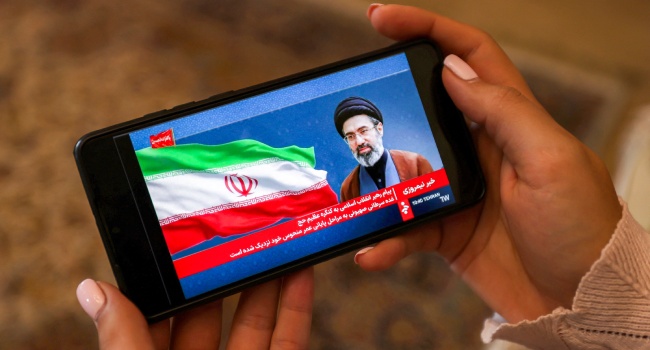
Iranian authorities on Tuesday partially restored internet connectivity after an almost three-month nationwide shutdown imposed during the country’s war with Israel and the United States.
The restoration was confirmed by internet monitoring group NetBlocks, Iranian officials, and residents inside the country.
The shutdown had largely disconnected Iranians from international networks, leaving only a domestic intranet operational for activities such as shopping, ride-hailing services, and online education.
“Live metrics show a partial restoration to internet connectivity in Iran on day 88,” NetBlocks said in a post on X, although the organisation noted it remained unclear whether the move marked a permanent end to what it described as “the longest nationwide internet shutdown in modern history.”
Iran’s Vice President, Mohammad Reza Aref, also confirmed the development in a post on X.
“The first step toward free and regulated access to cyberspace has been taken,” Aref said, adding that the demands of Iranians “will be fulfilled.”
Iranian state news agencies IRNA and Fars reported that full international internet connectivity had been restored for users of fixed broadband services.
However, NetBlocks said it had not independently confirmed full restoration across the country.
Residents inside Iran told AFP that mobile internet services remained restricted, while home internet connections using Wi-Fi had resumed in some areas.
Despite the restoration, many users still required virtual private networks (VPNs) to access certain social media platforms.
“A few minutes ago I could open international websites using my home internet provider,” a 22-year-old resident of Kermanshah said anonymously.
Another user in Tehran said internet access for his company had been restored, although mobile internet remained unavailable.
Others described the restored access as unstable and inconsistent across different regions.
The internet shutdown began on February 28 after war erupted between Iran, Israel, and the United States.
The closure followed an earlier blackout introduced on January 8 amid widespread anti-government protests across the country.
Activists accused authorities of using the shutdown to conceal the scale of the crackdown on demonstrations, which rights groups claimed left thousands dead, while also preventing further protests.
Doug Madory, head of internet analysis at US network monitoring firm Kentik, warned that the restoration should be viewed cautiously.
“Iran has a long way to go to get back to pre-Jan-8 levels of traffic volumes,” he wrote on X.
The prolonged shutdown has reportedly sparked internal debate within the administration of President Masoud Pezeshkian, who is considered a relatively moderate figure and has reportedly pushed for restrictions to be eased due to their economic impact.
However, major national security decisions in Iran are largely controlled by higher authorities.
According to Iranian lawmaker Yaghoub Rezazadeh, final decisions regarding internet restrictions rest with the Supreme National Security Council, headed by hardliner Mohammad Bagher Zolghadr.
Iran’s judiciary also suspended a newly formed presidential body that had earlier ordered the restoration of internet access.
The Special Headquarters for Organising and Governing the Country’s Cyberspace was established on May 12 by President Pezeshkian to oversee internet governance and digital policy.
Meanwhile, Iran’s Supreme Leader, Mojtaba Khamenei, has yet to appear publicly since the death of his father and predecessor, Ali Khamenei, at the beginning of the conflict.
Some Iranians welcomed the partial restoration online, expressing excitement over renewed access to international platforms.
“YouTube without a VPN!!! Oh my God, am I dreaming?” one user wrote on X.
Another user posted, “Hello my dear Twitter,” referring to the former name of the social media platform X.