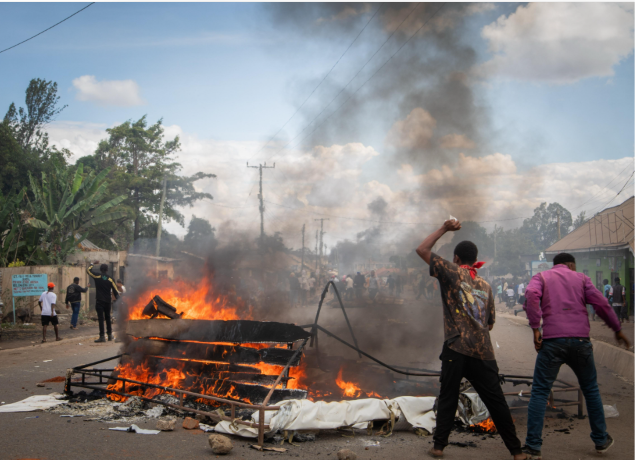
Families of people killed during Tanzania’s post-election violence are renewing their calls for justice, one year after the unrest that followed the country’s October 2025 general election. Despite investigations and official inquiries, relatives of the victims say they still lack satisfactory answers about the circumstances surrounding the deaths of their loved ones.
A report published by Deutsche Welle on 28 October 2026 highlighted the continuing distress of affected families and questions about the conduct of security personnel during the violence. The report also examined evidence reviewed by journalists and human rights organisations concerning alleged excessive use of force.
According to the report, a government inquiry recorded 518 deaths linked to the unrest. However, families continue to question whether the investigations have adequately established responsibility for the killings.
For those who lost relatives, the demand for justice goes beyond the publication of official findings. They want clear explanations of what happened, accountability where wrongdoing is established and recognition of the suffering experienced by affected households.
Questions remain over security operations
The violence erupted after Tanzania’s October 2025 general election, during a period of political tension and public demonstrations. The events raised concerns about the use of force by security personnel and the protection of citizens during periods of unrest.
DW reported that its investigations, alongside work by human rights organisations, documented incidents involving people who appeared to have suffered gunshot wounds to the head and upper body. The report also described cases involving people who were reportedly shot while fleeing or while outside during a government-imposed curfew.
These allegations have intensified calls for transparent investigations. Tanzania’s police guidelines restrict the use of firearms to circumstances in which they are considered absolutely necessary, according to the DW report.
However, evidence that security personnel were present at an incident does not, on its own, establish who ordered an operation or whether individual officers acted unlawfully. Those questions require careful investigation and evidence-based findings.
The government has previously described the unrest as an attempt to overthrow the administration. The competing accounts underline the importance of an investigation that can establish individual responsibility and distinguish verified evidence from political claims.
Investigations have not ended
The Chande Commission recommended further investigations but did not identify the security agencies, officers or commanders who might have been responsible for unlawful conduct.
A second inquiry, chaired by retired Justice Shaban Ally Lila, began gathering evidence in August 2026. Its findings were still pending at the time of DW’s report.
The Tanzanian Ministry of Home Affairs declined to comment to DW, saying that doing so could interfere with the legal process. The police had not responded to the publication’s questions by the time its report was published.
The absence of final findings has left some families uncertain about what steps will follow. For relatives of victims, the passage of time has not removed the need for answers.
The human cost of unresolved violence
The report featured accounts from relatives who said they had lost children, siblings and other family members. Some questioned why authorities had not visited affected households or provided a more direct response to their concerns.
Such accounts illustrate the longer-term consequences of political violence. Beyond the immediate loss of life, affected families can face financial hardship, emotional distress and uncertainty about whether their relatives’ deaths will ever be fully investigated.
Transparent investigations can help establish the facts, identify responsibility where evidence supports it and improve public confidence in institutions. They can also help authorities identify weaknesses in policing, crowd control and the protection of civilians.
The process must nevertheless distinguish between allegations and proven wrongdoing. Any criminal responsibility should be established through lawful procedures and credible evidence.
What happens next?
The findings of the second inquiry will be important in determining whether outstanding questions receive further examination. Families and human rights advocates will be watching for evidence that the process addresses the conduct of security agencies and the circumstances surrounding individual deaths.
For Tanzania, the issue also concerns public trust and the credibility of its institutions. Investigating election-related violence transparently can help demonstrate whether complaints are being treated seriously, regardless of the political circumstances in which they arose.
As the anniversary passes, the central demand from affected families remains straightforward: they want the truth about what happened to their relatives and meaningful accountability where the evidence establishes wrongdoing.