Residents of Beirut and southern Lebanon have expressed cautious scepticism following the extension of a fragile ceasefire agreement between Lebanon and Israel brokered by the United States, as renewed violence cast doubt on its durability.
Under the agreement announced on Wednesday, both sides agreed to renew the ceasefire and establish “pilot” security zones inside Lebanon from which Hezbollah militants would be excluded.
However, the arrangement has already triggered concerns among civilians about its practical implications, particularly regarding sovereignty, security, and the continued presence of Israeli military activity in Lebanese territory.
Speaking in Beirut, resident Suad Attia said the terms of the ceasefire must be fair and inclusive, warning against any arrangement perceived as favouring one side.
“According to the terms of the ceasefire, it should not favor some people over others. It depends on whether it includes a withdrawal from the occupied territories and does not give Israel freedom of movement based on what it considers a threat and what it does not,” she said.
Another resident, Khaled Zaghloul, stressed the need for guarantees that Israel has no long-term territorial ambitions in Lebanon, particularly in areas affected by ongoing tensions with Hezbollah.
From the southern city of Tyre, Hassan Dakhlallah voiced deeper scepticism based on past conflicts, saying previous Israeli actions had shown a reluctance to withdraw from occupied areas.
“Once it occupies something, it does not withdraw from it,” he said.
Hezbollah is not directly involved in the ceasefire negotiations, which have reportedly been conducted at ambassadorial level in Washington since last month.
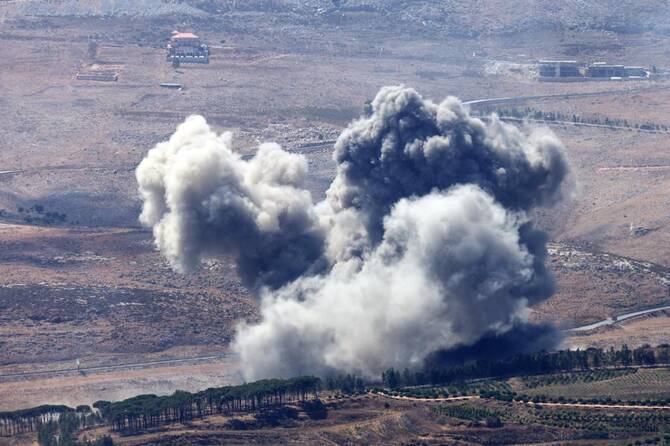
Despite the diplomatic efforts, violence continued on Thursday. The Lebanese state-run National News Agency (NNA) reported a series of Israeli drone strikes across southern Lebanon that left at least one person dead and several others injured.
According to the report, a drone strike on a motorcycle in the village of Maaroub killed one person and injured another, while another strike in Zefta wounded members of a family identified as Antoine Bouissa, his wife Terez, and their daughter Najat.
Further strikes were reported in multiple locations including Kfar Rumman, Kfar Tebnit and other villages in the Tyre district.
The Israeli military reportedly issued warnings advising civilians to avoid areas south of the Zahrani River, stating that operations were continuing against Hezbollah-linked targets.
The renewed ceasefire agreement, intended to reduce tensions and establish controlled security arrangements, now faces uncertainty as continued strikes raise questions about enforcement and long-term stability in the region.
With distrust high among residents and military activity ongoing, the prospects for lasting peace remain unclear despite diplomatic efforts to stabilise the border area.