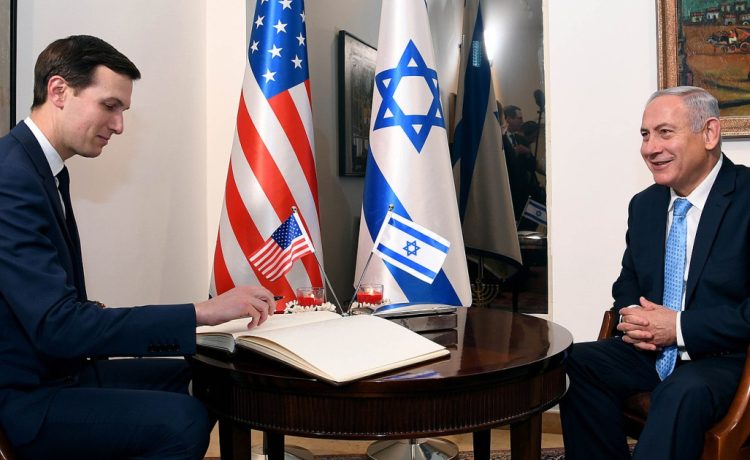
US President Donald Trump’s Middle East diplomatic effort has entered another important stage after his envoy Jared Kushner met Israeli Prime Minister Benjamin Netanyahu to discuss the administration’s proposed plan for Gaza.
The meeting follows a rare encounter between Kushner and Hamas representatives in Egypt, as Washington attempts to revive negotiations aimed at ending the conflict.
The diplomatic activity represents one of the most significant recent attempts to bring the different sides closer to a possible settlement.
However, major disagreements remain.
Washington Pushes for Progress
The Trump administration has been attempting to move its Gaza plan from a diplomatic proposal toward actual implementation.
The plan includes provisions relating to an end to hostilities, the disarmament of Hamas, an Israeli military withdrawal and the future administration and reconstruction of Gaza.
Each of those issues presents major political and security challenges.
The question of Hamas disarmament is particularly sensitive.
Israel has repeatedly insisted that Hamas must give up its weapons before any permanent settlement can be achieved.
Hamas, meanwhile, has demanded guarantees concerning Israeli withdrawal and Palestinian rights.
Those competing positions have made previous diplomatic efforts difficult.
Kushner’s Role
Kushner has become one of the key figures in the Trump administration’s effort to negotiate a Gaza settlement.
His involvement is particularly notable because of his previous role in Trump’s first administration, when he was involved in developing the Abraham Accords between Israel and several Arab countries.
His current mission is considerably more difficult.
The Gaza conflict has resulted in a severe humanitarian crisis and deep political divisions.
Any agreement will need to address security concerns while also creating a credible political and humanitarian future for Palestinians.
The Netanyahu Meeting
Kushner’s meeting with Netanyahu is significant because Israel’s government must decide whether it can accept the proposed framework.
Netanyahu has rejected aspects of the US proposal, particularly provisions involving Israeli military withdrawal and the conditions surrounding Hamas’s disarmament.
That means Washington will need to persuade the Israeli government that the proposed arrangements can provide adequate security.
At the same time, US negotiators will need to convince Hamas and Palestinian representatives that the plan offers sufficient guarantees.
Hamas Engagement
The rare meeting between US representatives and Hamas figures in Egypt is another significant development.
Direct contact between Washington and Hamas is unusual because the United States designates Hamas as a terrorist organisation.
The meeting demonstrates the extent to which diplomatic circumstances can change when governments are attempting to end a conflict.
Egypt, Qatar and Turkey have played important roles as intermediaries.
Their involvement could become critical if the negotiations move toward a formal agreement.
The mediators can potentially help bridge disagreements between the parties while providing channels of communication that would otherwise be difficult to maintain.
Major Obstacles Remain
Despite the renewed diplomatic activity, there is no guarantee that the talks will succeed.
The first major challenge is the question of Hamas’s weapons.
Israel wants Hamas and other armed groups in Gaza to be disarmed.
Hamas has historically resisted surrendering its weapons without guarantees about Palestinian security and political rights.
The second challenge concerns Israeli troops.
Any agreement would need to establish where Israeli forces would withdraw to and how security would be maintained afterward.
The third challenge is governance.
Gaza would require a functioning civilian administration capable of delivering essential services and overseeing reconstruction.
That raises questions about who would govern the territory and how Palestinians would participate in determining its future.
Humanitarian Dimension
The humanitarian situation makes the negotiations even more urgent.
The conflict has caused enormous destruction in Gaza.
Infrastructure, homes, hospitals and public services have suffered extensive damage.
A sustainable agreement would therefore need to include a major reconstruction effort.
International donors and regional governments could play an important role.
But reconstruction would be extremely difficult without a stable security environment.
A Diplomatic Test for Trump
The Gaza negotiations also represent a major foreign-policy test for Trump.
A successful agreement could become one of the most significant diplomatic achievements of his presidency.
Failure, however, could further deepen the conflict and undermine confidence in Washington’s ability to broker a lasting settlement.
For Netanyahu, the negotiations involve balancing relations with Washington against pressure from his domestic political base.
For Hamas, the challenge is equally complex because any agreement involving disarmament could fundamentally alter the organisation’s role in Gaza.
What Comes Next?
The immediate focus will be on whether the diplomatic contacts produce concrete commitments.
Kushner’s meeting with Netanyahu is one part of a wider negotiation involving multiple governments and mediators.
The coming days could reveal whether the different sides are prepared to make the compromises required to move forward.
For now, diplomacy has resumed at a level not seen in some time.
But turning meetings into a durable peace agreement will require the parties to resolve some of the most difficult political and security questions in the Middle East.